
← Back
04/19/1995 • 8 views

Oklahoma City bombing kills 168 people
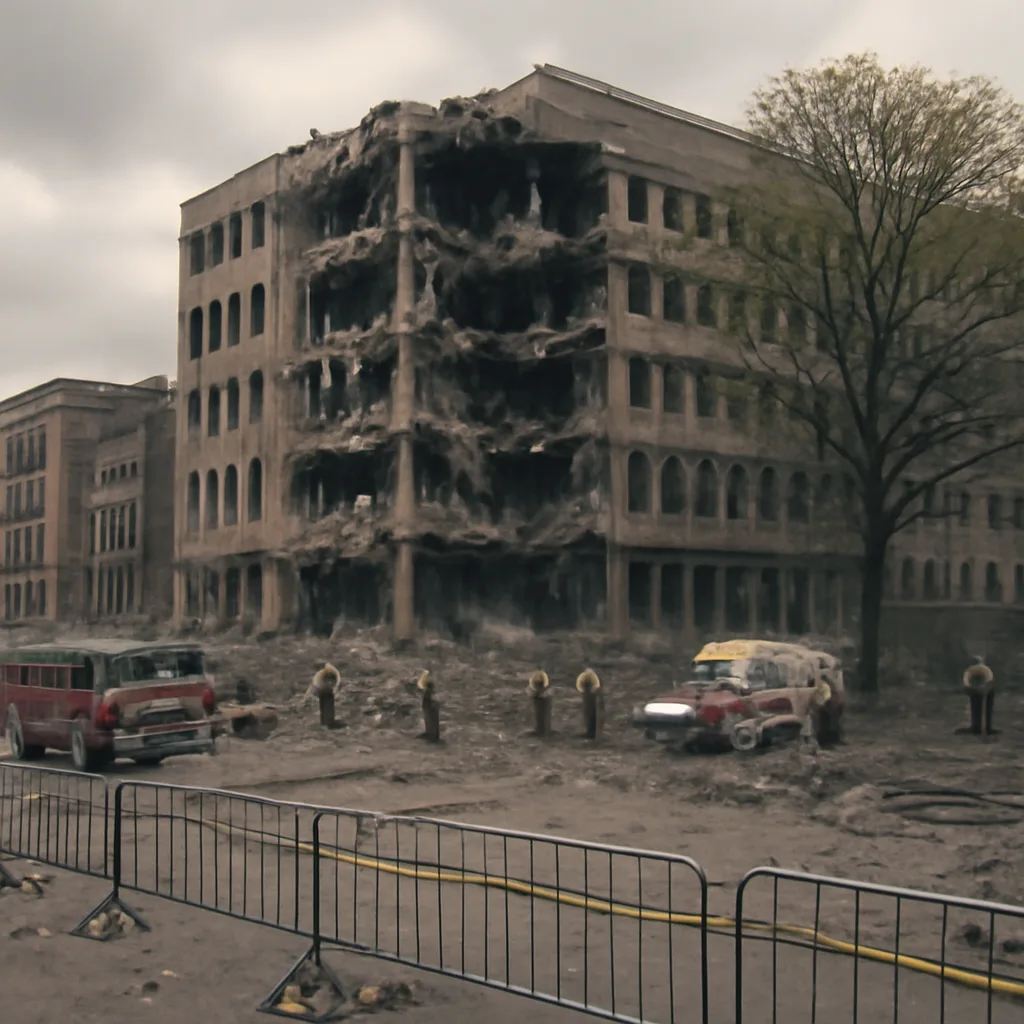
Rubble and rescue scene outside the destroyed Alfred P. Murrah Federal Building in Oklahoma City after the April 19, 1995 bombing, showing damaged structure, debris-strewn street, and emergency vehicles.

On April 19, 1995, a truck bomb destroyed the Alfred P. Murrah Federal Building in Oklahoma City, killing 168 people and injuring hundreds in one of the deadliest domestic terrorist attacks in U.S. history.


On the morning of April 19, 1995, a bomb placed in a rental truck detonated outside the Alfred P. Murrah Federal Building in downtown Oklahoma City, Oklahoma. The explosion caused catastrophic structural failure across a nine-story section of the building, collapsing offices, shattering windows for blocks, and igniting fires. Emergency responders, volunteers, and federal agencies mounted a large rescue and recovery operation in the hours and days that followed. Ultimately 168 people were killed, including 19 children who were in a daycare center housed within the building, and hundreds more were injured.

The investigation rapidly focused on Timothy McVeigh, a U.S. Army veteran, and his associate Terry Nichols. McVeigh was arrested shortly after the bombing for weapons violations and ultimately linked to the attack through vehicle identification, eyewitness accounts, and forensic evidence. Federal prosecutors charged McVeigh and Nichols with murder and conspiracy. In 1997 McVeigh was convicted on federal charges and sentenced to death; he was executed by lethal injection in 2001. Nichols was convicted in 2004 in state court of 161 counts of first-degree murder and received a life sentence without parole. A separate federal trial in 1997 resulted in Nichols' conviction on conspiracy charges and a life sentence.

The bombing profoundly affected national policy and public awareness of domestic terrorism. The attack prompted changes in federal building security, emergency response coordination, and intelligence-sharing among agencies. It also spurred legislative responses, including expanded anti-terrorism measures and funding for first responders. The bombing occurred on the second anniversary of the 1993 Waco siege's fiery conclusion, a timing that investigators and commentators noted and that influenced interpretations of motive; McVeigh cited the Waco incident and the 1992 Ruby Ridge confrontation as part of his stated grievances against the federal government.

Recovery and memorialization have been central to the city's response. In the years after the bombing, survivors, family members of victims, rescuers, and community members established commemorations and support organizations. The site of the Murrah Building was cleared and redeveloped as the Oklahoma City National Memorial, which opened in 2000. The memorial includes the Field of Empty Chairs (168 chairs honoring each life lost), the Survivor Tree (an American elm that survived the blast), and the Memorial Museum, which documents the attack, the victims, the investigation, and the community's recovery. Annual remembrance events continue to draw survivors and visitors.

The bombing also raised difficult legal and ethical debates about capital punishment, the treatment of domestic terrorism suspects, and the balance between security and civil liberties. Public records, court proceedings, and extensive reporting provide the factual basis for what is known about the plot, the perpetrators, and the response. Some details—such as the full extent of Nichols' role as assessed by different courts and commentators—have been the subject of legal complexity and public dispute, and accounts vary on motive and the extent of any broader co-conspirators beyond McVeigh and Nichols. Nevertheless, the core facts of the bombing, the death toll, and the subsequent convictions of McVeigh and Nichols are settled in the historical and legal record.

The Oklahoma City bombing remains one of the deadliest acts of domestic terrorism in U.S. history and a defining event for victims, survivors, first responders, and the nation. Its legacy is reflected in ongoing remembrance, changes in policy and practice, and continuing efforts to support those affected.

Share this

Email Share on X Facebook Reddit

Did this surprise you?