
05/07/1915 • 7 views
Sinking of RMS Lusitania on 7 May 1915 kills nearly 1,200
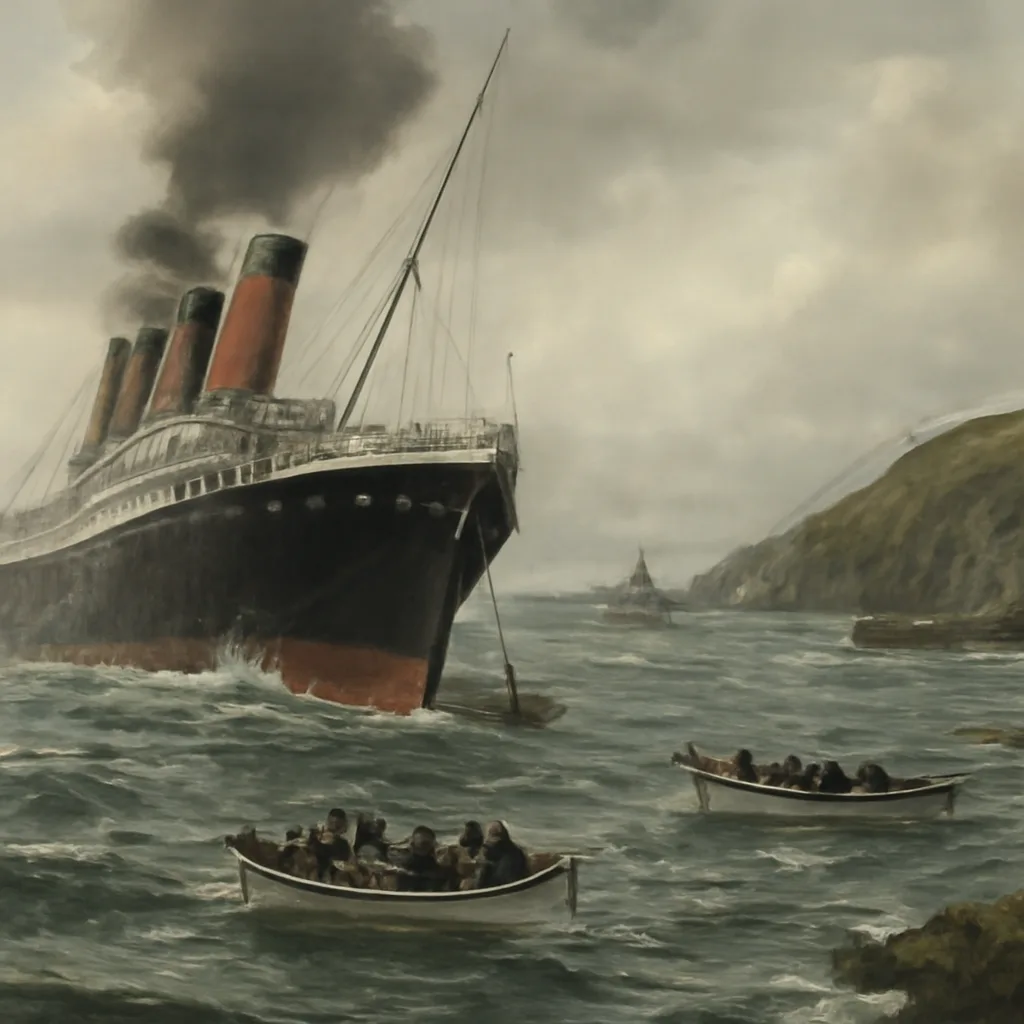
On 7 May 1915 the British ocean liner RMS Lusitania was torpedoed by a German U-boat off the coast of Ireland and sank in 18 minutes, with the loss of about 1,198 lives; the attack intensified international outrage and affected public opinion during World War I.
Casualties and survivors
Contemporary records and subsequent inquiries place the death toll at approximately 1,198 people, including men, women and children from multiple nations. About 764 people survived. Among the dead were hundreds of passengers and crew and a number of American citizens, a fact that contributed to diplomatic tensions between the United States and Germany.
Context and controversy
The sinking took place during the First World War amid a German unrestricted submarine-warfare campaign aimed at disrupting Allied shipping. Germany had declared the waters around the British Isles a war zone and warned that ships might be attacked. The British government had also implemented measures—such as blackouts and routing—to reduce risk, and Lusitania was steaming without an escort in a declared danger area.
Controversy has persisted over several disputed points. One issue is whether the Lusitania was carrying war materiel; archival evidence confirms that the ship carried war-related cargo, including rifle cartridges and other military supplies, though the scale and direct effect of that cargo on the ship’s vulnerability remain debated. Another contested point is the nature of the second internal explosion that so rapidly consumed the liner after the torpedo hit: theories include a coal dust or boiler explosion, detonating munitions in the hold, or structural failure exacerbated by the torpedo strike. Investigations and scholarly studies have not produced a universally accepted single explanation.
Diplomatic and strategic impact
The deaths of large numbers of civilians, including Americans, provoked widespread outrage in the United States, Britain and elsewhere. The incident became a major propaganda event for the Allies and shifted public opinion in neutral countries against Germany. While the sinking did not immediately bring the United States into the war, it was one of several factors—alongside later provocations, such as unrestricted submarine warfare resumption and the Zimmermann Telegram—that moved U.S. sentiment toward entry in 1917.
Legal and historical aftermath
The sinking prompted multiple inquiries, including a British board of trade inquiry and later historical and forensic investigations. Germany defended the attack as a legitimate act against a vessel supplying Britain and operating in a declared war zone; critics and survivors argued the attack on a passenger liner was unlawful and immoral. Over the decades historians have reexamined shipping manifests, naval records and physical surveys of the wreck (located in international waters and designated a maritime grave) to clarify details. While some questions remain unsettled, the core facts—the torpedoing by U-20, rapid sinking, and heavy civilian loss of life—are well established.
Memory and commemoration
The sinking of the Lusitania remains a significant episode in the history of the First World War, commemorated in memorials in Ireland, the United Kingdom, Canada and the United States. The event is studied for its military, diplomatic and humanitarian implications and continues to be cited in discussions of naval warfare, civilian protection and the laws of armed conflict.