
← Back
04/19/1912 • 5 views

1912 Roller Coaster Disaster in New York Spurs Early Ride-Safety Laws
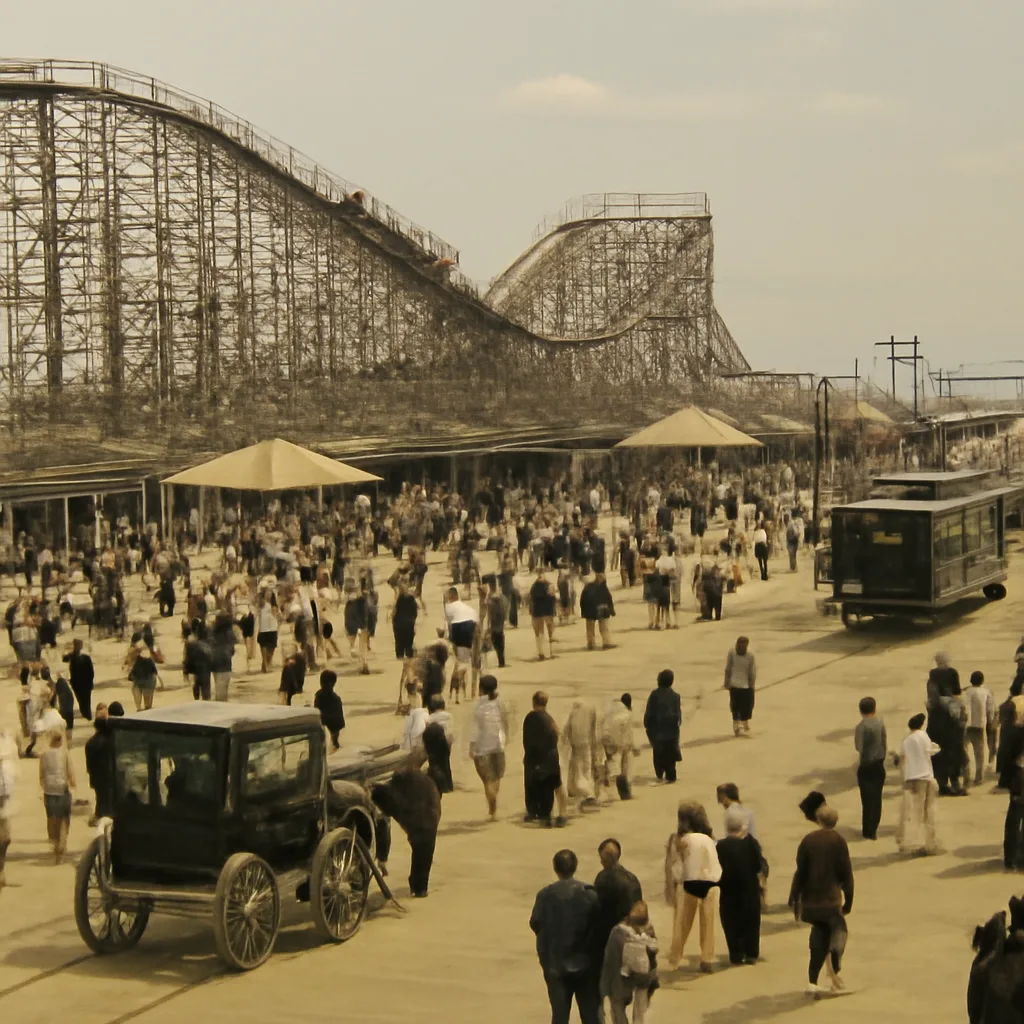
Early 20th-century wooden roller coaster structure at an urban seaside amusement park, spectators on the pier and horse-drawn vehicles nearby

On April 19, 1912, a catastrophic accident on a Coney Island-style roller coaster in Brooklyn killed and injured riders, prompting municipal investigations and helping drive some of the first local regulations targeting amusement-park safety and ride inspection standards.


On April 19, 1912, a serious accident on a popular roller coaster in Brooklyn highlighted the rapid rise of mechanical amusement rides and exposed gaps in safety oversight. The incident occurred during a period when urban amusement parks and seaside attractions—using increasingly ambitious electrically driven and gravity-powered devices—drew large crowds but operated with uneven engineering standards, scant formal inspection, and limited legal clarity about operator responsibility.

Contemporary newspaper accounts describe a roller coaster car derailing or failing in its mechanical restraints, causing multiple fatalities and injuries among passengers. Exact casualty figures reported at the time varied across newspapers and municipal bulletins; historians note conflicting tallies and the likelihood that initial counts underreported injuries. The event quickly drew city officials and engineers to investigate, and it received sustained press attention because it involved a widely used ride type rather than an isolated piece of novelty equipment.

The Brooklyn accident did not occur in a vacuum. From the late 19th century into the early 20th, amusement rides evolved from simple gears and pulleys to more complex, higher-speed attractions. Manufacturers and park operators often prioritized novelty and capacity over standardized safety engineering. Municipal oversight lagged: cities typically regulated amusements through general public-safety ordinances or building codes, not by ride-specific technical standards. When accidents happened, responsibility was frequently litigated through civil suits and local criminal inquiries rather than through prescriptive regulatory bodies.

The 1912 roller coaster disaster intensified calls for clearer oversight. In its aftermath, Brooklyn and other New York City authorities initiated inquiries into ride construction, maintenance practices, and operator qualifications. Reports from city engineers and coroner inquests (cited in contemporary press) recommended measures such as routine mechanical inspections, limits on passenger capacity, mandatory safety restraints, and licensing requirements for ride operators. These recommendations translated into municipal ordinances and enforcement practices that tightened inspection regimes at amusement parks and piers.

While this 1912 accident was not the first fatality on an amusement ride in the United States, its public visibility and the urban setting made it a notable catalyst. It contributed to an incremental shift from reactive responses to more systematic regulation: municipalities began to require certifications for rides, periodic inspections, and clearer liability rules for operators and owners. Over subsequent decades, these local rules were complemented by state-level statutes and, eventually, industry standards developed by trade groups and engineers.

The legacy of the April 19, 1912 disaster is twofold. Technically, it helped push ride design toward more robust engineering and regular inspection schedules. Legally and administratively, it encouraged cities to frame amusement-ride safety as a matter for targeted regulation rather than solely for general public-safety enforcement. The episode illustrates how early 20th-century urban hazards—borne of rapid technological adoption and mass leisure culture—were often corrected through local inquiry, press scrutiny, and incremental policy-making rather than immediate national legislation.

Scholars caution that precise details of the accident (such as exact casualty numbers and the specific mechanical failure mode) remain variably reported in primary sources, and interpretations rely on contemporary newspapers, coroner reports, and municipal records. Nevertheless, April 19, 1912 stands in historical accounts as a pivotal moment when a deadly amusement-ride accident prompted concrete steps toward the safety regulations that would govern mechanical attractions in the decades that followed.

Share this

Email Share on X Facebook Reddit

Did this surprise you?