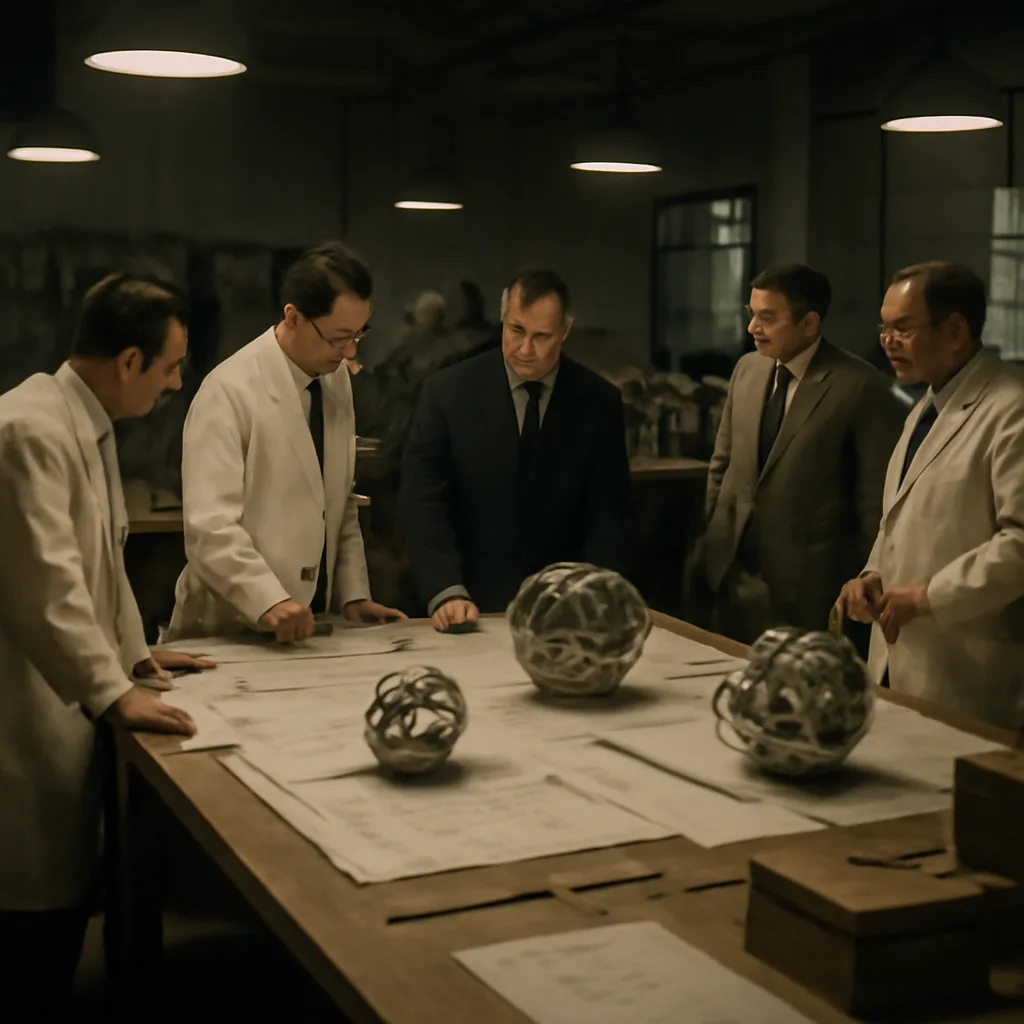
Design for the first atomic bomb is finalized at Los Alamos
On February 14, 1945, scientists at the Manhattan Project's Los Alamos laboratory finalized the design for the first plutonium implosion-type atomic bomb, completing key engineering and physics decisions that enabled the Trinity test and subsequent wartime use.
In mid-February 1945, work at the Los Alamos Laboratory reached a decisive technical milestone: the finalization of the design for the plutonium implosion-type atomic bomb. This design, developed under the direction of physicist J. Robert Oppenheimer and with major technical leadership from engineers and physicists such as George Kistiakowsky, Louis Slotin, and others, addressed problems that had ruled out simpler gun-type designs for plutonium and required the more complex implosion approach.
During 1944 and early 1945, experimental and theoretical efforts converged on a solution whereby a subcritical plutonium core would be rapidly compressed to a supercritical state by a precisely timed spherical arrangement of high-explosive lenses. The design had to solve multiple interrelated challenges: achieving a perfectly symmetric implosion, producing reliable high-explosive detonators and lens geometries, minimizing pre-detonation from spontaneous neutrons in reactor-produced plutonium, and integrating an internal tamper and initiator to ensure a prompt and efficient chain reaction.
By February 1945 the Los Alamos teams had settled on the major features of the device that would later be tested at Trinity on July 16, 1945. Key engineering advances included the development of explosive lens technology to shape the detonation front, the implementation of multiple-point detonators to fire simultaneously around the sphere, and refinements to the plutonium core's metallurgy and geometry to reduce the risk of predetonation. Practical tests with scale models, non-nuclear implosion experiments, and intense theoretical calculations validated the chosen approach sufficiently to move toward full assembly and testing.
The finalized design was the product of intense wartime collaboration among physicists, chemists, metallurgists, and ordnance engineers, and it also depended on large-scale industrial processes that supplied reactor-produced plutonium and machined componentry. While technical consensus was reached in mid-February, additional work continued on manufacturing tolerances, firing circuitry, and handling procedures through the spring of 1945.
Finalizing the design at Los Alamos set the schedule for the Trinity test in New Mexico and for the subsequent rapid assembly of weapons components for use in the Pacific theater. The implosion device design proved successful at Trinity, demonstrating that the scientific and engineering solutions adopted earlier in the year could produce a deliverable nuclear explosive. The success of that design had profound consequences: it enabled the first deployed nuclear weapons in August 1945 and ushered in the atomic age.
Historians note that while February 14 marks a useful milestone in the laboratory record for when major design decisions coalesced, the process involved continuing refinements and testing. Some operational details and internal deliberations remain documented in wartime technical reports and correspondence archived in U.S. government collections and later histories of the Manhattan Project.