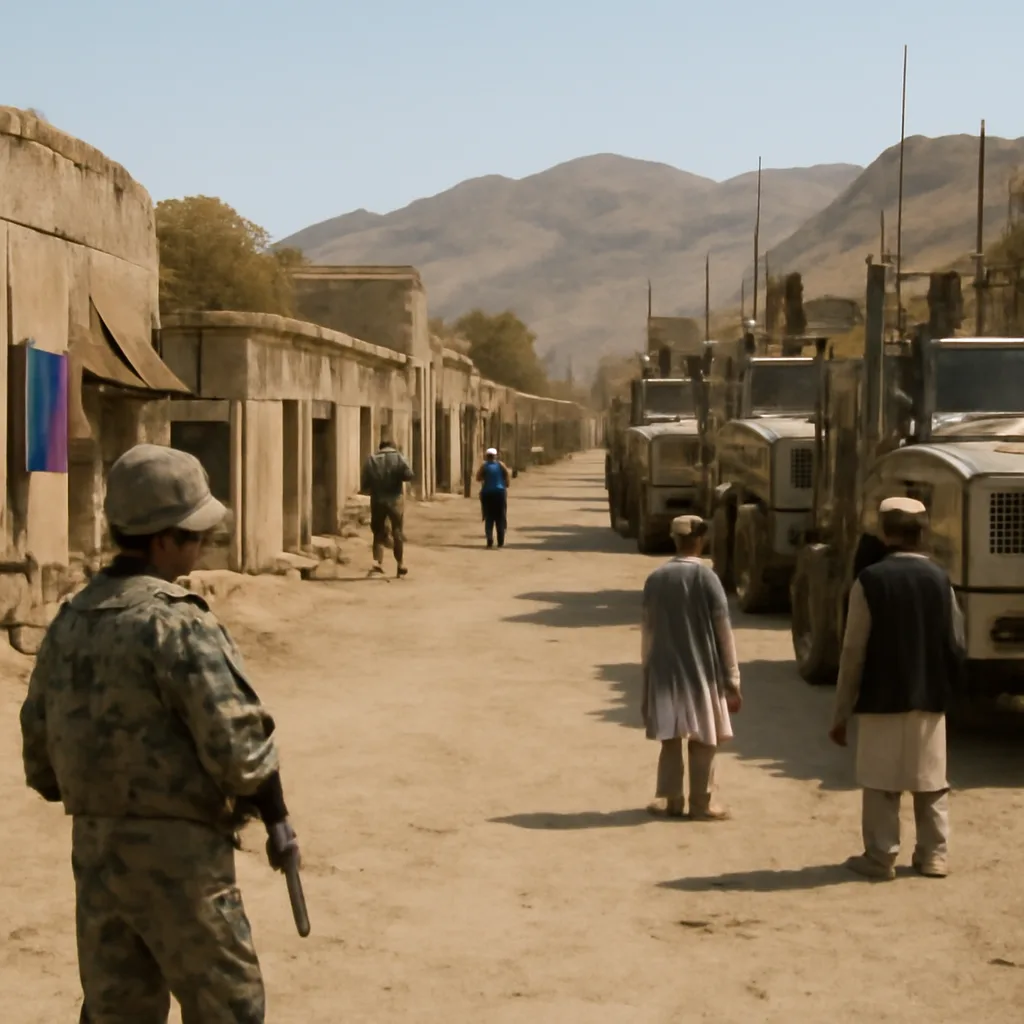
On September 20, 2009, President Barack Obama announced a significant increase in U.S. military forces in Afghanistan, beginning a years-long effort to counter the Taliban and stabilize the country amid rising violence.
On September 20, 2009, President Barack Obama revealed a major increase in U.S. military forces in Afghanistan, directing a surge intended to reverse Taliban momentum and create space for local governance and security forces to develop. The announcement followed months of internal deliberations among White House advisers, Pentagon officials and NATO partners about the scope and aims of U.S. involvement after nearly eight years of war.
Scale and timeline
The 2009 decision called for tens of thousands of additional troops to be deployed over several months; specific phased increases were outlined in subsequent military planning and public briefings. The surge prioritized population centers in the Afghan south and east, areas where the Taliban had significant influence. Senior commanders emphasized that the increase would be temporary and paired with a transition strategy to build Afghan security capacity.
Strategic rationale
U.S. officials framed the surge as necessary to deny safe havens to insurgents, protect vital population centers, and enable conditions for expanded civilian governance and economic development. The strategy combined counterinsurgency tactics—protecting civilians, clearing insurgent-held areas and holding them through partnered operations—with efforts to train and equip the Afghan National Security Forces (ANSF) so they could assume responsibility for security over time.
Coalition and Afghan responses
NATO and other coalition partners provided varying levels of additional forces, funding and support, while the Afghan government publicly welcomed the increase as essential for national security. Some allies expressed caution about timelines and force requirements. Within Afghanistan, views were mixed: some local leaders and civilians hoped the surge would reduce violence, while others worried about civilian harm, potential for escalation, and the political durability of gains.
Operational challenges and performance
The surge coincided with intensified combat operations in Taliban strongholds. U.S. and allied forces reported tactical successes in disrupting insurgent networks and retaking territory, but also faced persistent challenges, including complex insurgent tactics, the rugged terrain of southern and eastern Afghanistan, limitations in Afghan partner forces, and difficulties in extending governance and development sustainably.
Civilian impact and rules of engagement
Efforts to limit civilian casualties and adapt rules of engagement were part of the operational approach, reflecting concern that civilian harm would erode support for coalition and Afghan government efforts. Despite precautions, civilian casualties remained a critical issue, drawing criticism from Afghan civilians, human rights groups and international observers.
Political and long-term consequences
The surge shaped U.S. policy toward Afghanistan for several years, influencing troop levels, funding priorities and the emphasis on training Afghan forces. While the surge achieved some short-term security gains in certain areas, critics argued it did not produce a decisive, nationwide military solution and that political reconciliation with insurgent elements received inconsistent attention. Over the following years, questions persisted about sustainability, the pace of Afghan security force development, and the political will in the U.S. and among allies to maintain large-scale deployments.
Historical context
The 2009 surge built on prior U.S. and NATO efforts that began after the 2001 invasion and evolved amid changing counterinsurgency doctrine. It reflected a phase in the war when policymakers sought to balance military pressure with nation-building aims, while responding to an adaptive insurgency and complex local dynamics.
Assessment
Historians and analysts assess the 2009 surge as a consequential but contested episode: it altered the operational tempo and produced localized security improvements, yet it also highlighted the difficulties of achieving enduring political stability through military means alone. The episode remains part of broader debates about strategy, limits of military power, and the interplay between security, governance and reconciliation in Afghanistan.