
← Back
04/19/1904 • 7 views

Fire Ravages Toronto’s Downtown, Destroys Multiple Blocks
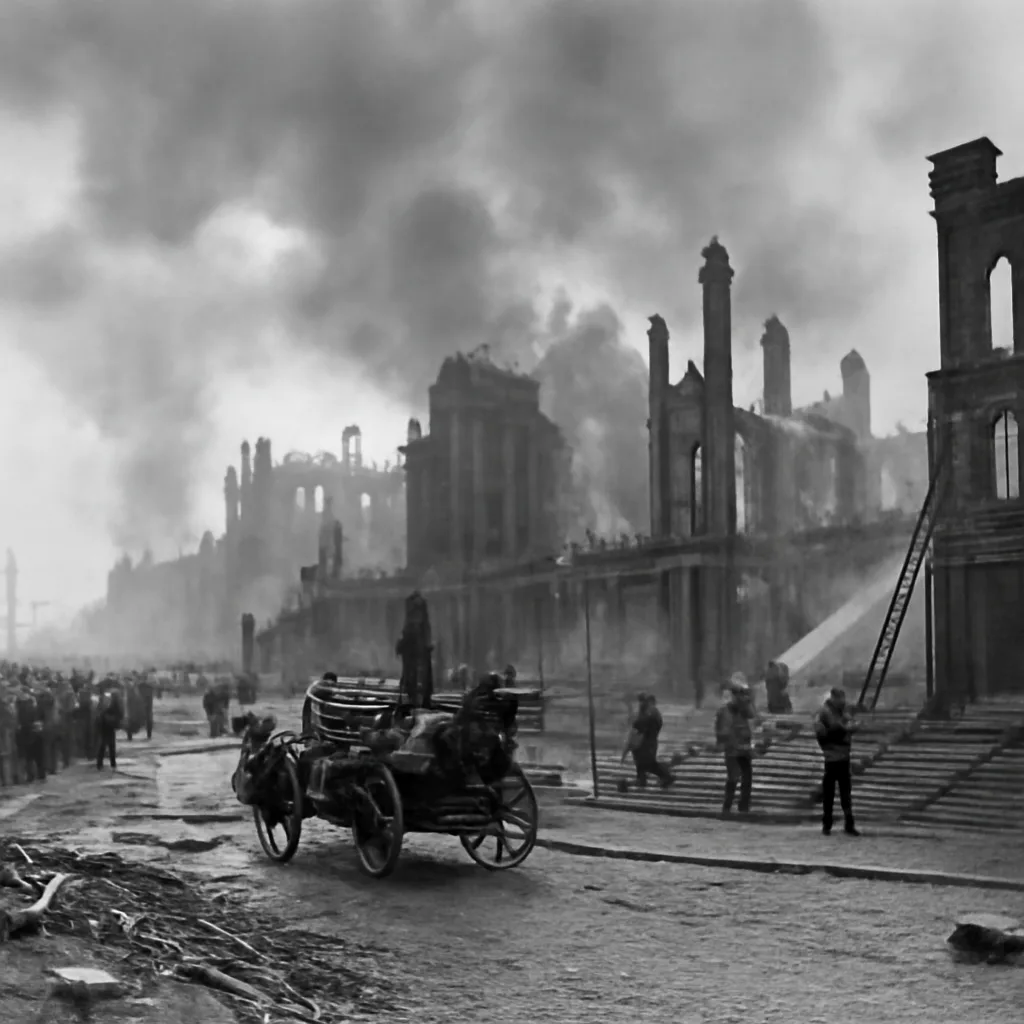
Early 20th-century downtown Toronto streetscape with damaged commercial buildings, smoke and rubble after a large fire; horse-drawn equipment and firefighters visible, crowds observing from a distance.

On April 19, 1904, a major conflagration swept through Toronto’s downtown core, destroying numerous commercial buildings and leaving thousands temporarily homeless; the blaze reshaped the city’s waterfront and prompted changes in fire safety and rebuilding.


On the evening of April 19, 1904, a large fire broke out in downtown Toronto and quickly spread through wooden and densely built commercial blocks. The blaze destroyed dozens of buildings in the city’s central business district and along portions of the waterfront, causing extensive property loss and displacing many residents and businesses.

The city’s rapid growth in the late 19th and early 20th centuries had left parts of Toronto with crowded streets, closely spaced wooden structures, and commercial warehouses—conditions that allowed fire to spread rapidly once it began. Firefighting technology and organization of the period—steam-powered fire engines, horse-drawn apparatus, and volunteer or early professional companies—struggled to contain large urban fires under such conditions, particularly on a night when wind and combustible building materials intensified the threat.

Contemporary reports from 1904 describe wide swaths of the downtown reduced to smoldering ruins, with firefighters working through the night to prevent the flames from crossing firebreaks and reaching less-damaged neighborhoods. Key commercial thoroughfares and wholesale warehouses serving the city and surrounding region suffered heavy damage, interrupting trade and commerce. Many businesses lost stock and records, and workers found themselves suddenly unemployed while owners assessed losses.

Casualty figures varied in contemporary accounts; while loss of life was reported as limited relative to the scale of property destruction, several people were injured and numerous families were left temporarily homeless. Relief efforts were organized by civic institutions, churches, and charitable groups, which provided shelter, food, and clothing to those affected. Insurance claims from the conflagration were substantial and played a major role in the economic aftermath of the event.

The 1904 downtown fire accelerated discussions and actions around urban planning and fire safety in Toronto. Rebuilding efforts favored more fire-resistant materials such as brick, stone, and steel, and municipal authorities moved to improve fire prevention measures and modernize firefighting equipment and infrastructure. The disaster contributed to gradual changes in building codes, wider streets in some redevelopment plans, and investment in water supply and hydrant systems to better serve firefighting needs.

In the longer term, the destruction of central blocks opened opportunities for redevelopment that altered the character of the waterfront and business district. New commercial buildings erected in the years after the fire reflected contemporary architectural styles and materials, and the event is often cited in histories of Toronto as a catalyst for modernization in urban construction and fire safety policy.

While memories of the April 19, 1904, fire remain part of Toronto’s municipal history, exact details—such as the precise number of buildings lost or the full tally of economic cost—vary among contemporary sources and later accounts. Historians rely on period newspapers, city records, insurance ledgers, and municipal reports to reconstruct the event and its consequences, and those primary documents show the fire’s immediate human and material toll and its role in shaping the city’s subsequent urban development.

Share this

Email Share on X Facebook Reddit

Did this surprise you?