
← Back
01/01/1892 • 9 views

Ellis Island Opens: America’s New Year’s Gate of Hope and Fear
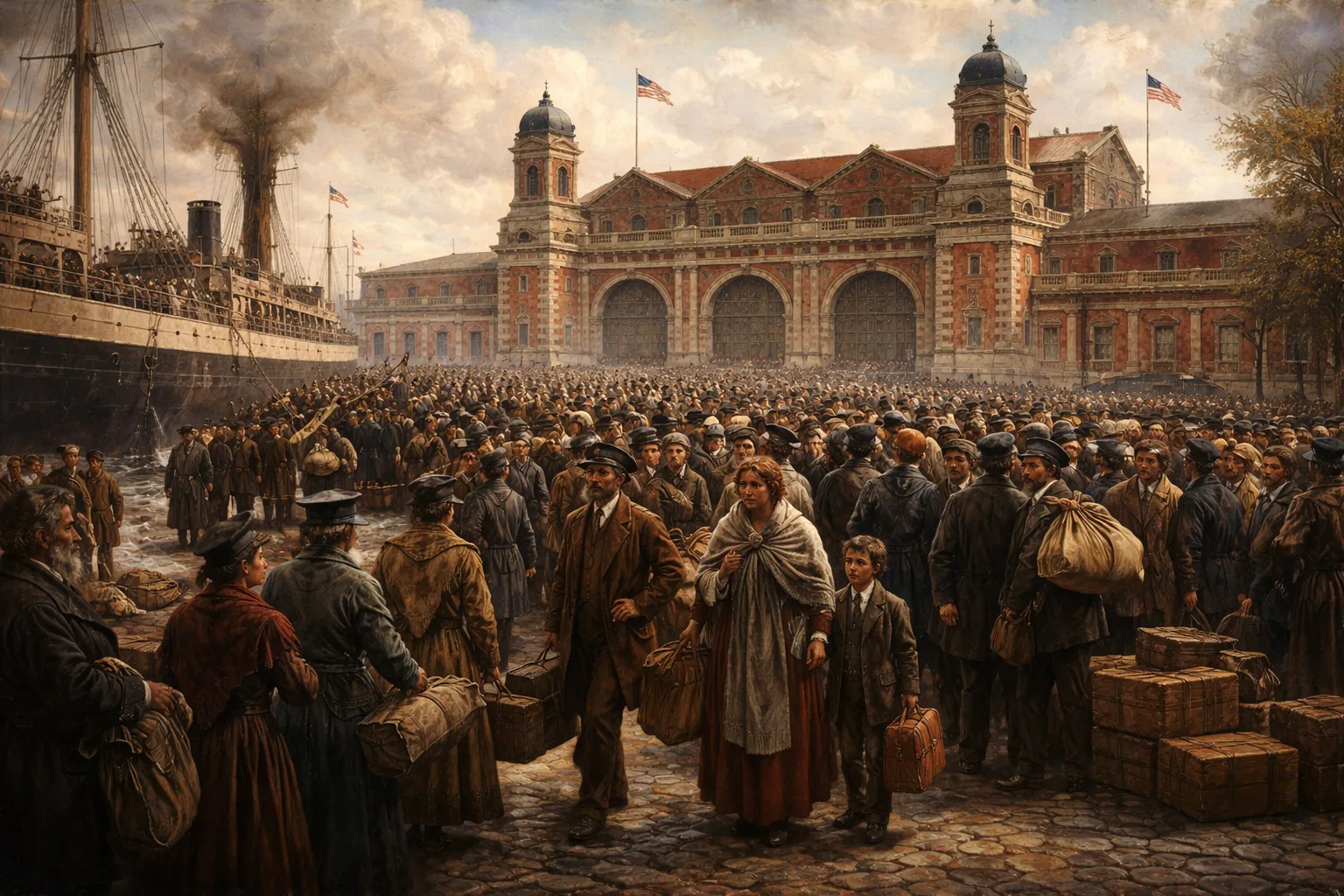
Ellis Island

On January 1, 1892, Ellis Island officially opened in New York Harbor, marking the beginning of what would become one of the most consequential immigration gateways in modern history.


On January 1, 1892, Ellis Island officially opened in New York Harbor, marking the beginning of what would become one of the most consequential immigration gateways in modern history. Over the next six decades, more than 12 million immigrants would pass through its halls, seeking opportunity in the United States. While Ellis Island is often remembered as a symbol of hope and renewal, its opening day also marked the start of a system that subjected vulnerable newcomers to intense scrutiny, fear, and the constant threat of rejection.

The first immigrant processed at Ellis Island was a 15-year-old Irish girl named Annie Moore, who arrived with her two younger brothers. Her reception was widely publicized and celebrated, reinforcing the idea of America as a land of welcome. Behind this carefully curated image, however, the inspection process at Ellis Island was designed to filter, exclude, and deport as efficiently as possible. Immigrants arrived exhausted after weeks at sea, only to face officials who could determine their future in a matter of seconds.

Medical inspections were among the most dreaded aspects of arrival. Doctors conducted what became known as the “six-second physical,” during which immigrants were quickly examined for visible signs of illness or disability. Those suspected of medical or mental conditions were marked with chalk symbols on their clothing. An “X” often indicated suspected mental deficiency, “E” suggested eye disease, and “B” could denote back problems or physical deformities. Individuals so marked were pulled aside for further examination, sometimes without explanation, as family members watched helplessly.

The consequences of failing inspection were severe. Immigrants deemed unfit could be detained for days or weeks, and many were deported back to their countries of origin at the shipping company’s expense. In some cases, families were permanently separated when one member was rejected while others were allowed entry. For people fleeing poverty, persecution, or violence, deportation could mean returning to conditions they had risked everything to escape.

Ellis Island’s opening also reflected broader anxieties within American society. As immigration surged from Southern and Eastern Europe, fears grew about disease, crime, political radicalism, and cultural change. The inspection process was shaped by emerging pseudoscientific beliefs about eugenics and racial hierarchy, which influenced who was considered “desirable” or “undesirable.” Although the majority of immigrants were admitted, the system reinforced the idea that acceptance into the United States was conditional and revocable.

Despite its harsh realities, Ellis Island became a defining chapter in the American story. For millions, it was the threshold between desperation and possibility, trauma and survival. Its opening on New Year’s Day symbolized both promise and peril: a new beginning shadowed by judgment and uncertainty. Ellis Island stands today not only as a monument to immigration, but as a reminder that the pursuit of opportunity has often come at a profound human cost.

Share this

Email Share on X Facebook Reddit

Did this surprise you?