01/01/1939 • 6 views
Hitler’s New Year’s Warning
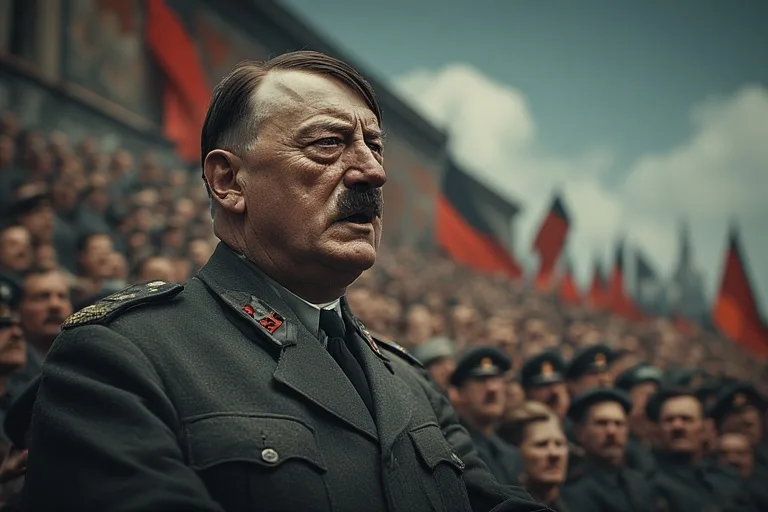
On January 1, 1939, Adolf Hitler delivered a New Year’s address that, in hindsight, reads less like political rhetoric and more like a blunt prelude to catastrophe.
By the start of 1939, Germany had already violated the post–World War I order. The remilitarization of the Rhineland in 1936, the Anschluss with Austria in March 1938, and the annexation of the Sudetenland later that year had been met largely with appeasement by Britain and France. The Munich Agreement, signed in September 1938, was meant to secure “peace for our time.” Hitler’s January 1 speech made clear that peace was not his intention.
In the address, Hitler cast Germany as a nation surrounded by enemies and betrayed by international forces. He spoke of struggle as inevitable and framed conflict not as aggression, but as a necessary act of survival. While he avoided declaring a specific war, the message was unmistakable: Germany would no longer tolerate limits imposed by other nations, and violence was an acceptable, even desirable, tool to reshape Europe.
What made the speech particularly chilling was its timing. New Year’s Day traditionally symbolizes renewal and hope, yet Hitler used the moment to normalize the idea of mass conflict. Rather than offering reassurance to a weary population, he reinforced a narrative of permanent crisis. The German public, subjected to years of propaganda, largely received the message as confirmation of national strength and destiny.
Internationally, the speech raised alarms—but not enough. Foreign diplomats and leaders were accustomed to Hitler’s inflammatory language and often dismissed it as posturing meant to extract further concessions. This pattern of underestimation would prove disastrous. In March 1939, Germany seized the rest of Czechoslovakia, a move that shattered any remaining illusion that Hitler’s ambitions were limited to uniting ethnic Germans. On September 1, 1939, Germany invaded Poland, triggering World War II.
In retrospect, the January 1, 1939 speech stands as a clear warning that was heard but not fully believed. Hitler was not disguising his worldview; he was openly articulating it. The address fits into a broader pattern of Nazi rhetoric that framed war as both inevitable and morally justified, conditioning the population to accept unprecedented levels of violence.
The tragedy of the speech lies not only in what was said, but in how little was done in response. It underscores one of the central lessons of the early years of the Second World War: when authoritarian leaders openly threaten violence, dismissing their words as exaggeration can carry catastrophic consequences. On the first day of 1939, the future of Europe was spoken aloud. The world simply failed to act in time.