
← Back
08/21/2009 • 5 views

U.S. Announces Major Troop Increase in Afghanistan
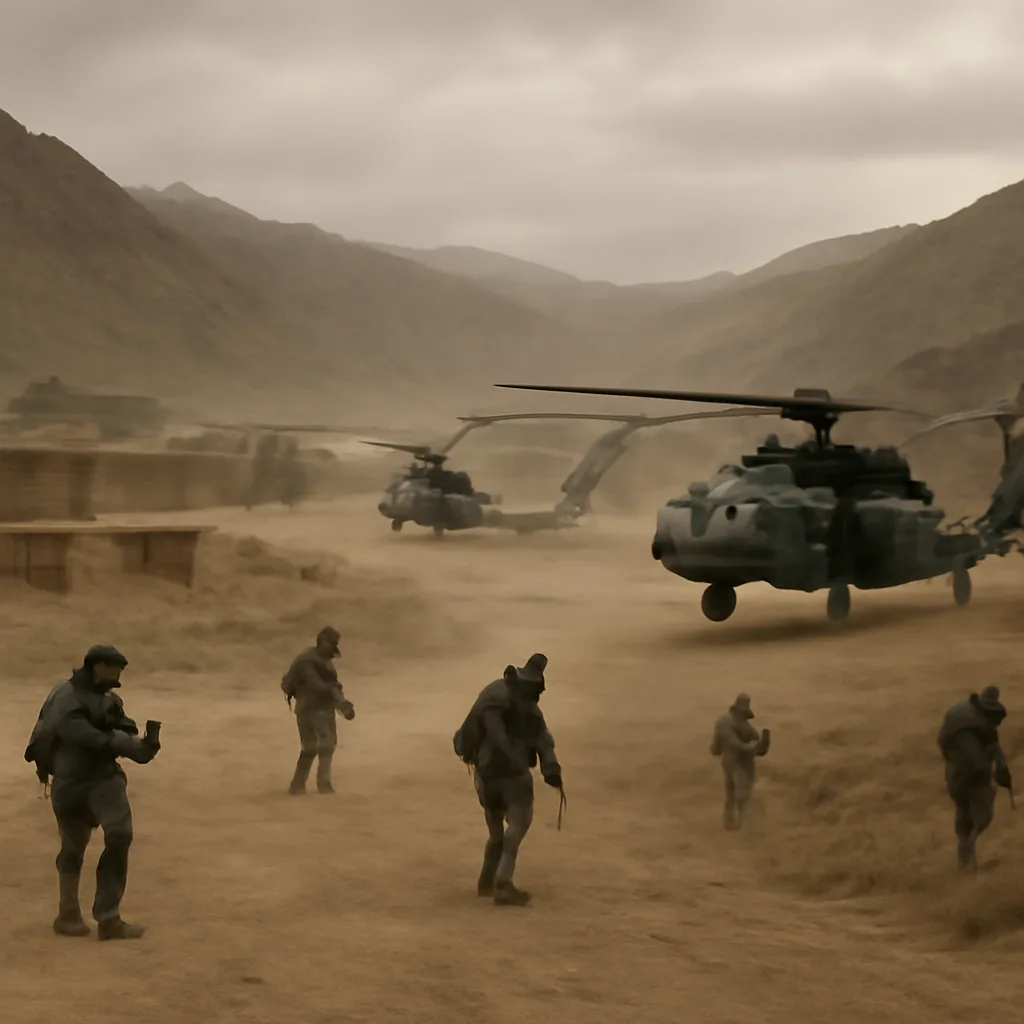
U.S. military helicopters and soldiers operating in a dusty Afghan province near an encampment, with low mud-brick buildings and rugged hills in the background.

On August 21, 2009, President Barack Obama announced a significant U.S. troop surge to Afghanistan, reversing earlier plans for a smaller footprint and aiming to blunt Taliban gains while strengthening Afghan security forces.


On August 21, 2009, President Barack Obama revealed a major change in U.S. military policy toward Afghanistan: a decision to send additional combat brigades to the country and extend American involvement beyond earlier plans. The announcement followed months of interagency and military review initiated after Obama took office in January 2009, as the administration weighed options to respond to a resurgent Taliban and growing violence across Afghanistan.

Context and rationale
By mid-2009, Afghanistan faced expanding insurgent activity, particularly in the south and east, and an increasingly fragile security environment. The Obama administration concluded that the forces then deployed were insufficient to protect population centers, secure supply lines, and expand Afghan government control. The announced increase was intended to provide time and space for expanded counterinsurgency operations, bolster training and mentoring of Afghan security forces, and create conditions for political reconciliation and governance improvements.

Scale and timing
The surge consisted of tens of thousands of additional U.S. troops over the following months; exact numbers and timelines were phased and subject to further military planning. The decision also involved sending more resources and advisers to improve Afghan army and police capabilities. The additional forces were to focus on the most contested provinces, including Kandahar and Helmand in the south, where Taliban influence was strongest.

Strategy and operations
The administration framed the increase within a counterinsurgency (COIN) doctrine emphasizing protection of civilians, population security, and joint operations with Afghan forces. Senior commanders were tasked with population-centric approaches: clearing insurgents from key areas, holding those gains through sustained presence and local security forces, and building governance and development programs. The surge aimed to reduce safe havens for insurgents and disrupt militant networks, while also training Afghan units to assume responsibility over time.

Domestic and international response
The decision generated debate in the United States and among NATO allies. Supporters argued the surge was necessary to prevent strategic failure and protect American personnel, while critics warned of prolonged entanglement and questioned the feasibility of achieving political goals through a military buildup. Several NATO partners committed additional troops or support, but differences remained over burden-sharing and exit timelines.

Limitations and uncertainties
Officials cautioned that military force alone could not deliver a lasting solution. Success depended on parallel political progress, improved Afghan governance and corruption reduction, effective training of Afghan forces, and regional cooperation—particularly from Pakistan, where militants maintained cross-border sanctuaries. The surge raised questions about how long increased U.S. ground presence would be required and what metrics would guide eventual reductions.

Aftermath and legacy
The 2009 decision set a new course for U.S. engagement in Afghanistan, leading to intensified operations in key provinces and a sustained U.S. presence through the following decade. Assessments of the surge’s impact have been mixed: it disrupted insurgent momentum in some areas and accelerated Afghan force development, but it did not produce a decisive political settlement. The surge is widely seen as a significant episode in the long U.S. involvement in Afghanistan, illustrating the limits of military approaches to complex political conflicts.

Sources and verification
This summary is based on contemporaneous public statements, reporting, and subsequent analyses of U.S. policy in 2009. Specific operational details, troop numbers, and internal deliberations were subject to classification and evolving public reporting at the time.

Share this

Email Share on X Facebook Reddit

Did this surprise you?