
04/18/1965 • 7 views
First Spacewalk: Alexei Leonov Returns Safely After Historic EVA
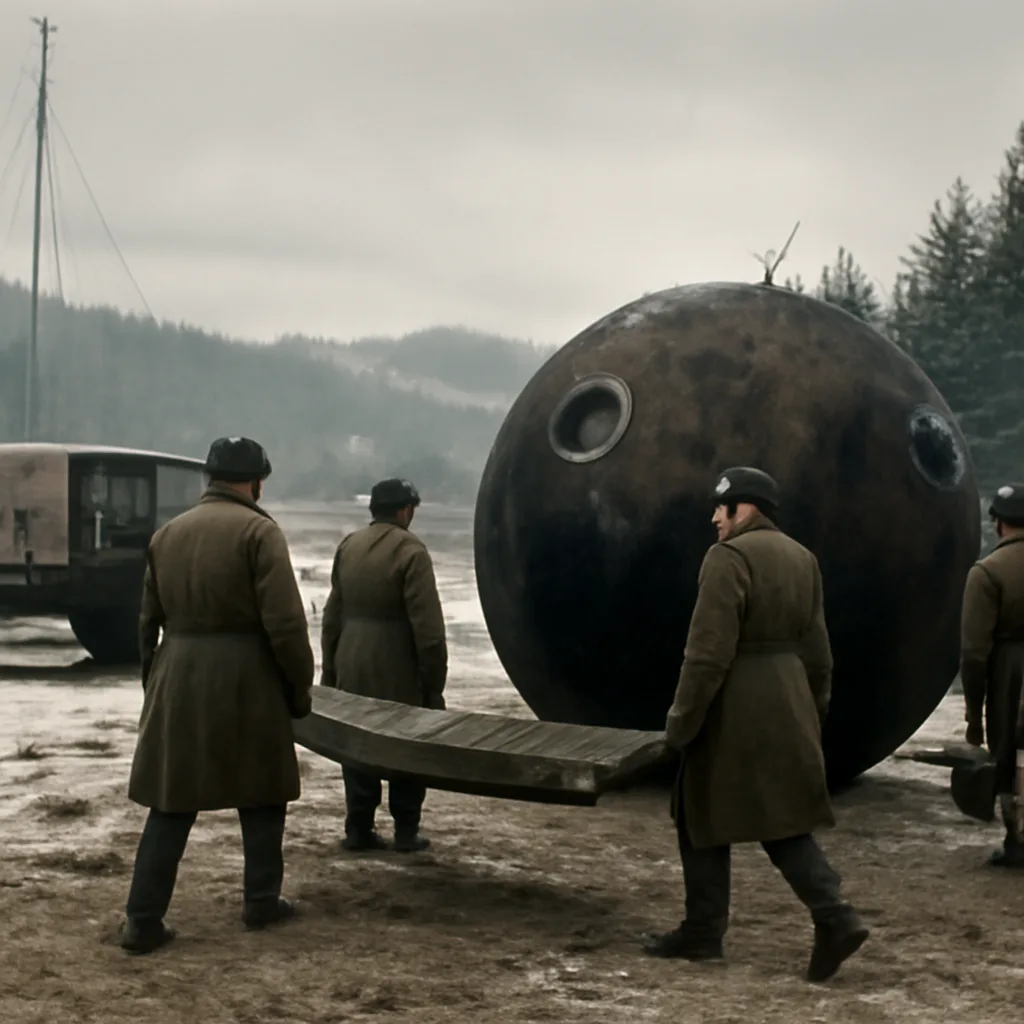
On 18 April 1965, Soviet cosmonaut Alexei Leonov conducted the first human extravehicular activity and re-entered his Voskhod 2 spacecraft safely after a tense, improvised recovery that has since become a landmark of early spaceflight.
Leonov and his crewmate, Pavel Belyayev, were aboard Voskhod 2, launched by the Soviet Union on 18 April 1965. The mission’s primary objective was to demonstrate that a human could leave a spacecraft and work outside it. After depressurizing the airlock, Leonov opened the hatch and moved out into space, tethered to the spacecraft. He reported on conditions outside and tested maneuvering while attached to the tether.
The EVA succeeded in proving that a person could survive and function outside a pressurized cabin, but the return to the spacecraft did not go according to plan. Leonov’s pressure suit ballooned in the vacuum, making it stiff and increasing his effective size. He found it difficult to re-enter the airlock through the hatch. To solve the problem, Leonov improvised by bleeding off some suit pressure to reduce its rigidity and allow himself to fit back through the hatch. This remedy involved risks, since too low a suit pressure could have endangered him, but it permitted his reentry.
Following the EVA, Voskhod 2 encountered further problems during reentry. The service module failed to separate cleanly, causing the descent module to reenter on an incorrect orientation and leading to a ballistic reentry. The spacecraft landed off target in a remote, forested region near the Ural Mountains. Recovery was delayed by the location and by severe weather. Leonov and Belyayev spent the night in the capsule before they were located and rescued by Soviet recovery teams.
Despite the technical difficulties and hazards, both cosmonauts survived and returned to the Soviet Union, where the mission was hailed as a significant technological and symbolic achievement in the competition to expand human presence beyond Earth. The flight provided valuable data on human performance in vacuum and on the engineering requirements for spacesuits, airlocks, and procedures for extravehicular operations.
Historical assessments emphasize both the courage and improvisation of the crew and the limitations of early space systems. Leonov’s decision to reduce suit pressure to reenter the airlock carried documented risks but demonstrated practical problem-solving under extreme conditions. The mission also highlighted the need for improved design to prevent suit overinflation and to ensure reliable spacecraft separation and reentry trajectories—lessons that influenced subsequent EVA and spacecraft designs internationally.
Alexei Leonov’s EVA remains a pivotal episode in spaceflight history. It established the feasibility of human activity outside a spacecraft and underscored the importance of robust training, reliable hardware, and contingency planning for operations in the harsh environment of space. The safe return of Leonov and Belyayev turned a hazardous mission into a celebrated technical and human achievement of the 1960s space era.