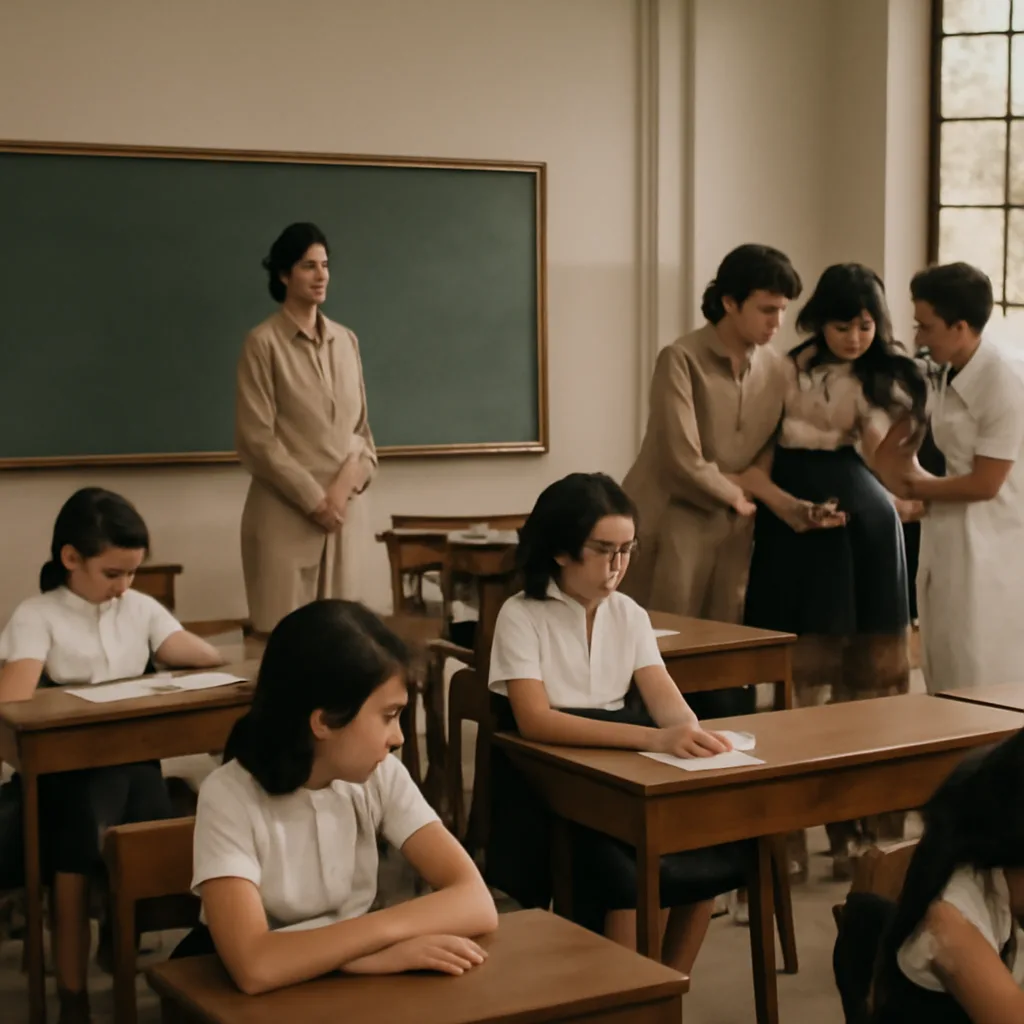
The First Recognized Mass Psychogenic Illness: 1966 Rio de Janeiro School Case
In February 1966, students at a girls’ school in Rio de Janeiro experienced an outbreak of fainting, crying, and uncontrollable movements that clinicians later classified as mass psychogenic illness—one of the first well-documented modern cases linking social stress and shared somatic symptoms.
In mid-February 1966 a sudden outbreak of fainting, hyperventilation, crying, and uncontrollable movements occurred among pupils at a private girls’ school in Rio de Janeiro, Brazil. The event attracted attention from physicians, public health officials, and the press; clinicians who examined the students ultimately described the phenomenon as mass psychogenic illness (MPI), also called mass hysteria in older literature. This episode is often cited in public-health and sociological literature as an early, well-documented modern example tying social context and collective somatic symptoms.
Setting and chronology
The affected institution was a mid-20th-century urban girls’ school. Initial cases involved a few students who experienced fainting spells and dizziness during classes in the first week of February; within days dozens of pupils across multiple classrooms exhibited similar symptoms. Some students reported headaches, nausea, and sensations of heat or buzzing, and a number briefly lost the ability to walk or speak normally. The pattern—rapid onset among a cohesive social group, predominance of non-specific physical complaints, and absence of a consistent organic cause—was consistent with descriptions of MPI in the medical literature.
Medical and public response
Local physicians and hospital staff evaluated many of the affected students. Basic clinical examinations and routine laboratory tests failed to reveal a unifying infectious, toxic, or neurological explanation. Public-health authorities intervened to assess school conditions, sanitation, and possible environmental exposures; no toxic source was confirmed. Reports from clinicians emphasized the role of social contagion: symptoms spread through visual and verbal cues, and recovery tended to follow removal from the triggering environment or reassurance from medical staff and family.
Context and interpretation
Researchers interpreting the 1966 outbreak noted several contributory factors common to MPI: a close-knit population (students with shared routines and expectations), heightened stress or anxiety (academic or social pressures and, for some, family concerns), and vivid interpersonal transmission (students observing peers’ symptoms). At the time, psychiatric and public-health frameworks for understanding such outbreaks emphasized psychogenic mechanisms—stress manifesting as physical symptoms and amplified through social networks—though historians and social scientists have since examined broader cultural and institutional dynamics.
Significance and legacy
The Rio de Janeiro school outbreak of February 1966 is frequently referenced in case studies and reviews of mass psychogenic illness because it was investigated by clinicians and public-health officials at a time when interest in psychosomatic and social determinants of health was growing. The case contributed to evolving diagnostic and management approaches: prompt clinical assessment to exclude organic causes, attention to communication and reassurance, and measures to reduce crowding and sensational reporting. It also fed academic discussions about how cultural expectations, media coverage, and institutional authority shape collective illness experiences.
Limits and caveats
Contemporary accounts vary in detail, and archival materials are limited; some descriptions come from press reports and later clinical reviews rather than a single comprehensive medical record accessible today. As with many historical MPI events, definitive causal statements are not possible—the diagnosis rests on exclusion of other causes and on features typical of psychogenic outbreaks. Scholars caution against stigmatizing affected individuals; modern public-health practice emphasizes compassionate care, clear communication, and investigation that remains open to both psychosocial and environmental explanations.
The 1966 Rio case remains an instructive episode for clinicians, public-health practitioners, and historians interested in how biological, psychological, and social factors can interact to produce rapid, collective patterns of illness.