
← Back
03/12/1938 • 6 views

Germany Annexes Austria in the 1938 Anschluss
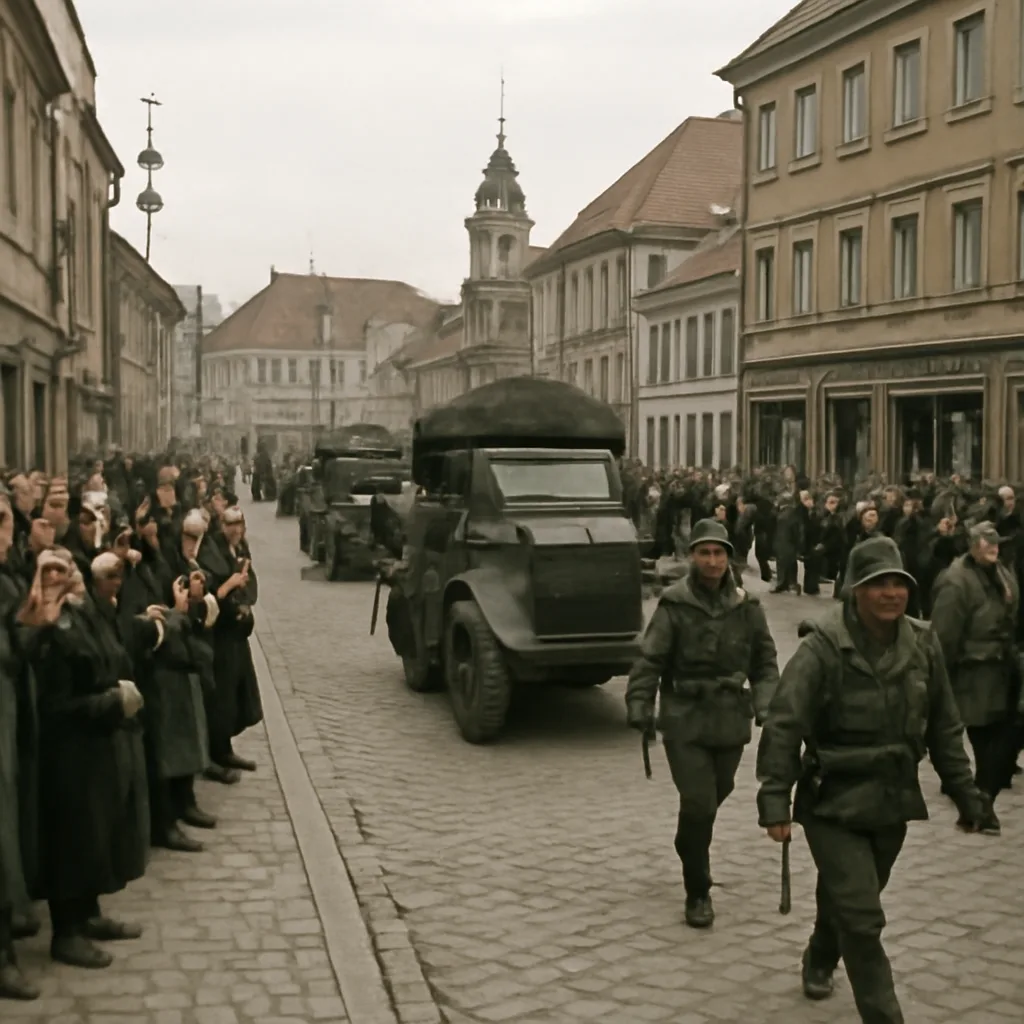
German troops entering Austria near a border town in March 1938, with civilian crowds and banners; a 1930s European townscape in the background.

On March 12, 1938, German troops entered Austria and the following day Austria was incorporated into Nazi Germany in an event known as the Anschluss, ending Austrian independence and marking a major step in Hitler’s expansionist policies.


In early March 1938 the Austrian government collapsed under pressure from Nazi Germany. Chancellor Kurt Schuschnigg had sought to preserve Austrian independence but, after a meeting with Adolf Hitler on March 11 in Berchtesgaden, was forced to resign. The next day, March 12, German military units crossed the border into Austria; they encountered little organized resistance and were welcomed in many towns by crowds and by Austrian Nazis who had long agitated for union with Germany.

On March 13, 1938, the Austrian parliament voted to transfer power to German Chancellor Adolf Hitler, and Austria was incorporated into the German Reich as the Ostmark. A plebiscite was held in April under conditions that international observers and historians have described as coercive and staged; official results reported overwhelming approval, but the vote took place amid intimidation, the arrest and exile of opponents, and widespread propaganda.

The Anschluss had immediate and profound consequences. Austrian political leaders who opposed Nazism were arrested, forced into exile, or prosecuted. Jewish citizens of Austria faced rapidly escalating persecution: discriminatory laws, forced emigration, economic dispossession, and violence. Austrian institutions—government, police, and the press—were quickly Nazified and integrated into German administrative structures. Austria’s incorporation also strengthened Hitler’s strategic position in Central Europe by extending Germany’s borders and resources without major military conflict.

International reaction was mixed. Many Western governments condemned the annexation rhetorically but took no military action. The event exposed the limitations of the League of Nations and the policy of appeasement that characterized much Western diplomacy at the time. For proponents of Nazi expansionism, the Anschluss was a political victory and a propaganda success that encouraged further territorial demands.

Historians view the Anschluss as a key step on the road to World War II and the Holocaust. It demonstrated how a combination of external pressure, internal political division, and violent suppression of dissent could eliminate a country’s independence without large-scale conventional warfare. The incorporation of Austria into Nazi Germany remained a contested legal and moral issue after 1945; Austria was occupied by the Allies and later re-established as an independent republic in 1955 with the signing of the Austrian State Treaty.

While some Austrians initially displayed enthusiasm or relief at union with Germany, the overall legacy is complex and includes complicity in Nazi crimes as well as victimization. Scholarly accounts emphasize both the role of German coercion and the participation of Austrian Nazis and institutions in implementing Nazi policies. The Anschluss remains a central event in 20th-century European history for its immediate human consequences and for how it reshaped the political map of Europe on the eve of global war.

Share this

Email Share on X Facebook Reddit

Did this surprise you?