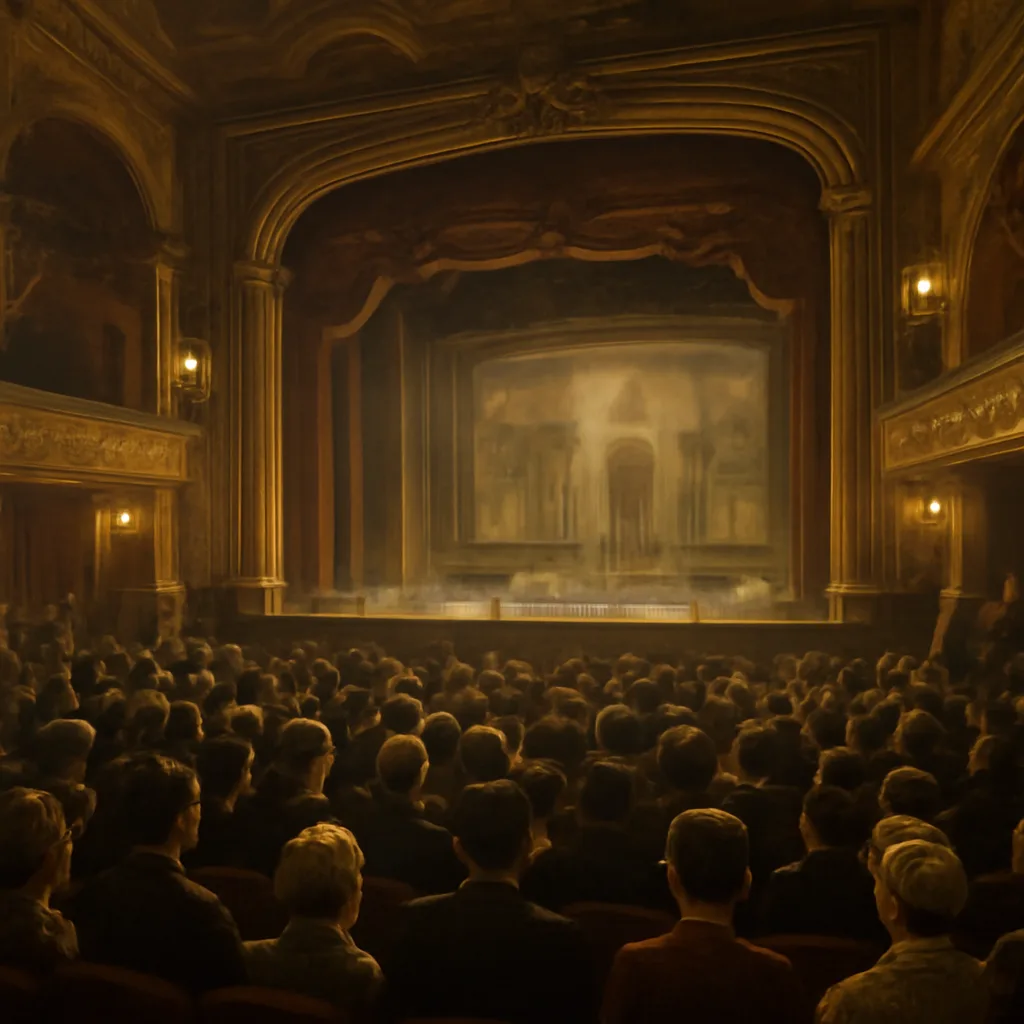
1894 Theater Incident Often Cited as First Documented Mass Hypnosis
On March 12, 1894, reports from a London music hall describe a sudden collective trance among audience members during a stage performance — an episode later cited in contemporary press and medical writings as an early documented case of mass hypnosis, though accounts and interpretations vary.
On March 12, 1894, contemporary newspapers and medical journals carried accounts of an unusual incident at a London music hall in which many audience members were reported to enter a trance-like state during a performance. The event attracted attention from physicians, journalists and social commentators at a time when public interest in mesmerism, hypnotism and crowd psychology was high.
Context
The late 19th century saw the popularization of hypnotism following earlier work by Franz Mesmer and later clinical and theatrical demonstrations across Europe. Music halls and theaters were common sites for sensational performances and demonstrations of novel entertainments; they were also places where large assembled audiences could witness or be suggestible to dramatic stimuli. Scientific and medical communities were debating the mechanisms and legitimacy of hypnotic phenomena, and press coverage often blurred the lines between reportage and sensationalism.
Contemporary reports
Press reports from the period describe an episode in which several audience members reportedly became immobile, unresponsive or highly suggestible during a performer’s act. Some journalists used the term “hypnosis” or “mesmeric influence,” while others framed the incident as hysterical contagion or mass excitement. Physicians of the day investigated similar events and published case notes in medical journals, sometimes treating them as demonstrations of crowd suggestion or conversion disorder rather than deliberate stage hypnosis.
Interpretation and disputes
Historians and historians of medicine warn that contemporary coverage can be unreliable: newspaper accounts tended to conflate different phenomena and to emphasize novelty. Sources diverge on key details such as the number of people affected, the precise setting within the music hall, and whether a performer intentionally induced the state. Some later commentators treated the incident as the first documented case of mass hypnosis in a theater; others argue it is better understood within the broader set of ‘‘mass psychogenic’’ or ‘‘contagious’’ episodes documented in urban settings of the period.
Legacy
Regardless of definitive classification, the March 12, 1894 episode contributed to growing public and professional interest in collective psychological phenomena. It was cited in late-19th and early-20th-century discussions of hypnotism, crowd behavior, and the ethical limits of theatrical demonstration. The incident also illustrates how entertainment venues could become focal points for debates over modernity, science and public morality in the Victorian era.
Caveats on sources
Precise, single-source documentation of this being the ‘‘first’’ such case is not available; the label depends on how one defines ‘‘documented,’’ ‘‘mass,’’ and ‘‘hypnosis.’’ Multiple similar episodes were reported in the same period across Europe and North America. For rigorous historical work, primary sources (contemporary newspapers, medical journal reports, and theatre records) should be consulted directly, and historians note that later retellings sometimes overstate the clarity of the original accounts.