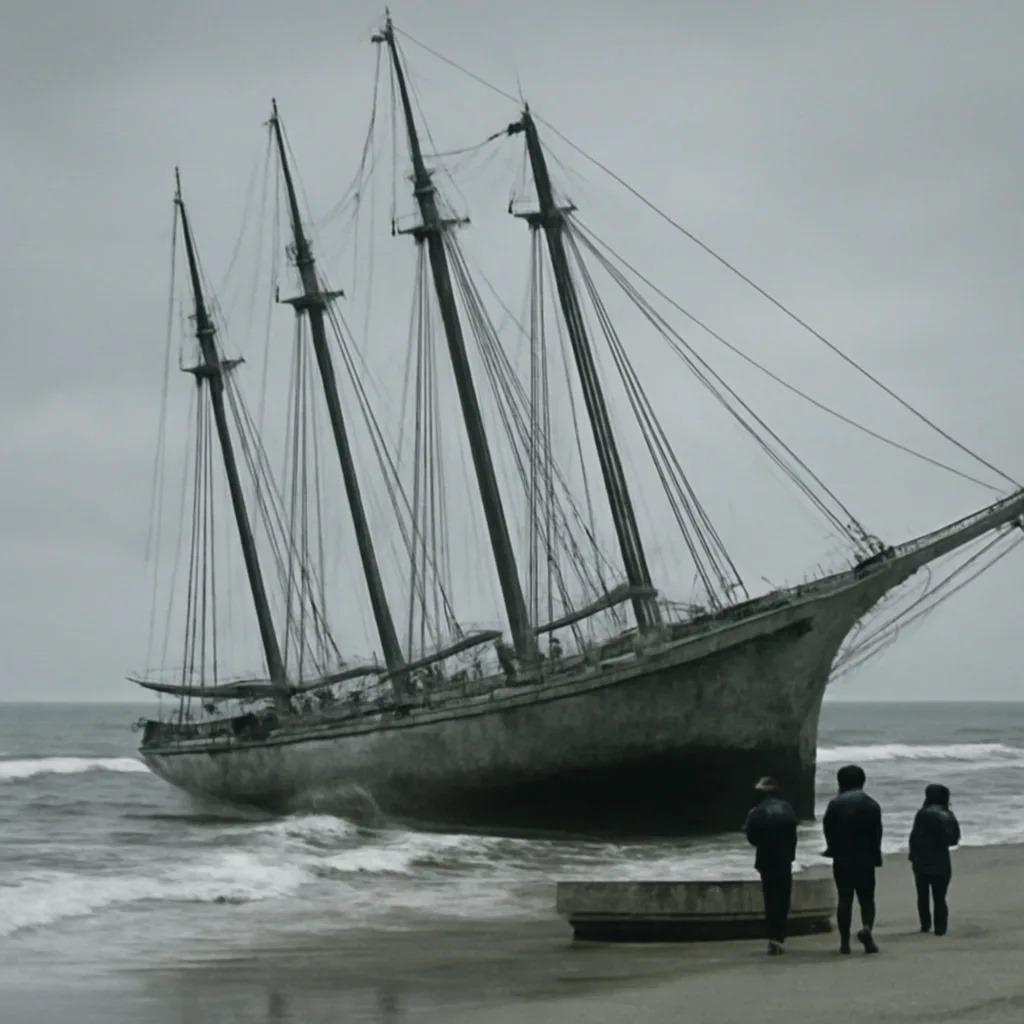
Mystery of the 1947 Ghost Ship: Why the Carroll A. Deering Was Found Abandoned
On March 25, 1947, the five-masted schooner Carroll A. Deering was found run aground off Cape Hatteras with no crew aboard. The vessel's intact logbooks, missing lifeboats and personal effects, and contradictory evidence spawned theories from piracy to mutiny, but no definitive explanation was ever proven.
On 25 March 1947 the five-masted commercial schooner Carroll A. Deering was discovered run aground on Diamond Shoals, off Cape Hatteras, North Carolina, with no one aboard. The vessel, built in 1919 and active in coastal and transatlantic trade, was returning from a voyage from Norfolk, Virginia, to Rio de Janeiro when it ran aground. The ship’s condition and the scene found by authorities prompted a widely reported investigation and decades of speculation.
Discovery and initial condition
A life-saving crew and local authorities who first boarded the Deering reported the ship stripped of many personal items and navigational instruments, with the lifeboats missing and the cabin doors open. The logbook contained entries until roughly a day and a half before discovery, and some charts were set as if in use. There were no signs of a violent struggle, no blood, and no bodies aboard. Radio equipment was either removed or disabled. The vessel’s rigging was intact, and the ship showed no major hull damage to account for abandonment at sea.
Investigations and official inquiries
Federal, state and Coast Guard investigators examined the ship and interviewed witnesses. The Coast Guard conducted an extensive inquiry, recovering the logbook and other documents, and searching for survivors and missing crew for weeks. Several small boats and personal items were later found along the Outer Banks, but no crew were ever located. Investigators considered navigational error, piracy, illegal activities, and deliberate abandonment. The available official records do not point to a single conclusive cause.
Leading theories
- Piracy or seizure: Some contemporaneous reports and later speculation suggested the Deering might have been boarded and the crew taken by force. Evidence cited for this theory included missing lifeboats and items and the absence of distress signals. However, investigators found no clear forensic signs of a violent boarding or struggle.
- Mutiny or foul play among the crew: Another hypothesis is that a dispute among crew led to violence or a deliberate departure in small boats. The lack of bodies and the presence of some personal effects left behind complicate this theory.
- Abandonment under perceived threat: Investigators considered that the crew may have abandoned ship in an orderly way after believing the vessel to be in danger (fire, leak, or other imminent peril). The intact hull and lack of fire damage make this explanation problematic.
- Illicit activity (rum-running, smuggling) gone wrong: The postwar era saw illicit trade along the East Coast. Some have suggested the Deering’s voyage involved illegal cargo or activities that led to a clandestine abandonment or seizure. No conclusive evidence in official records confirms contraband as the cause.
- Natural causes and navigational error: Weather and treacherous shoals around Cape Hatteras have caused many groundings. A combination of poor visibility, disorientation, or equipment failure could have led to grounding followed by abandonment. Yet investigators found too many puzzling details for this to be a wholly satisfactory explanation.
Legacy and unresolved status
The Carroll A. Deering’s abandonment became a high-profile maritime mystery. Newspapers, maritime historians, and amateur investigators have debated the case for decades. The Coast Guard’s final determinations did not definitively state a cause, and the seafaring community has retained the incident as an example of an unexplained “ghost ship” case from the mid-20th century. Subsequent searches never produced conclusive evidence about the fate of the crew.
What is known and what is not
Contemporaneous official records confirm the date the vessel was found, the ship’s general condition, and that no crew were aboard. Beyond those facts, key elements remain uncertain: the crew’s fate, the precise sequence of events leading to abandonment, and whether criminal activity played a role. Because primary sources—Coast Guard reports and local records—stop short of a single explanation, the Carroll A. Deering retains its status as an unresolved maritime mystery rather than a case with a settled historical verdict.