
← Back
02/14/1929 • 5 views

St. Valentine’s Day Massacre: Seven Men Killed in Chicago Gangland Ambush
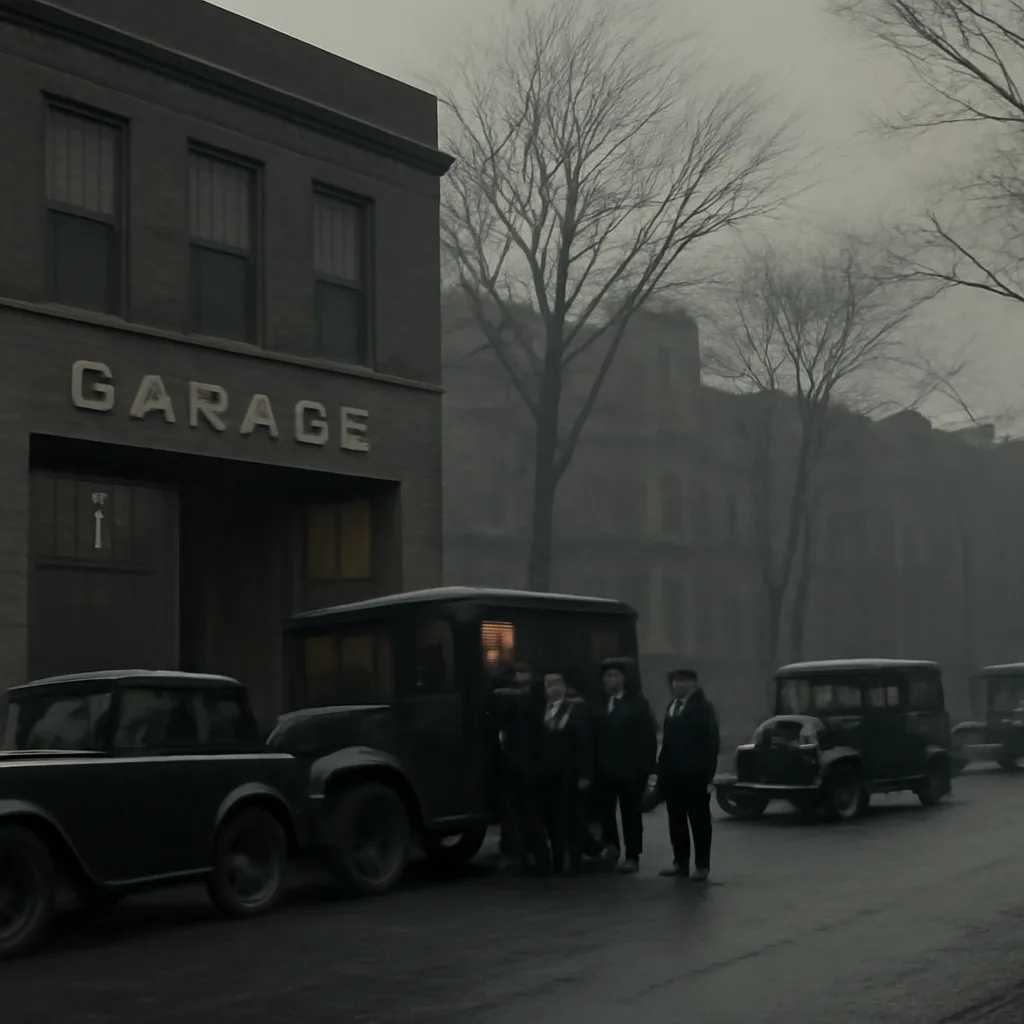
Exterior view of a 1920s brick automobile garage and street in Chicago, early morning, with a police wagon and uniformed officers outside; period cars parked on the street.

On February 14, 1929, seven men associated with Chicago’s North Side Gang were lined up and shot in a South Side garage in an execution that crystallized the city’s violent gang conflicts during Prohibition.


On the morning of February 14, 1929, seven men were found dead in a brick-lined garage at 2122 North Clark Street in Chicago’s Lincoln Park neighborhood. The victims were associates and employees of George “Bugs” Moran’s North Side Gang; several were unarmed and some were mechanics or drivers who worked at the garage. Police concluded that the men had been lined up against a wall and shot at close range in what became known as the St. Valentine’s Day Massacre.

The crime occurred during the height of Prohibition, a period in which illegal manufacture and distribution of alcohol empowered organized criminal groups. The leading suspects were gunmen associated with Al Capone’s Chicago Outfit, who were engaged in a bitter rivalry with Moran over control of bootlegging territory and rackets. Although popular accounts often portray Capone as the mastermind, no one was ever convicted for the killings. Investigations and contemporaneous reporting identified possible perpetrators, including men dressed as policemen who led the victims into the garage, but definitive proof tying Capone or specific individuals to the murders was not established in court.

The massacre had immediate and longer-term consequences. Public shock at the brutality—seven bodies, several of them riddled by .38-caliber and .45-caliber bullets—intensified scrutiny of organized crime in Chicago and nationally. The episode helped shift public opinion, contributing to increased federal efforts to investigate and prosecute organized-crime networks. Within the underworld, the slaughter weakened Moran’s organization and altered the balance of power, even though his gang survived for a time.

Investigations encountered obstacles. Forensic methods of the era were limited; witnesses were often unwilling to cooperate amid fears of reprisal; and police corruption and the complex, insular nature of mob networks hindered prosecutions. Some historians and investigators have argued that the killers used police uniforms to gain access and to reduce resistance, while others caution that elements of the original reporting were exaggerated or misremembered in later retellings.

The St. Valentine’s Day Massacre became a potent symbol of Prohibition-era violence and organized crime. It entered popular culture through newspapers, books, and later films, shaping the public image of the gangland 1920s. While many myths and dramatic reconstructions have grown up around the event, the basic, documented facts are clear: seven men connected to the North Side Gang were executed in a Chicago garage on February 14, 1929, and no one was ever successfully prosecuted for the crime.

Today the site and the massacre are remembered as part of Chicago’s history of organized crime and law enforcement struggles. Historians continue to examine primary sources—police reports, coroner records, newspaper archives and contemporaneous testimony—to refine understanding of who planned and carried out the killings and how the event affected subsequent criminal and legal developments in the city.

Share this

Email Share on X Facebook Reddit

Did this surprise you?