
← Back
06/26/1960 • 4 views

Televised U.S. presidential debate airs for first time
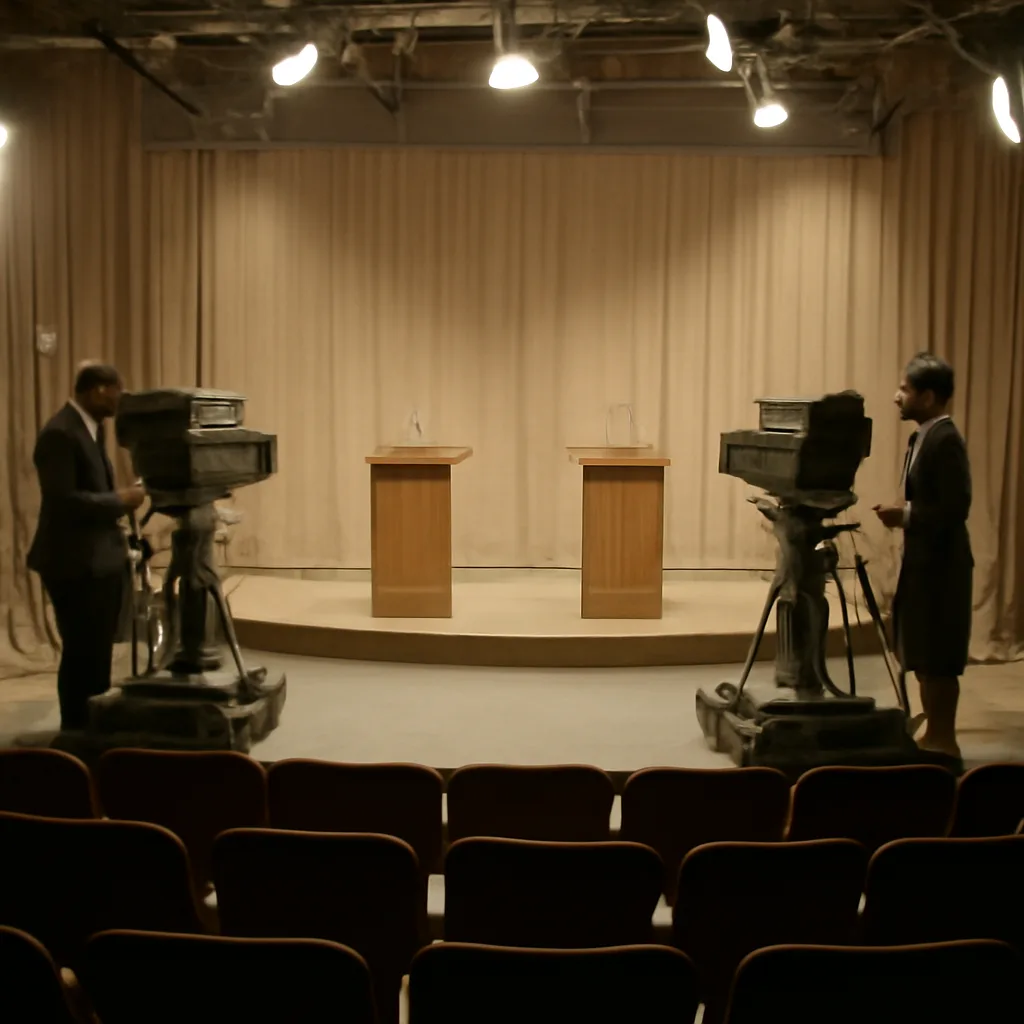
A mid-20th-century television studio set with podiums and microphones on a stage under studio lighting; an empty audience area and broadcast cameras visible, representing a 1960 presidential debate setting.

On June 26, 1960, the first-ever televised U.S. presidential debate was broadcast, bringing the candidates into American living rooms and altering campaign communication by privileging visual presentation alongside policy arguments.


On June 26, 1960, the United States witnessed its first-ever televised presidential debate: a landmark moment in political communication that reshaped campaigns by placing candidates’ appearances and delivery on nearly equal footing with their arguments. The debate was part of a series of four meetings between Senator John F. Kennedy, the Democratic nominee, and Vice President Richard Nixon, the Republican nominee, during the 1960 presidential campaign. These debates marked the first time presidential hopefuls agreed to face one another on television, reflecting the medium’s rapid rise in American households during the 1950s.

The debates took place against a tense Cold War backdrop and amid vigorous domestic debates about civil rights and economic policy. Television was quickly becoming the primary source of news for many Americans, and broadcasters and political operatives recognized the medium’s power to shape perceptions. The June 26 debate—typically identified as the first in the series—was organized under rules negotiated by the campaigns and participating networks. It featured opening statements, timed answers to questions, and rebuttals. The format emphasized direct engagement with policy topics but also allowed television viewers to judge candidates’ composure, health, and charisma.

Contemporaneous accounts and later scholarship emphasize how visuals influenced public reception. Observers reported that Kennedy appeared tanned, rested, and confident on camera, while Nixon, who had recently been hospitalized and declined makeup for part of the broadcast, looked paler and perspired under studio lighting. Those differences in on-screen appearance contributed to immediate popular impressions and are widely cited by historians as a factor in how viewers—especially those watching on television—evaluated the candidates. At the same time, listeners who experienced the event via radio often judged Nixon more favorably or saw the debate as more even, underscoring how medium shapes perception.

The 1960 televised debates did not create new political issues, but they changed the tactical landscape of campaigns. Candidates and advisers increasingly prepared for camera presence, wardrobe, and stagecraft in addition to policy positions. Media organizations refined live-broadcast techniques, and political communication scholars began studying the interplay among image, rhetoric, and voter behavior. The debates also accelerated the expectation that presidential contenders would participate in live, head-to-head public encounters.

Historians debate the extent to which the debates alone determined the 1960 election outcome. While many attribute some of Kennedy’s advantage to his televised performances, other factors—regional politics, voter turnout, campaign organization, and narrow margins in key states—also played decisive roles. Still, the June 26 debate remains a pivotal moment in U.S. political history because it institutionalized television as a central arena for presidential campaigning and set precedents for future debates, media strategy, and voter expectations.

The legacy of the 1960 debates is visible in every subsequent presidential campaign: televised debates continue to shape how candidates prepare, how media cover elections, and how voters weigh substance and style. Although the balance among those elements has shifted over time with new technologies and platforms, the June 26, 1960 broadcasts stand as the moment when television irrevocably entered the highest level of American electoral politics.

Share this

Email Share on X Facebook Reddit

Did this surprise you?