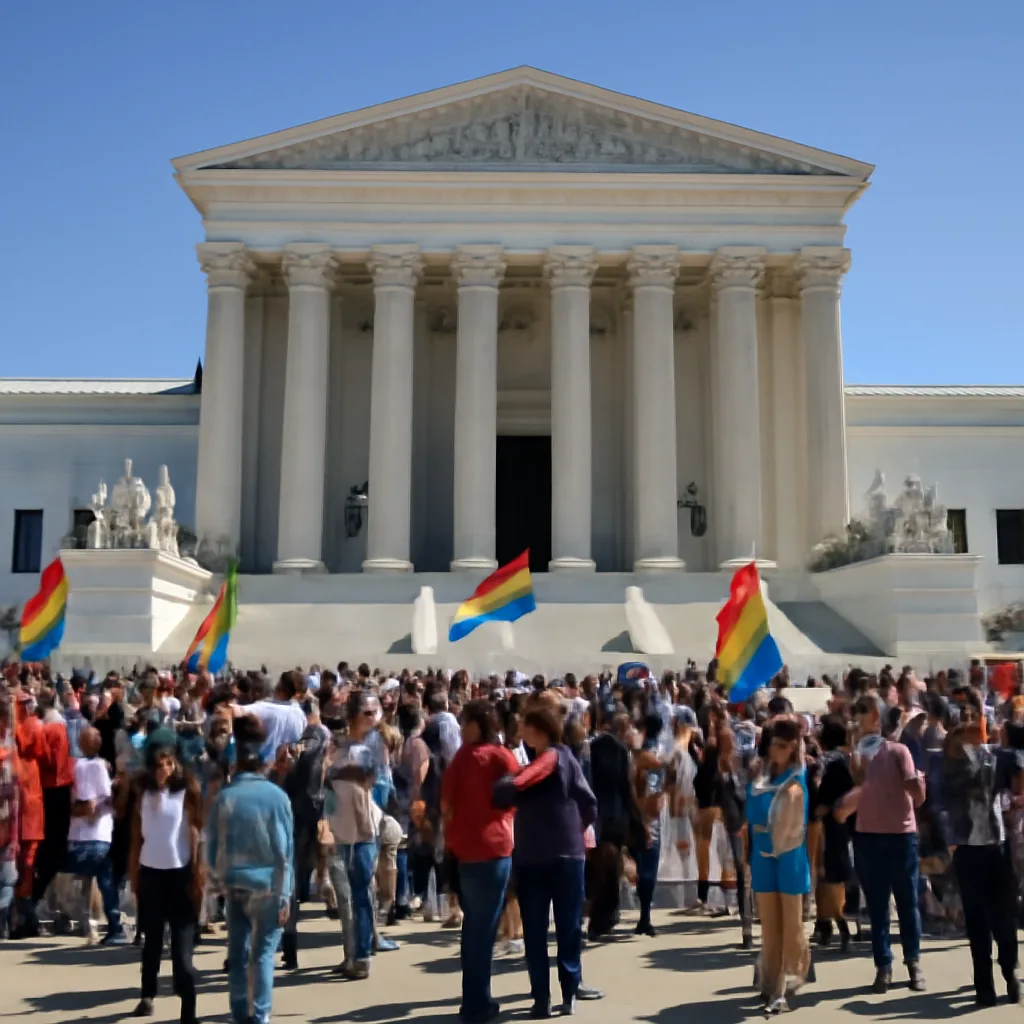
Supreme Court Ruling Legalizes Same-Sex Marriage Nationwide
On June 26, 2015, the U.S. Supreme Court ruled in Obergefell v. Hodges that same-sex couples have a constitutional right to marry, requiring states to both license and recognize marriages of same-sex couples.
On June 26, 2015, the United States Supreme Court issued a landmark decision in Obergefell v. Hodges, holding that the Fourteenth Amendment requires states to license marriages between two people of the same sex and to recognize such marriages lawfully performed out of state. The 5–4 opinion, written by Justice Anthony Kennedy, resolved a circuit split and extended the constitutional guarantees of due process and equal protection to same-sex couples seeking marriage.
Background: In the decades preceding Obergefell, the legal status of same-sex marriage in the United States evolved through state legislation, state court rulings, federal court decisions, and ballot initiatives. Some states had legalized same-sex marriage through court rulings or legislative action, while others had passed laws or constitutional amendments banning it. The federal Defense of Marriage Act (DOMA), enacted in 1996, had defined marriage for federal purposes as between one man and one woman; the Supreme Court in United States v. Windsor (2013) struck down Section 3 of DOMA, holding that it violated equal protection principles as applied to legally married same-sex couples for federal benefits.
The Cases: Obergefell consolidated several cases from Ohio, Michigan, Kentucky, and Tennessee in which same-sex couples challenged state laws and constitutional provisions that either barred same-sex marriage or refused to recognize same-sex marriages performed in other jurisdictions. Petitioners argued that the states’ actions violated the Fourteenth Amendment by denying same-sex couples the fundamental right to marry and by withholding recognition of marriages legally performed elsewhere.
The Opinion: The majority held that the right to marry is a fundamental liberty protected by the Due Process Clause of the Fourteenth Amendment and that the Equal Protection Clause forbids states from denying that right to same-sex couples. The opinion addressed historical and contemporary understandings of marriage, the personal and social dimensions of the institution, and the harms imposed by excluding same-sex couples from marriage. The Court ordered that states must both issue marriage licenses to same-sex couples and recognize same-sex marriages performed legally in other states.
Dissent: Four justices—Chief Justice John Roberts and Justices Antonin Scalia, Clarence Thomas, and Samuel Alito—dissented. Their dissenting opinions raised concerns about judicial overreach, argued that the Constitution does not address the issue directly and that it should be resolved through democratic processes, and warned of potential consequences for religious liberty and democratic governance.
Impact and Aftermath: Obergefell immediately changed the legal landscape across the United States. State officials were required to issue marriage licenses to same-sex couples and to recognize same-sex marriages solemnized elsewhere. The decision affected a wide range of legal areas tied to marital status, including taxation, inheritance, spousal benefits, parental rights, and access to health care and Social Security benefits. The ruling also intensified public and political debates about religious liberty and anti-discrimination protections, leading to subsequent litigation and legislative proposals at both state and federal levels addressing intersections between religious freedom and anti-discrimination law.
Scholarly and social responses varied: supporters hailed the decision as the culmination of decades of civil-rights advocacy and a advancement of equality under the law; critics viewed it as judicial activism that bypassed democratic processes. Subsequent legal developments have continued to test the balance between nondiscrimination principles and claims of religious exemption.
Significance: Obergefell v. Hodges is widely regarded as one of the most consequential Supreme Court decisions of the early 21st century, marking the nationwide recognition of same-sex marriage as a constitutional right. The ruling remains a central reference point in ongoing legal and societal discussions about equality, marriage, and the scope of constitutional protections.