01/09/1493 • 4 views
Columbus Mistakes Manatees for Mermaids
How myth, exhaustion, and sea cows created one of history’s most curious sightings

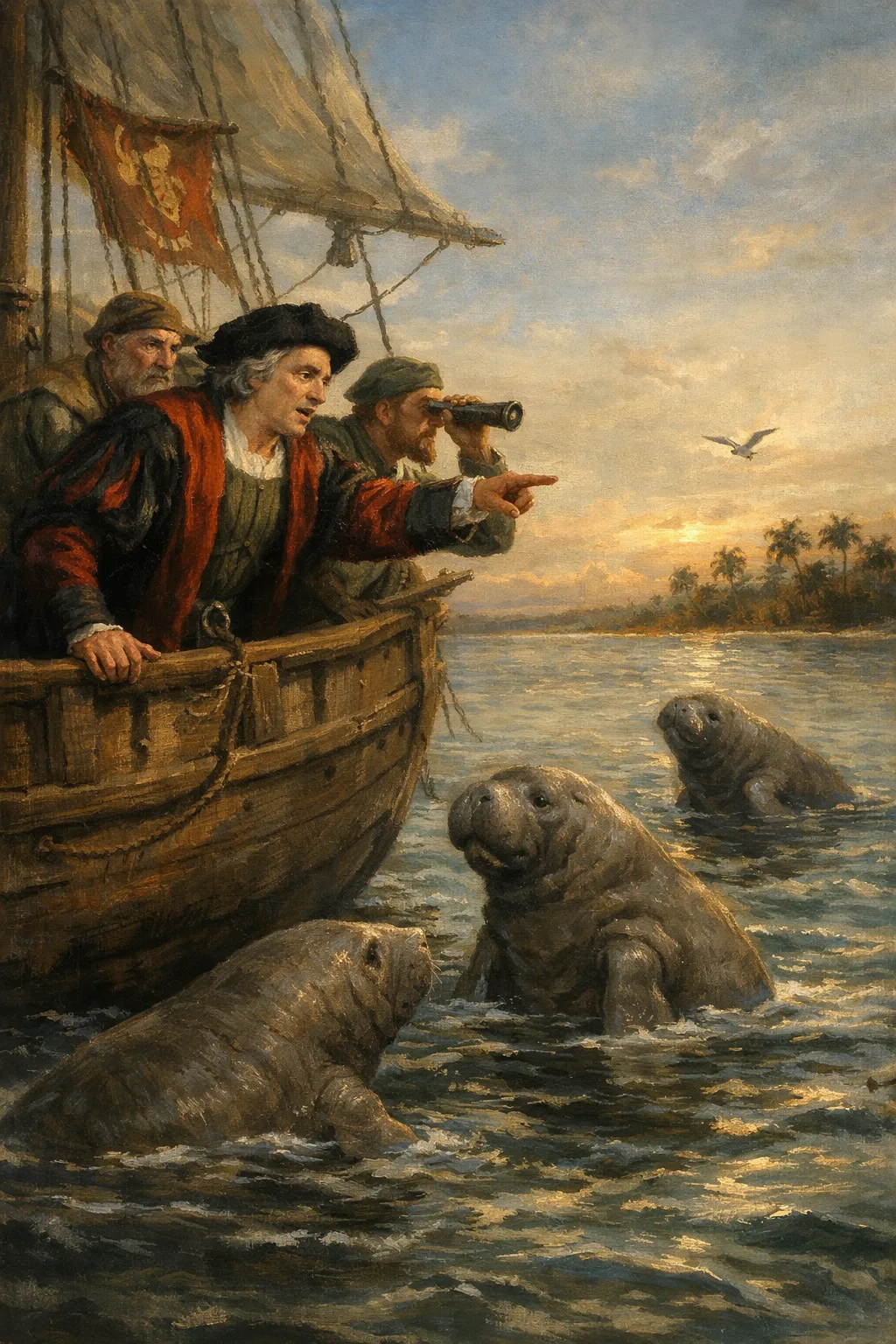
On January 9, 1493, while sailing near the Caribbean during the return leg of his first voyage to the New World, Christopher Columbus recorded a curious encounter in his ship’s journal. Rising from the sea, he claimed to see three mermaids swimming nearby. Yet even in his own account, something felt off. These creatures, he noted, were “not so beautiful as they are painted,” and their faces appeared oddly human.
What Columbus had actually seen were manatees — large, slow-moving marine mammals native to the warm coastal waters of the Caribbean. Though far removed from the elegant half-women of legend, these gentle animals would become forever linked to mermaid mythology because of that moment.
The Reality Beneath the Myth
Manatees are massive aquatic herbivores, often reaching 10 to 12 feet in length and weighing over 1,000 pounds. They have rounded heads, expressive eyes, and paddle-like flippers that they sometimes use to hold food or steady themselves in the water. When a manatee surfaces to breathe, it can lift its upper body just enough to suggest a vaguely humanoid silhouette — especially from a distance, in shifting light, and amid rolling waves.
To a modern observer, the confusion seems almost comical. But for 15th-century sailors, encountering an unknown sea creature in unfamiliar waters was fertile ground for imagination.
Why Columbus Believed What He Saw
Several factors likely contributed to the misidentification:
Cultural expectation: European sailors were steeped in legends of mermaids and sirens long before setting sail. These creatures were believed to inhabit distant oceans, and many explorers expected to find them.
Exhaustion and isolation: Months at sea, poor nutrition, and constant stress could distort perception and heighten suggestibility.
Lack of scientific reference: Europeans had never documented manatees before. With no framework to understand such animals, myth filled the gap.
Even so, Columbus’s own skepticism crept into his description. By noting their lack of beauty, he subtly acknowledged that these “mermaids” didn’t match the stories he had heard — a rare moment where legend and reality collided on the page.
A Widespread Nautical Illusion
Columbus was far from alone in this mistake. Similar sightings were reported by sailors across centuries and oceans. The confusion became so common that when scientists later classified manatees and dugongs, they placed them in an order called Sirenia, named after the sirens of ancient mythology. The name stands as a lasting reminder of how folklore shaped early understanding of the natural world.
From Myth to Conservation
Today, manatees are recognized not as enchanting sea maidens but as vulnerable marine mammals facing threats from habitat loss, pollution, and boat collisions. Their link to mermaids now serves as a historical curiosity — a reminder of humanity’s tendency to project imagination onto the unknown.
Columbus’s “mermaids” were never mythical beings. They were real animals, quietly grazing beneath the waves, miscast by a tired explorer guided by legend rather than science. Yet that single misinterpretation helped cement one of history’s most enduring and oddly charming maritime myths.