A Pioneering — and Controversial — Human Blood Transfusion Is Attempted
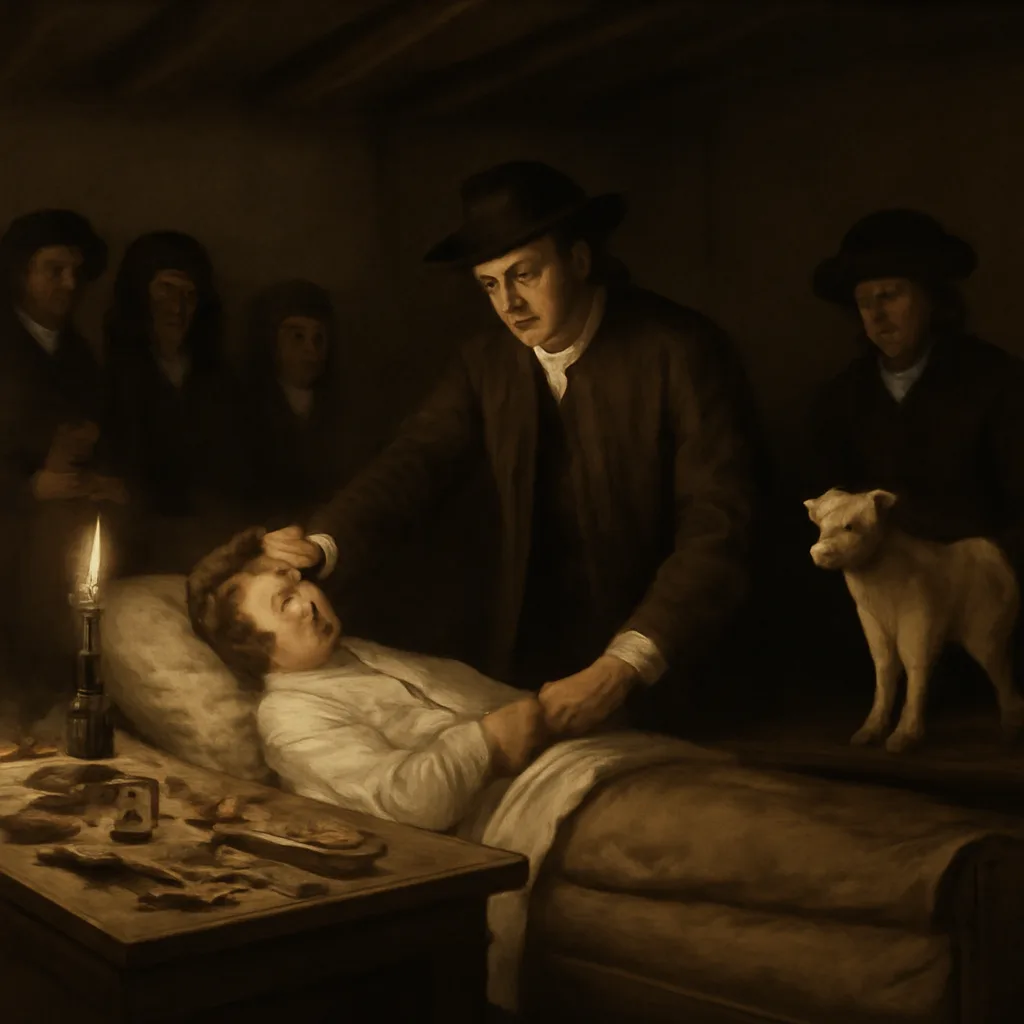
On January 9, 1667, French physician Jean-Baptiste Denis performed what is recorded as one of the first documented human blood transfusions, transferring animal blood into a patient amid scientific curiosity, medical debate, and ethical controversy.
On 9 January 1667, Jean-Baptiste Denis, a physician to the French royal household, carried out one of the earliest documented attempts to transfuse animal blood into a human patient. The procedure took place in Paris during a period of experimental investigation into the properties of blood and its supposed life-giving qualities. Denis — influenced by earlier animal-to-animal transfusions by Richard Lower in England and by broader seventeenth-century interest in experimental medicine — sought to apply those findings to human therapy.
Denis’s transfusions were part of a small series of experiments. Contemporary accounts indicate he used animal blood, most commonly that of lambs or calves, introduced via a direct vein-to-vein method. In the case traditionally associated with 9 January 1667, the recipient was a teenage boy reportedly suffering from feverish illness. Initial reports suggested the patient improved after the procedure, and Denis subsequently carried out additional transfusions on other patients, including adults.
These early transfusions occurred before an understanding of blood types, cross-matching, or the immunological reactions that modern medicine recognizes. At the time, physicians worked with limited physiological knowledge and relied on observational experimentation. Denis and his contemporaries debated both the scientific rationale and the proper indications for transfusion, with supporters citing apparent short-term benefits and detractors warning of risks and theological or moral implications.
The experiments quickly drew intense public and professional scrutiny. In England and France, medical practitioners and natural philosophers discussed the procedures in pamphlets, letters, and meetings. An important turning point came when a patient of Denis later died; critics connected the death to the transfusion, and official inquiries followed. In 1670 the French Parliament issued a ruling effectively banning transfusions of animal blood into humans, citing public safety and moral concerns. In England similar experiments waned as the risks and controversies became more widely recognized.
Historically, Denis’s work is significant because it marks an early attempt to move transfusion from animal experimentation into clinical practice. The trials exposed both the promise and the hazards of intervening directly in the circulatory system. They also highlight the limits of seventeenth-century physiology: without knowledge of blood groups, microbial infection, or immune reactions, physicians could not predict compatibility or many adverse outcomes.
Modern readers should note that Denis’s transfusions used animal blood, not human-to-human transfusion as practiced today. The breakthroughs that made safe, routine human transfusion possible — including Karl Landsteiner’s discovery of ABO blood groups in 1901, improved sterile techniques, anticoagulants, cross-matching procedures, and blood-storage methods developed during the twentieth century — came centuries after these early experiments.
Scholars continue to discuss Denis’s place in medical history. Some view him as an adventurous experimenter whose work advanced clinical inquiry; others emphasize the ethical and practical missteps of applying poorly understood techniques to vulnerable patients. The episode remains a vivid illustration of how medical innovation often proceeds through trial, error, controversy, and eventual refinement.
For historical context: contemporaneous scientific culture in the mid-1600s was marked by experimental societies, a growing emphasis on observation, and vigorous public debate about new methods. Denis’s transfusions fit into that milieu — a mix of empirical curiosity and contested authority — and foreshadow the long incremental path that eventually led to safe, lifesaving blood transfusion practices.