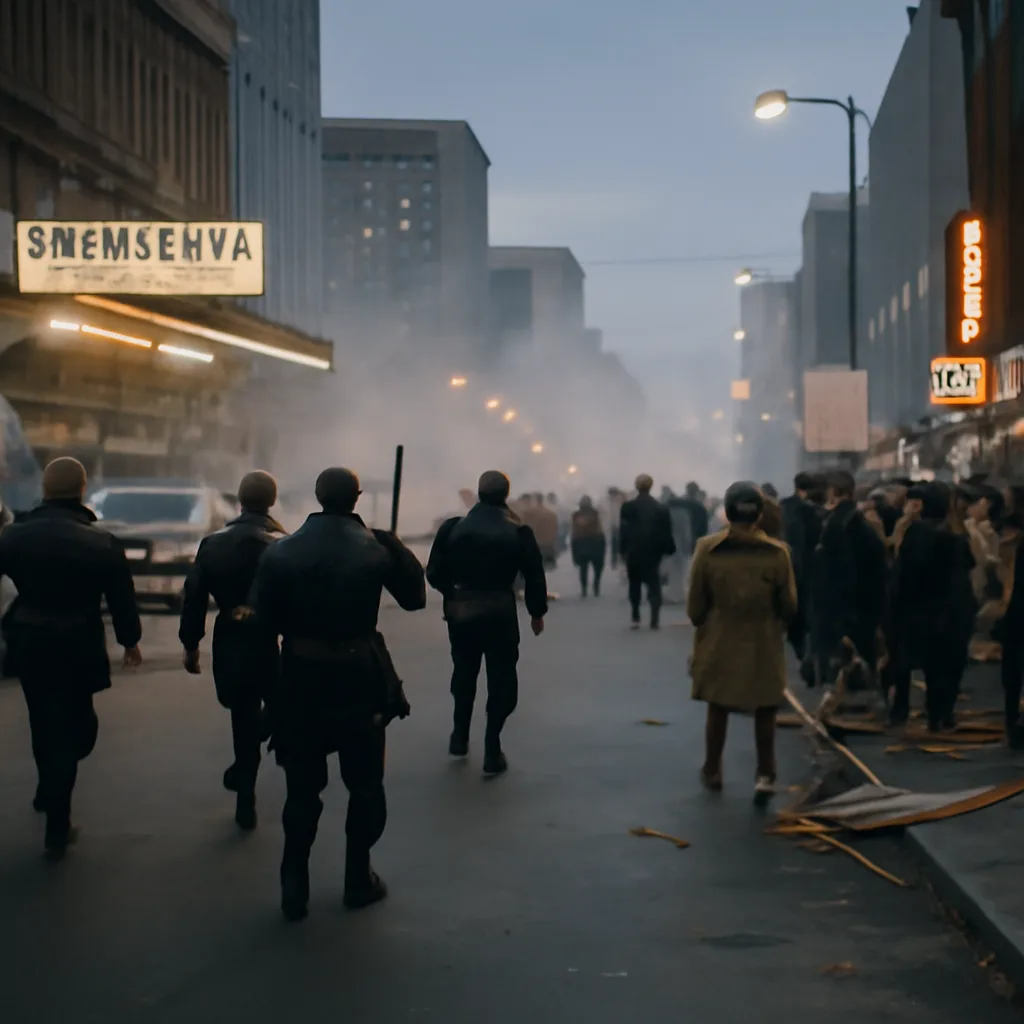
Chicago Police Clash with Protesters at 1968 Democratic Convention
On August 26, 1968, Chicago police violently confronted thousands of antiwar demonstrators and bystanders near the Democratic National Convention, a clash later criticized for excessive force and for its political ramifications.
On the evening of August 26, 1968, a large gathering of anti–Vietnam War protesters and counter-demonstrators converged on the streets around the International Amphitheatre and the Chicago Coliseum during the Democratic National Convention. City authorities, led by Mayor Richard J. Daley and the Chicago Police Department, sought to control demonstrations that had been planned for several days; tensions between police, demonstrators, and national political figures escalated into repeated physical confrontations.
Events that day formed part of a broader week of demonstrations in Chicago, where thousands of activists—organized by groups including the National Mobilization Committee to End the War in Vietnam (often called the Mobe), Students for a Democratic Society (SDS), and others—sought to protest the Vietnam War and the Democratic Party’s nomination process. The protests included marches, speeches, and attempts to assemble near convention sites. City officials declared many gatherings unlawful and imposed restrictions that protest organizers said constrained free assembly.
On August 26, law enforcement officers used force to break up crowds. Television and still photographs taken by journalists and independent observers recorded police beating protesters and, in some cases, bystanders. Protesters threw rocks, sticks, and other objects in some confrontations; police responded with batons, tear gas, and mass arrests. The violence occurred across multiple locations, including near the Amphitheatre and in the West Side neighborhoods through which demonstrators marched. Numerous attendees reported being pursued and struck by police even when not actively protesting.
The clashes produced dozens of injuries and hundreds of arrests; exact counts vary across contemporaneous reports. Coverage in national newspapers and on television brought vivid images of the street fighting into U.S. living rooms, prompting intense public debate. Many journalists and civil liberties groups criticized the Chicago police for what they described as indiscriminate and excessive force. City and federal inquiries later examined police conduct, crowd-control tactics, and the role of municipal and federal authorities in planning for the convention.
Politically, the confrontations damaged public perceptions of authority and the Democratic Party at a volatile moment. The violence at the convention highlighted deep national divisions over the war and the limits of dissent. The events intensified scrutiny of law enforcement practices at mass demonstrations and contributed to changes in police crowd-control policies in subsequent years.
Legal and investigatory responses followed. In the months and years after the convention, protesters, journalists, and civil liberties organizations pursued litigation and sought official investigations. Some prosecutions and legal actions produced settlements or findings related to police misconduct; other questions about decision-making and responsibility remained points of dispute among historians and participants. The 1968 Chicago confrontations have since been the subject of scholarly analysis, documentaries, and retrospectives that place them within the larger context of 1960s protest movements and institutional responses to dissent.
Today the August 26 clashes are widely cited as a defining episode of 1968’s political tumult: a moment when televised images of street violence shaped national debate about civil liberties, social protest, and governmental authority. While accounts differ on specific numbers and on judgments of intent, the broad outline—that Chicago police engaged in violent clashes with demonstrators during the Democratic National Convention—remains well documented in contemporary reporting and later historical studies.