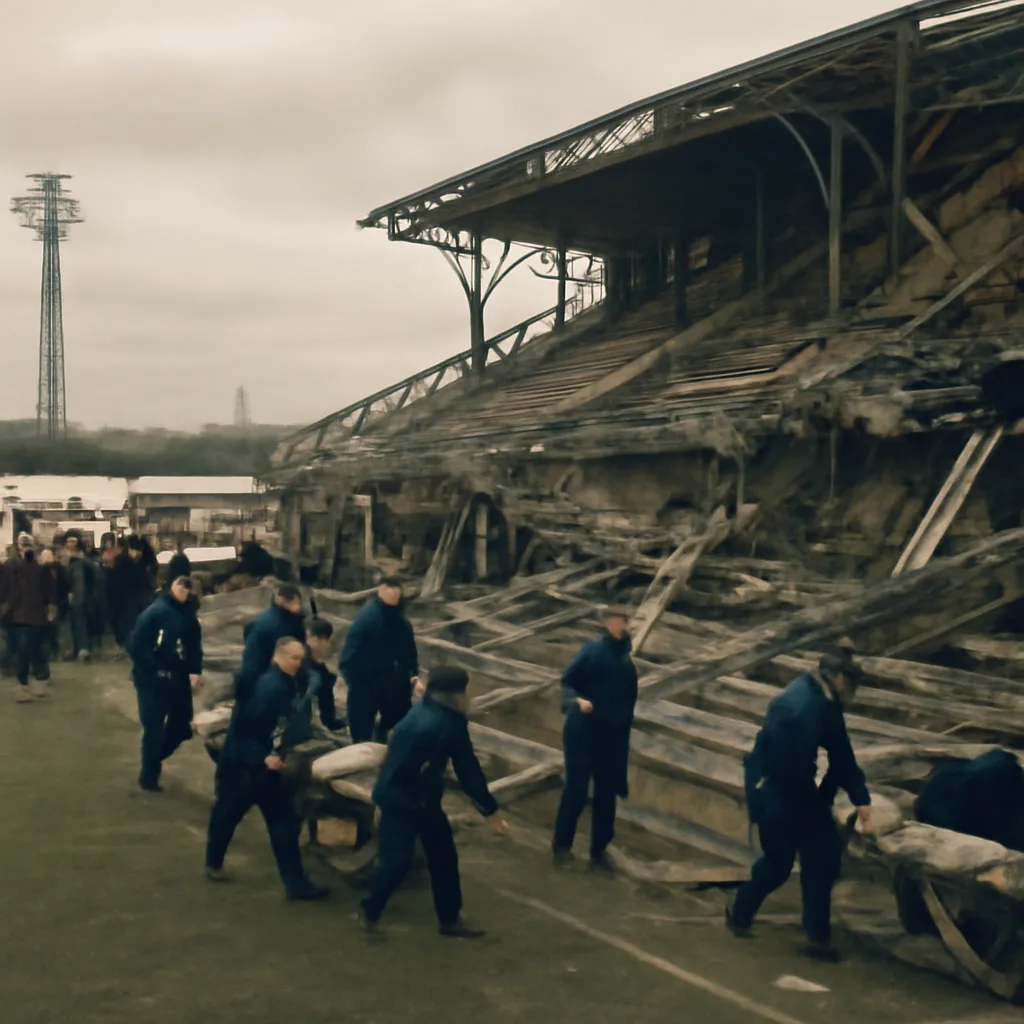
Stadium Stand Collapse Kills Dozens at May 24, 1964 Football Match
On May 24, 1964, a section of a football stadium collapsed during a match, causing dozens of fan deaths and numerous injuries. Investigations afterwards examined crowding, structural failure, and stadium maintenance practices.
On May 24, 1964, a catastrophic structural failure at a football stadium resulted in the collapse of a spectator stand during a match, killing dozens of fans and injuring many more. The event occurred in the context of mid-20th-century stadiums that often combined large crowds with aging or improvised stands and limited crowd-control measures.
Incident and immediate aftermath
Contemporary reports described a sudden failure of a stand while spectators were occupying it. Witnesses and emergency responders immediately focused on rescuing people trapped beneath decking and rubble and treating the injured. Local hospitals received a surge of casualties, and rescue operations continued for hours. Authorities established cordons and began securing the site; missing-person and fatality counts were updated as rescue and recovery proceeded.
Casualties and disruption
Official fatality and injury totals varied in initial accounts, but the incident was widely reported as causing dozens of deaths. Survivors included a range of ages; many victims were spectators in the part of the stand that failed. The disaster prompted an immediate suspension of the match and led to cancellations or postponements of other sporting events in the area while officials assessed safety.
Investigations and causes
Inquiries following the collapse examined several possible contributing factors: structural weakness in the stand, inadequate maintenance, overcrowding beyond design capacity, and the effects of dynamic loads caused by fans’ movement. Investigators and engineers inspected construction materials and design, maintenance records, and eyewitness testimony to determine whether the stand had been altered, repaired inadequately, or subjected to stresses beyond its intended limits.
Responsibility and public response
Authorities faced public pressure to determine responsibility and prevent further tragedies. If management, designers, or municipal inspectors were found negligent, criminal or civil proceedings were possible. The disaster also intensified scrutiny of stadium safety standards, crowd-control protocols, and inspection regimes—issues that were already gaining attention internationally as mass spectator events became more common.
Legacy and safety reforms
Stadium collapses and crowd disasters in the mid-20th century contributed to a gradual tightening of safety regulations, more rigorous building inspections, and improved emergency-response planning. Over time, lessons from such incidents influenced changes in stadium design (including material standards and load calculations), the use of all-seater arrangements in some countries, and legal frameworks for venue safety and crowd management.
Limits of the record
Contemporary accounts of the May 24, 1964 collapse vary in detail, and some specifics—such as the precise death toll, names of those responsible, or the full sequence of structural failures—may be inconsistently reported across sources. Where precise details are disputed or unavailable in reliable records, summaries emphasize the established facts: a stand collapsed during a football match on that date, resulting in the deaths of dozens and prompting investigations and calls for improved stadium safety.