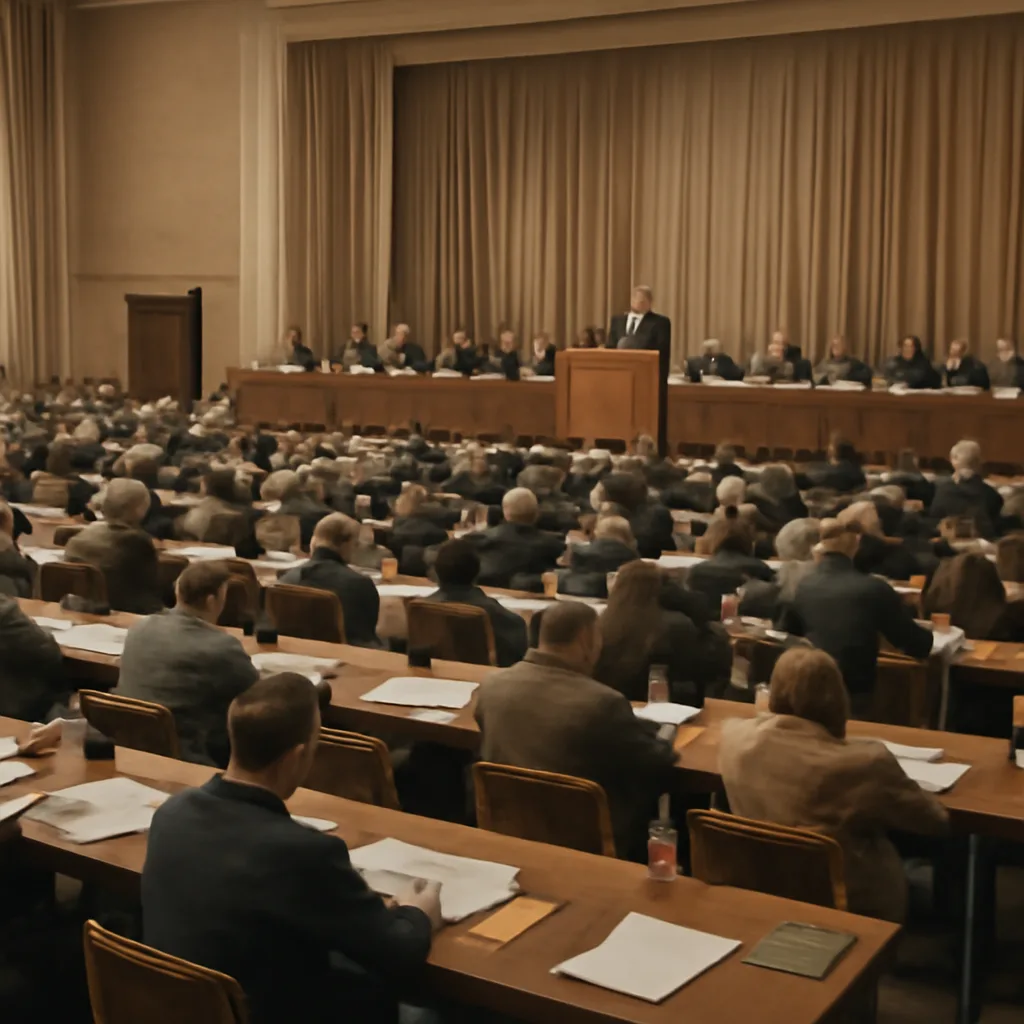
United Nations Charter Adopted at San Francisco Conference
On June 26, 1945, delegates at the United Nations Conference on International Organization in San Francisco adopted the UN Charter, creating the foundational legal framework for the United Nations and setting principles for postwar international cooperation and collective security.
On June 26, 1945, representatives of 50 Allied nations meeting at the United Nations Conference on International Organization in San Francisco formally adopted the United Nations Charter. The Charter established the United Nations (UN) as a successor to the League of Nations in purpose if not structure, providing a legal and institutional framework intended to prevent future global conflicts, promote human rights, and foster international cooperation on economic, social, and humanitarian issues.
The San Francisco conference convened from April 25 to June 26, 1945, with participants drafting and negotiating the text of the Charter based on earlier agreements reached at the Dumbarton Oaks discussions (August–October 1944) and the Yalta Conference (February 1945). Delegates debated the composition and powers of principal organs, including the General Assembly, the Security Council, the Secretariat, the International Court of Justice, the Economic and Social Council, and trusteeship arrangements. Key issues included the veto power afforded to the five permanent members of the Security Council (the United States, the Soviet Union, the United Kingdom, China, and France), voting procedures, and the scope of UN authority in maintaining international peace and security.
Adoption of the Charter did not mark the immediate birth of the organization; the Charter required ratification by the signatory states. The Charter stipulated that it would come into force upon ratification by the signatories, including the five permanent members of the Security Council. Ratification proceeded rapidly: a sufficient number of countries ratified the Charter in the summer of 1945, and the United Nations officially came into existence on October 24, 1945, the date now commemorated annually as United Nations Day.
The Charter’s preamble and articles articulated principles that would guide the UN’s work: respect for sovereign equality of all its members, peaceful settlement of disputes, non-use of force except in certain circumstances, cooperation to solve international problems of an economic, social, cultural, or humanitarian character, and the promotion and encouragement of respect for human rights and fundamental freedoms. Over time, the UN system expanded beyond the Charter’s original institutions to include numerous specialized agencies, programs, and treaties, though the Charter remains the organization’s constitutional foundation.
Historians note both the achievements and the limits of the Charter as enacted in 1945. The inclusion of veto power for the permanent Security Council members reflected wartime realities and great-power compromises; it has been criticized for enabling geopolitical deadlock, particularly during the Cold War and in later conflicts. At the same time, the UN under the Charter has provided forums for diplomacy, peacekeeping operations under Chapter VI and Chapter VII mandates, a platform for decolonization and development, and legal instruments that shaped postwar international law.
The adoption of the Charter at San Francisco marked a pivotal moment in mid-20th-century international order: a collective attempt by victorious wartime powers and their allies to build institutions aimed at preventing another global war and managing an interdependent world. The Charter endures as a living document whose interpretation and application have evolved through practice, amendment, and the work of the UN membership over subsequent decades.