
06/26/1948 • 5 views
Berlin Airlift Begins: Allied Planes Lift Blockaded City
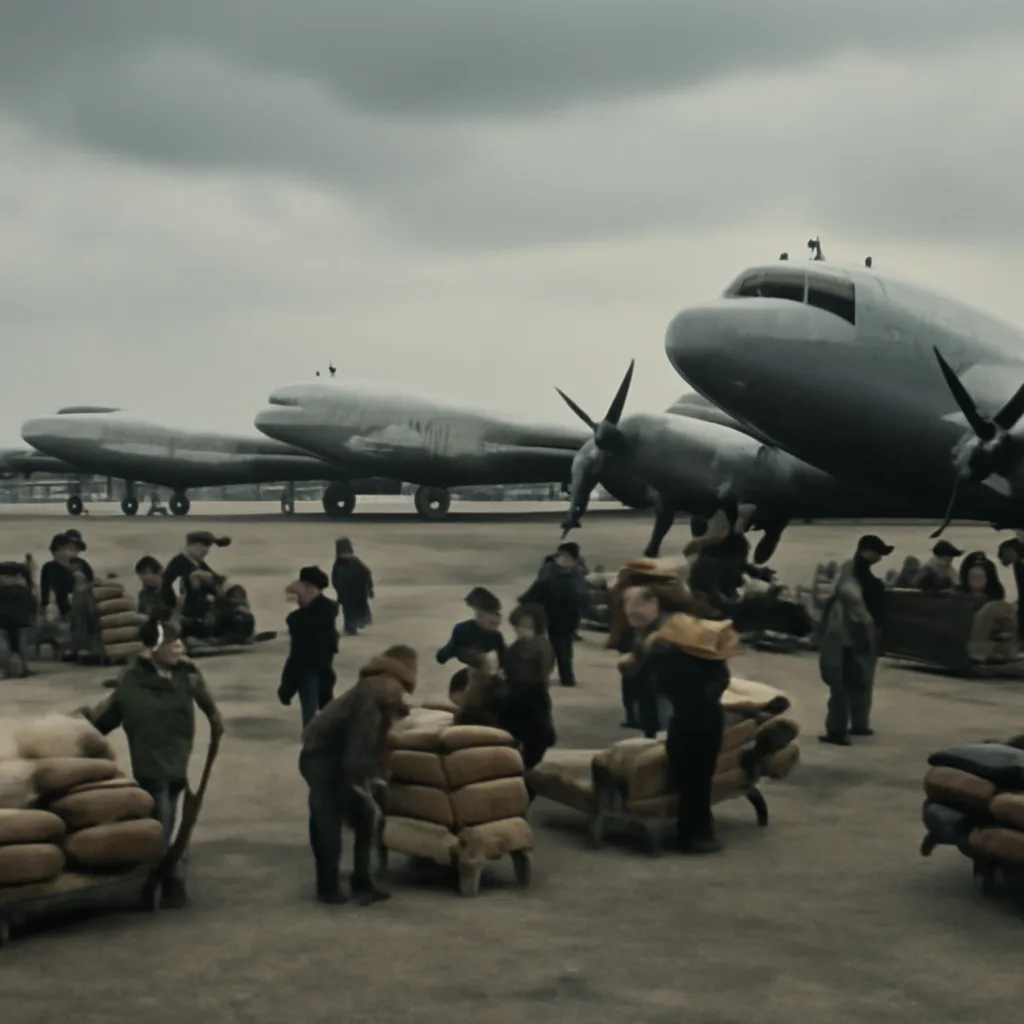
On June 26, 1948, British and American aircraft began sustained supply flights to West Berlin after Soviet authorities blocked ground routes; the operation marked the start of a year-long effort to sustain the city's two million residents by air.
In the months after World War II, defeated Germany was divided into four occupation zones managed by the United States, the United Kingdom, France and the Soviet Union. Berlin, located deep inside the Soviet sector, was itself divided among the four powers. Tensions over Germany’s political and economic future rose sharply in 1948 after the Western Allies moved to merge their zones economically and introduce a new currency, steps the Soviets viewed as threats to their influence in Germany.
The blockade
On June 24, 1948, Soviet authorities cut road, rail and canal access between West Berlin and the western occupation zones. With over two million people in the three Western sectors of the city reliant on supplies delivered by surface transport, the cutoff threatened food, fuel and coal deliveries essential for survival and heating.
The decision to airlift
Faced with the blockade, Western commanders and political leaders deliberated on responses ranging from forceful reopening of ground access to diplomatic protest. Rather than risk direct military confrontation, the United States and Britain chose to supply West Berlin by air. On June 26, 1948, the Berlin Airlift officially began when transport aircraft began sustained flights into the city’s airfields.
Scale and operations
The airlift required careful coordination among Allied air forces, especially the Royal Air Force and the United States Air Force, later joined by civilian and other national carriers. Cargo included food, coal, medicine and other essentials. Operations used Tempelhof, Gatow and Tegel airfields in Berlin; Gatow and Tempelhof were existing military and municipal fields, while Tegel was constructed rapidly by the French and British to increase capacity.
Aircraft flew continuous circuits, with arrivals timed in close succession to maximize throughput. Pilots and ground crews developed efficient loading, unloading and turnaround procedures. Weather, air traffic density and Soviet restrictions on air corridors presented ongoing challenges. At peak effort in 1949, aircraft were landing in West Berlin at intervals of under a minute.
Human impact and significance
The airlift sustained West Berliners through the harsh winter of 1948–1949, preventing the Soviets from forcing the Western powers out by deprivation. It became a symbol of Western commitment to defending access to Berlin and of the emerging Cold War divide between East and West. The operation also spurred logistical innovations and demonstrated the strategic value of air transport in humanitarian and military contexts.
End and aftermath
The Soviet blockade remained in place for nearly a year. On May 12, 1949, the Soviet Union lifted the blockade. The airlift continued in a reduced form for some months afterwards to build reserves and normalize supply lines. Politically, the blockade and airlift accelerated the consolidation of Western zones into what became the Federal Republic of Germany (West Germany) and contributed to the formation of NATO. It also left a lasting legacy in Berlin’s collective memory as an example of relief by air under duress.
Notes on sources and limits
This summary is based on widely documented historical records of the Berlin Blockade and Airlift. Specific operational figures (flight counts, tonnages) vary by source; this account focuses on the broadly agreed chronology and strategic significance without asserting disputed numeric detail.