
09/19/1991 • 4 views
Human Skull Found Embedded in Living Tree, Discovered Sept. 19, 1991
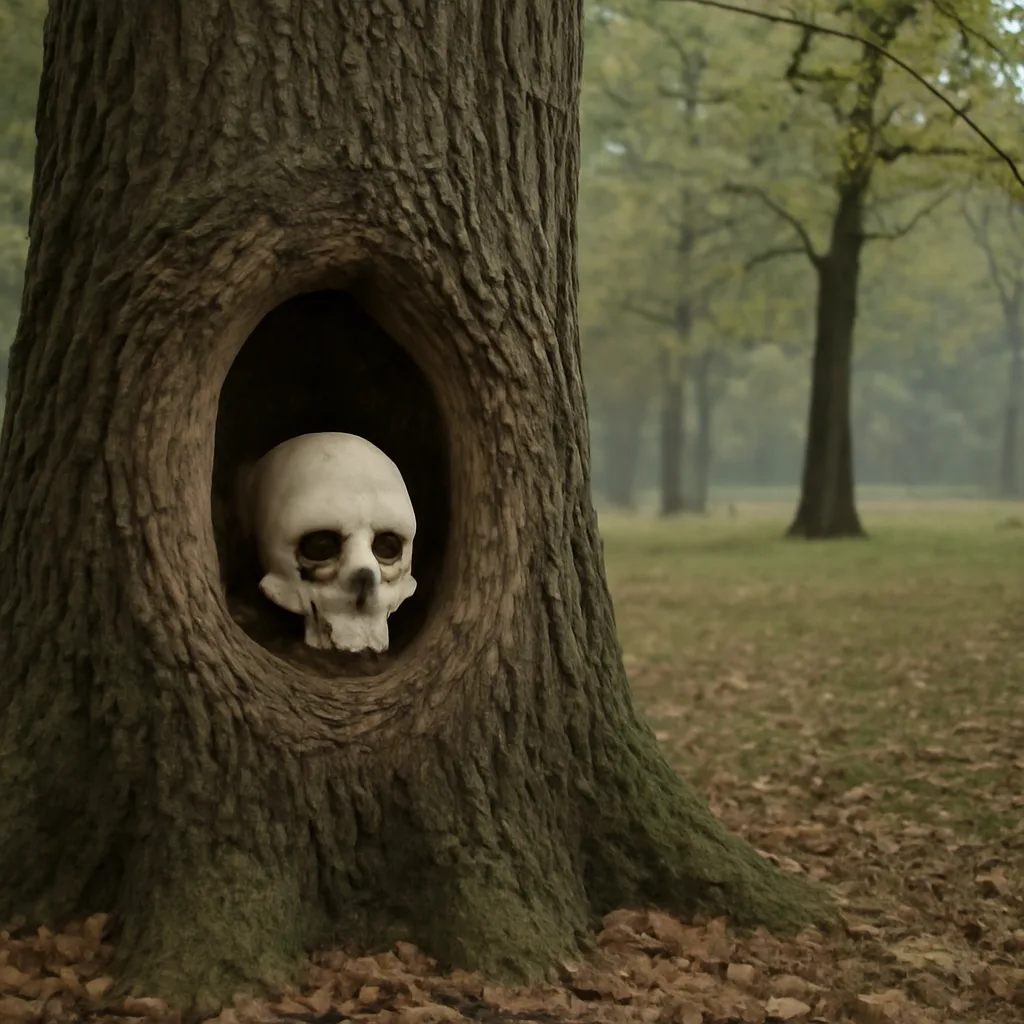
On September 19, 1991, a human skull was reported embedded within the trunk of a living tree. The discovery prompted local authorities and forensic investigators to examine how the remains came to be incorporated into the tree’s growth and to seek identification.
Initial response and investigation
Local law enforcement secured the site and notified forensic specialists and a medical examiner. Investigators documented the tree and skull in situ, photographed the scene, and removed the skull for laboratory analysis. Standard procedure in such cases includes searching the surrounding area for associated bones, personal effects, or signs of disturbance; conducting a forensic anthropological assessment of the remains; and attempting to estimate postmortem interval (time since death) using biological and environmental indicators.
Forensic analysis and limitations
A forensic anthropologist examines skeletal features to estimate age at death, sex, ancestry, and possible trauma. If the skull retained dentition, dental records could offer a route to identification. However, estimating how long a skull has been embedded in a tree is complex. Trees can grow around objects over years or decades; the rate and pattern of growth depend on species, local climate, and tree health. Dendrochronology (tree‑ring analysis) can sometimes indicate when a wound or inclusion occurred, but interpreting tree growth around a foreign object is not straightforward and can yield only approximate timelines.
Potential scenarios
Investigators consider several possibilities: the skull could have been part of human remains left against or near the tree and gradually enveloped by bark and wood as the tree grew; it could have been intentionally placed in a cavity or crevice and later became enclosed; or the skull might have been transported into the tree by natural processes such as animal activity or flooding. Each scenario carries different implications for determining whether the death was natural, accidental, or the result of foul play.
Context and historical precedents
Cases of human remains incorporated into trees have been documented in different regions and time periods. In some historical instances, remains became encased as trees grew around graveside items, or skulls were used decoratively on posts and later overgrown. Modern forensic science treats each case individually, combining osteological analysis with contextual evidence from the scene, records of missing persons, and, when possible, DNA testing.
Outcome and identification challenges
Identification depends on available comparative data (dental records, medical records, or family DNA) and the condition of the remains. If the skull is too degraded or lacks distinctive features, establishing identity can be difficult. Likewise, determining the date of death may remain imprecise if environmental and taphonomic indicators are ambiguous.
Public and legal follow-up
When human remains are found in public or accessible locations, law enforcement typically conducts a homicide investigation until evidence rules out criminal activity. Public communication balances transparency with the need to protect investigative details and family privacy. If a historical or archaeological context is suspected, agencies specializing in those fields may be consulted.
Uncertainties
Without access to investigation records, laboratory results, or official statements related to this specific September 19, 1991 discovery, details such as the skull’s age at death, cause of death, and whether it was ever conclusively identified remain uncertain. Published case reports and official records would be required to provide definitive answers.
Conclusion
A skull found embedded in a living tree presents complex forensic and interpretive challenges. Determining how long remains have been present, whether they resulted from crime or natural causes, and identifying the individual depend on careful scene documentation, multidisciplinary analysis, and available comparative records. In many such cases, some questions remain unresolved without further evidence.