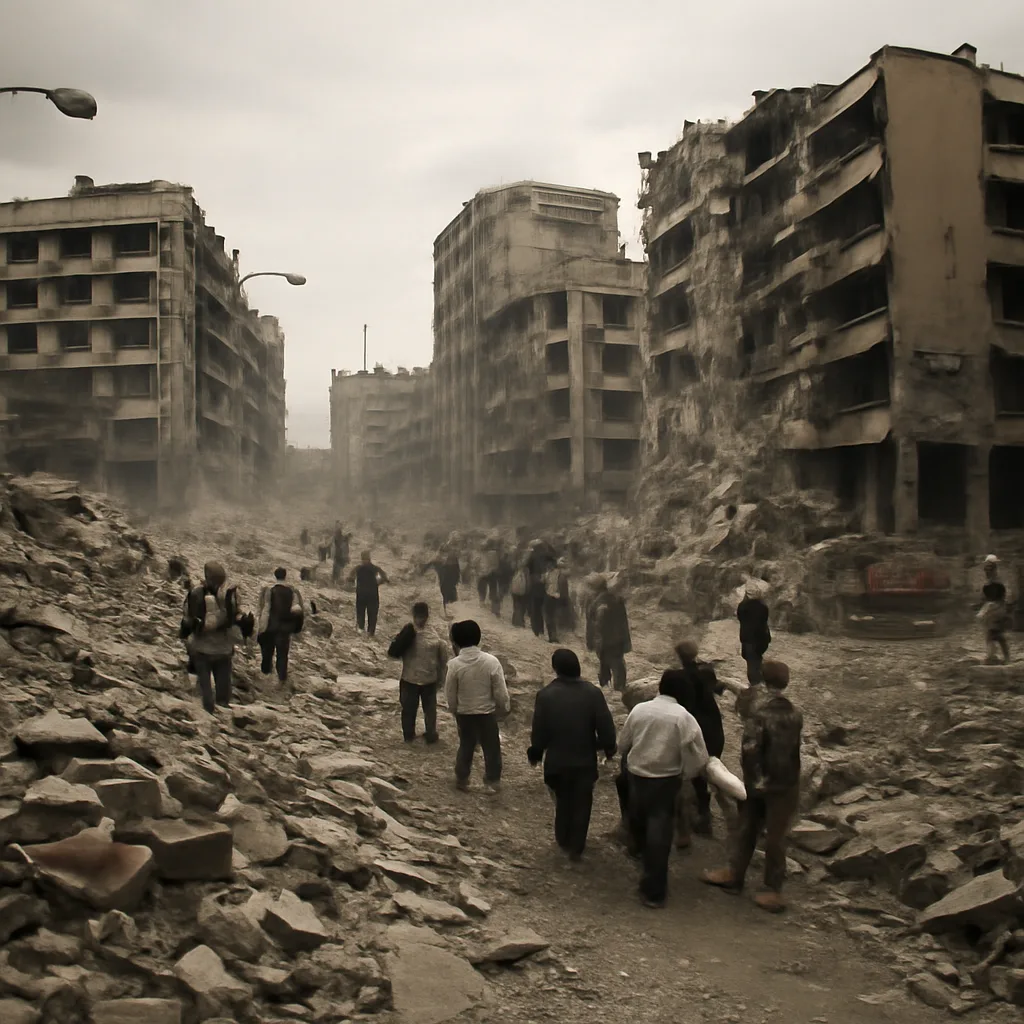
Massive 1985 Mexico City Earthquake Kills Thousands
On September 19, 1985, a powerful earthquake struck Mexico City, causing widespread building collapses, fires and infrastructure failure; official and independent estimates placed the death toll in the thousands and left large areas of the capital in ruin.
On the morning of September 19, 1985, a magnitude 8.0 earthquake (commonly reported as M8.0) struck off the Pacific coast of Michoacán and Guerrero and caused catastrophic damage across Mexico City. The quake occurred at 07:17 local time and, because of the basin-like geology of the Valley of Mexico, seismic waves were amplified as they traveled toward the capital, producing prolonged shaking that brought down buildings, ruptured utilities and ignited fires.
Extent of damage and casualties
Damage was concentrated in central and eastern districts of Mexico City, where soft lakebed sediments amplified the shaking. Whole apartment blocks, office buildings and hospitals collapsed or were severely damaged; many historic structures in the city center were also impaired. Fires broke out in several neighborhoods, and gas- and water-line ruptures hindered firefighting and rescue work. Communications and transportation networks were disrupted, compounding the emergency response.
Estimates of casualties varied. The Mexican government reported an official death toll of around 10,000 at the time, while some independent investigators and later analyses suggested numbers ranging from 5,000 to 20,000. Thousands more were injured and tens of thousands were rendered homeless. The discrepancy in figures reflected the chaotic conditions after the quake, difficulties in accounting for missing persons, and differences between immediate counts and later assessments.
Emergency response and civic mobilization
The immediate response combined government rescue efforts, military and civil defense operations, and massive grassroots mobilization. Neighbors and volunteers organized ad hoc rescue brigades that worked alongside professional teams to dig survivors from rubble, provide first aid, and distribute food and water. The earthquake galvanized a broad civic response: spontaneous fundraising, makeshift shelters, and volunteer search-and-rescue crews became central to relief work, while citizens also pressured authorities for clearer information and more effective aid distribution.
Political and institutional consequences
The earthquake exposed weaknesses in building regulation enforcement, emergency preparedness and municipal governance. Investigations and public scrutiny focused on construction practices, zoning on unstable lakebed soils, and the performance of regulatory and inspection bodies. The disaster influenced urban policy and led to reforms in building codes, emergency response planning and seismic monitoring over subsequent years.
Memorialization and legacy
The 1985 earthquake left a lasting imprint on Mexico City’s urban landscape, civil society and public memory. Annual commemorations on September 19 recall the lives lost and the solidarity shown during the crisis. The event also stimulated improvements in seismic monitoring, public education on earthquake preparedness and stricter construction standards aimed at reducing future risks. Debates about exact casualty figures and the adequacy of the official response remain part of historical discussion, reflecting the scale of the tragedy and its complex aftermath.
Notes on sources and uncertainties
Many contemporary and subsequent accounts agree on the date, time and general pattern of damage from amplified shaking in the valley. However, specific casualty counts have been disputed and reported differently by government, media and independent researchers; this summary reflects that range without asserting a single definitive figure.