
06/14/1883 • 5 views
Early documented outbreak of foodborne illness reported in 1883
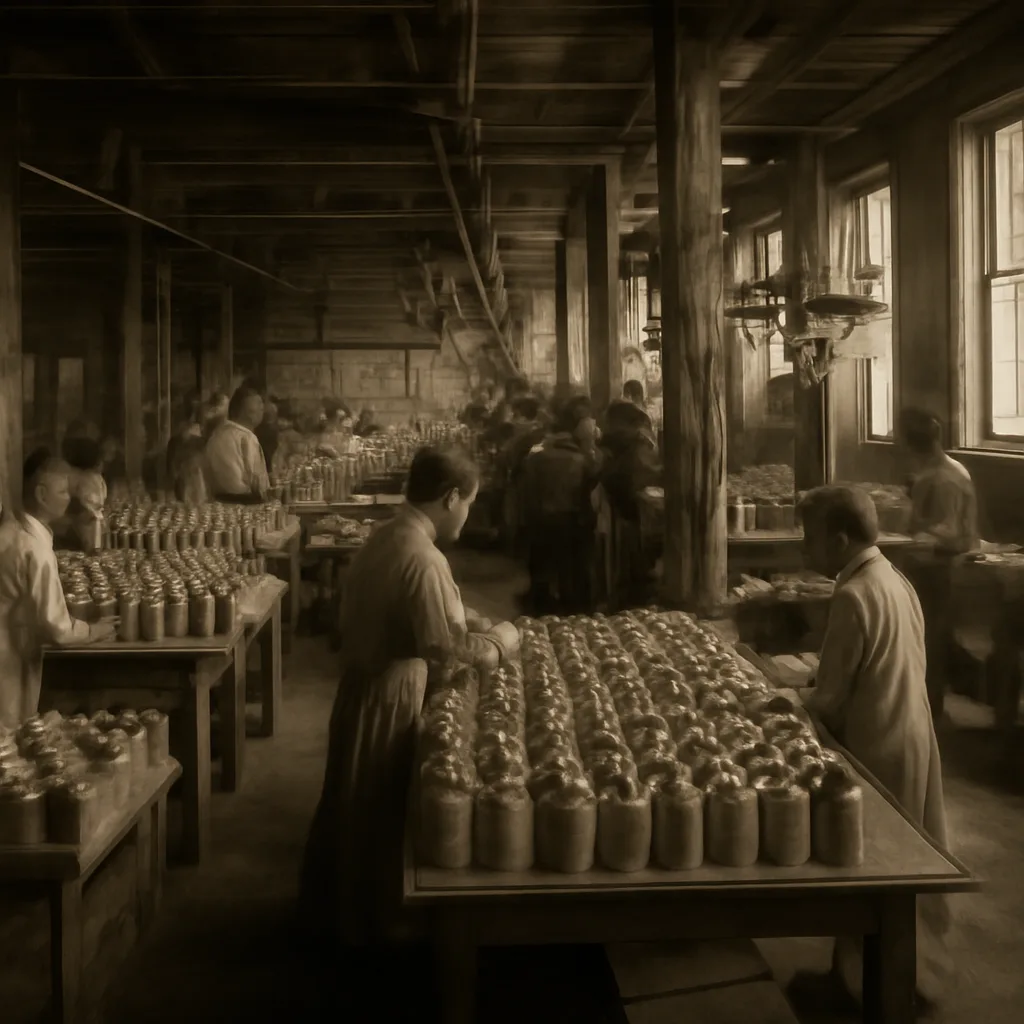
On June 14, 1883, physicians in Germany recorded an outbreak of acute gastroenteritis linked to contaminated canned food — one of the earliest recognized incidents of modern food poisoning tied to industrial food preservation.
Context
The 1800s brought major changes in food production and distribution. Canning, developed earlier in the century, became widespread by mid- to late-century, enabling long-term storage and transport of perishable items. However, canning techniques, sanitation standards, and understanding of microbial causes of disease lagged behind adoption. Foodborne illness could arise from inadequate cooking, contamination during processing, or toxins from microorganisms that survived preservation.
The 1883 incident
Contemporary medical reports and later secondary accounts identify an outbreak in June 1883 in which multiple individuals developed severe vomiting, diarrhea, and systemic symptoms after consuming the same commercially canned product. Physicians investigating the cluster noted the temporal association with the canned food and described spoilage signs in some containers. Laboratory bacteriology was an emerging field at the time; investigators could sometimes observe gross spoilage and putrefactive organisms but lacked the full microbiological tools and toxin assays available today.
Significance
This outbreak is significant for historians of public health and food safety because it illustrates the growing pains of industrialized food systems and the nascent efforts to trace illness to specific products. It contributed to awareness among regulators, manufacturers, and physicians that preserved foods could carry acute health risks. Over subsequent decades, improving canning techniques, sterilization practices, and regulatory oversight reduced many hazards, while microbiology and toxicology clarified specific causes such as Clostridium botulinum, Salmonella, and Staphylococcus aureus enterotoxins. (Botulism bacterium C. botulinum was identified later; early outbreaks like this predate full understanding of its role.)
Limitations and uncertainty
Contemporary reports did not always provide the level of laboratory confirmation modern readers expect. Names of investigators, detailed laboratory findings, and precise microbiological identifications are often absent or incomplete in primary accounts from 1883. Some later summaries generalize from multiple early outbreaks when tracing the history of foodborne disease, so attribution of any single etiologic agent to the 1883 event is uncertain. Historians rely on a combination of published medical notices, public health records, and later reviews to reconstruct these episodes.
Aftermath
Episodes such as the June 1883 outbreak helped spur gradual improvements: better canning practices, inspection regimes in factory settings, and the rise of municipal and national food safety authorities. Over time, the ability to isolate pathogens and detect toxins transformed both diagnosis and prevention of foodborne illness. While this particular 1883 event is one early documented case among others in the period, it remains a useful marker of the risks associated with the transition to mass-produced preserved foods and the parallel development of food hygiene and microbiological science.
For readers today, the episode underscores that many modern food-safety measures evolved in response to real-world harm documented in earlier eras. It also illustrates how advances in production can create new vulnerabilities that require scientific and regulatory responses to protect public health.