
← Back
06/14/1994 • 5 views

Thousands Flee Rwanda as Genocide Intensifies
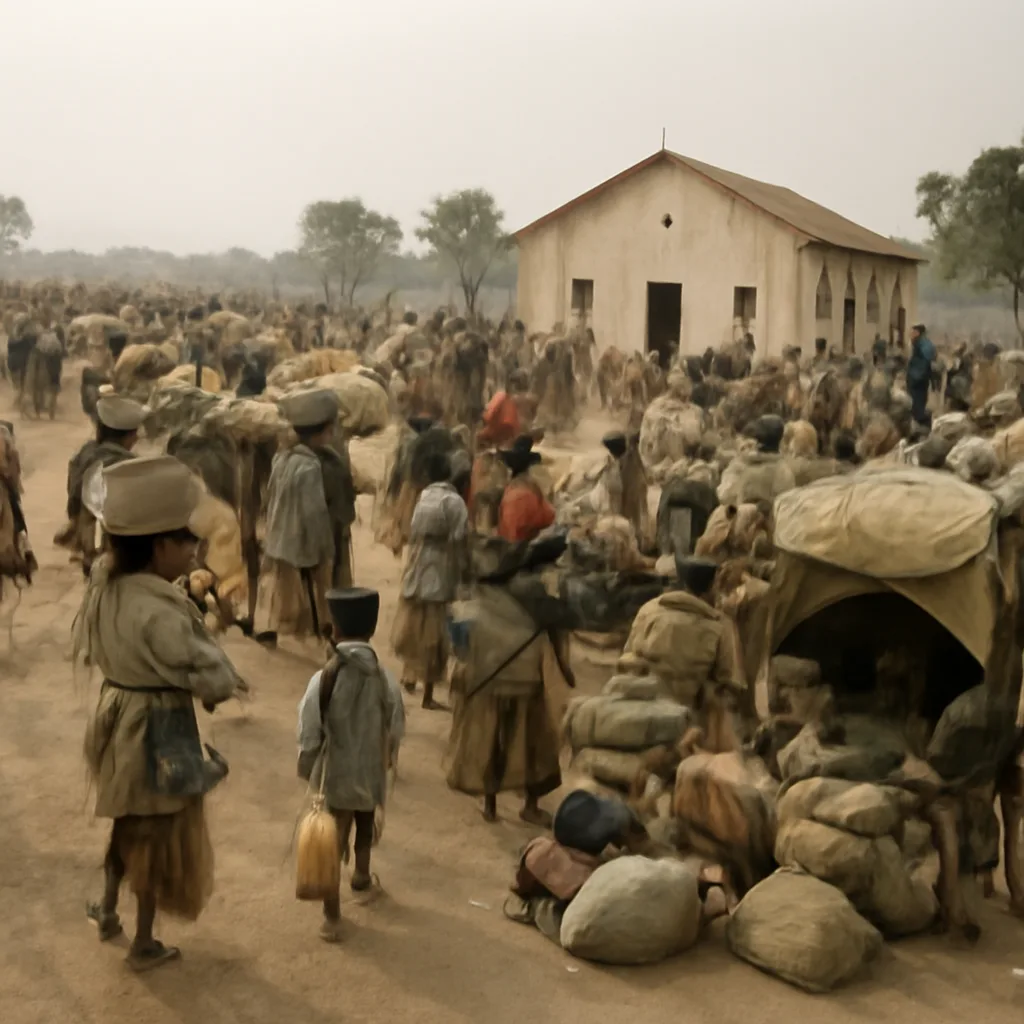
Crowds of displaced Rwandan civilians with belongings on a dirt road near a makeshift shelter area in mid-1994, surrounded by simple buildings and sparse vegetation.

In mid-June 1994, the mass killings and targeted violence in Rwanda accelerated, forcing tens of thousands of civilians to flee their homes across the country and into neighboring states amid collapsing order and limited international intervention.


By June 14, 1994, Rwanda’s genocide — which began after the April 6 assassination of President Juvénal Habyarimana — had entered a phase of intense, decentralized killing and widespread displacement. Government forces, allied militias such as the Interahamwe, and units of the Rwandan Armed Forces continued systematic attacks primarily targeting Tutsi civilians and Hutu opponents of the killings. The escalating violence through June prompted large population movements within Rwanda and across borders into Burundi, Tanzania, Uganda and the Democratic Republic of the Congo (then Zaire).

Patterns of violence in June 1994 included mass killings in towns and villages, summary executions at roadblocks, and attacks on people sheltering in churches, schools and other supposed sanctuaries. Local authorities and militias often coordinated or facilitated these assaults. The interim government that assumed power after the president’s death broadly tolerated—or in many instances directed—campaigns of ethnic cleansing. Meanwhile the Rwandan Patriotic Front (RPF), a mostly Tutsi rebel force advancing from the north, intensified its military operations to halt the massacres and seize territory, contributing both to shifts in front lines and to additional civilian displacement.

Humanitarian actors and the United Nations Assistance Mission for Rwanda (UNAMIR) faced severe constraints. Troop mandates, lack of resources, and restrictive rules of engagement limited their ability to protect civilians or prevent massacres. International response was widely criticized for being too slow and insufficient relative to the scale and speed of the killings. Humanitarian agencies struggled to reach populations trapped by fighting, and aid convoys were occasionally impeded by insecurity.

The flows of refugees and internally displaced people created acute humanitarian needs. Camps and impromptu settlements quickly formed around towns, transit points and border crossings, often lacking adequate shelter, clean water, sanitation, and medical services. The spread of disease, food shortages, and exposure compounded the immediate dangers faced by survivors. Women and children were particularly vulnerable to sexual violence, forced recruitment, and family separation.

Regional governments confronted difficult decisions as refugees arrived in large numbers. Some border crossings were overwhelmed, and the presence of armed elements among fleeing populations raised security and diplomatic concerns. International agencies called for expanded relief operations, safe humanitarian corridors, and increased protection for civilians, but the scale of displacement outpaced available resources.

By mid-June, reports from humanitarian organizations and journalists described Rwanda as fragmented by violence and mass flight. Exact death tolls and displacement figures were difficult to verify on the ground amid continuing hostilities; later investigations and subsequent historical research would document the genocide’s vast human cost. The events of June 1994 marked a critical and tragic intensification of a campaign that ultimately resulted in the deaths of an estimated 500,000 to 1,000,000 people during the spring and summer of 1994 and left deep regional consequences that persisted for decades.

Share this

Email Share on X Facebook Reddit

Did this surprise you?