
04/15/1896 • 6 views
Closing Ceremonies Mark End of the First Modern Olympic Games in Athens
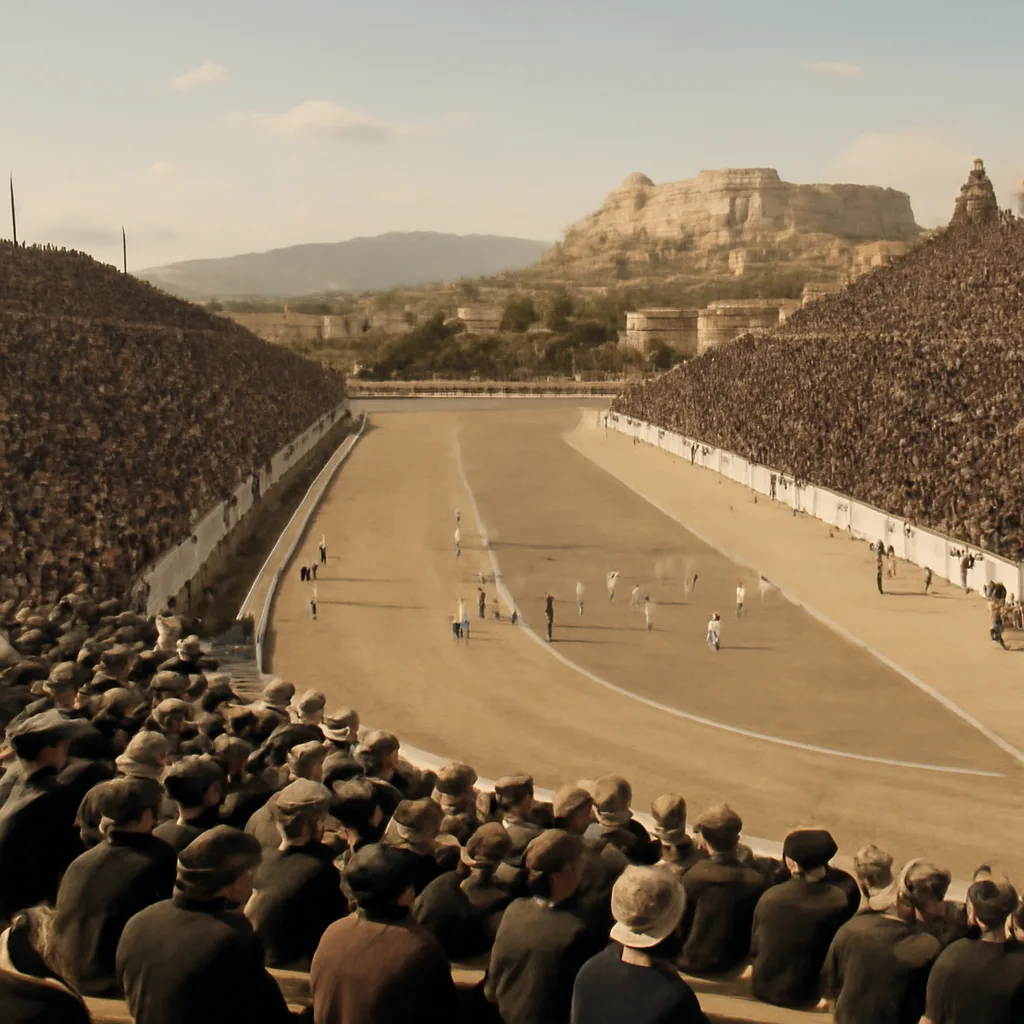
On 15 April 1896 the inaugural modern Olympic Games concluded in Athens, capping a nine-day program of athletics, gymnastics, wrestling and other events that revived the ancient festival under international organization.
Organization and context
The revival was driven by Pierre de Coubertin and supported by Greek officials who saw an opportunity to link contemporary Greece with its classical heritage. The IOC, formed in 1894, selected Athens as the host city for the first modern Games. Planning drew on local resources and on the recent restoration of the Panathenaic Stadium, a marble arena rebuilt for the occasion. Participation was modest by later standards: estimates count roughly 241 competitors from 14 nations, though contemporary records sometimes vary depending on how entries and national representations are tallied.
Events and participants
Events included track and field (athletics), gymnastics, cycling, fencing, swimming, weightlifting, wrestling and tennis. Some sports followed rules and formats specific to the organizing committees rather than standardized international codes used later. Notable moments included the marathon victory by Greek runner Spiridon Louis, which became a celebrated national triumph, and strong showings by athletes from countries such as the United States, Great Britain and Germany. Women did not compete; the 1896 program was restricted to male athletes.
Ceremony and public response
The closing on 15 April concluded a nine-day festival of competition and public ceremonies. Reports from the period describe enthusiastic crowds at the Panathenaic Stadium and considerable local interest. The success of the event in attracting international competitors and public attention encouraged the IOC and national organizers to consider the Games as a recurring international sporting festival.
Legacy and limitations
While widely hailed at the time as a successful revival, the 1896 Games also reflected the limitations of the era: smaller athlete fields, uneven international representation, and organizational practices that would be standardized only in later Olympics. The event helped establish the precedent of an international multi-sport competition held under IOC auspices, setting a foundation for the growth and institutional development of the modern Olympic movement in the 20th century.
Historiography
Historical accounts of the 1896 Games rely on contemporary newspapers, official reports by the organizing committee, personal memoirs of participants and later scholarly studies. Certain figures—such as exact competitor counts and national affiliations—are sometimes reported differently across sources; where totals are given here, they reflect commonly cited estimates rather than an uncontested official roster.
The closing on 15 April 1896 thus marked both an endpoint for the first modern iteration and a starting point for what would become a recurring global sporting institution.