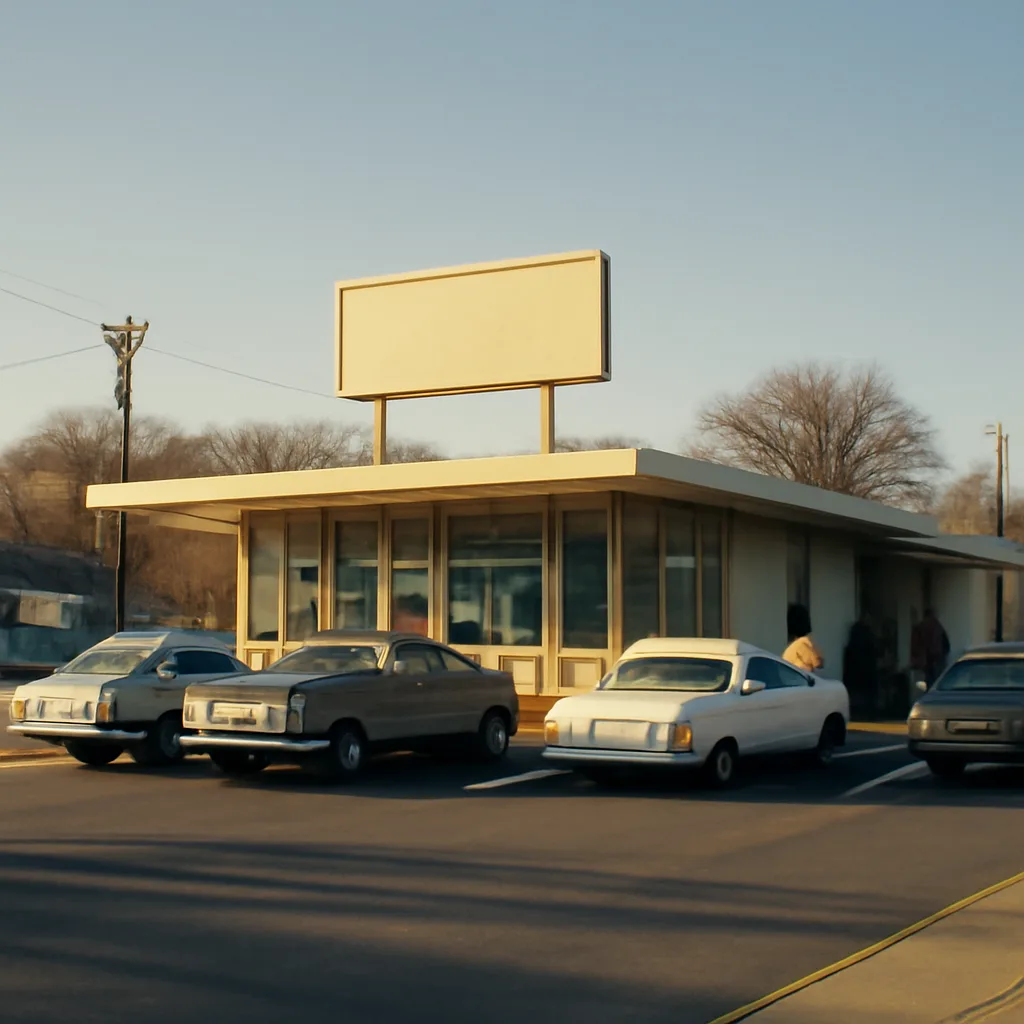
Ray Kroc Opens the First McDonald’s Franchise, April 15, 1955
On April 15, 1955, Ray Kroc opened the first McDonald’s franchise in Des Plaines, Illinois, marking the start of what became a global fast-food chain built on a standardized menu, assembly-line kitchen methods, and aggressive franchising.
On April 15, 1955, Ray Kroc opened the first McDonald’s franchise at 400 Lee Road in Des Plaines, Illinois. Kroc was a Multimixer milkshake-machine salesman who had encountered the original McDonald’s restaurant—owned and operated by brothers Richard and Maurice “Mac” McDonald—in San Bernardino, California. Impressed by the restaurant’s high-volume, streamlined operation and limited menu, Kroc negotiated franchise rights and set about expanding the concept nationwide.
The Des Plaines location was not the first McDonald’s restaurant ever (the McDonald brothers’ original in San Bernardino dated to the 1940s and their earlier operated stand in Monrovia, California, in the 1930s), but it is widely recognized as the first store in the McDonald’s Corporation franchise system that Kroc established. Kroc’s approach emphasized consistency: standardized food preparation, simplified menus (notably hamburgers, fries, and shakes), speed of service, cleanliness, and cost control. These principles allowed franchisees to reproduce the product and service reliably across locations, which became central to the brand’s rapid growth.
The Des Plaines restaurant used a drive-in and walk-up format typical of the era but incorporated the “Speedee Service System” developed by the McDonald brothers—a kitchen layout and workflow modeled on assembly-line efficiency. This system reduced wait times and labor costs, enabling lower prices and higher throughput. Kroc also promoted centralized purchasing, uniform training, and strict operational guidelines—practices that institutionalized franchising standards in the fast-food industry.
Kroc’s business practices and relationship with the McDonald brothers later became points of contention and legal dispute. In 1961, Kroc acquired exclusive rights to the McDonald’s name and operating system from the brothers for a sum that has been characterized as modest relative to the chain’s later value; the exact terms and fairness of the transaction have been debated by historians and commentators. The brothers continued to run their original San Bernardino location for some years before it closed; the Des Plaines site served as a model for subsequent franchise openings.
Under Kroc’s leadership, McDonald’s expanded rapidly through the 1950s and 1960s, transforming from a regional curiosity into a national—and later global—brand. The company’s growth coincided with postwar suburbanization, rising automobile ownership, and a cultural shift toward convenience dining. McDonald’s adaptations—such as menu variations, franchising incentives, and aggressive real estate and marketing strategies—helped it become a dominant player in the fast-food sector.
The Des Plaines building itself remained a point of historical interest. It closed as an operating McDonald’s in 1984 and was later preserved and converted into a museum by the Historical Museum of Des Plaines; the original building was ultimately demolished in 2018 and replaced by a replica museum structure nearby. The legacy of the April 15, 1955 opening lies less in a single storefront than in the business model and franchising methods that Ray Kroc popularized and scaled.
While accounts of the event and its significance are consistent on core facts—Kroc’s opening of the Des Plaines franchise on April 15, 1955 and his role in expanding McDonald’s—interpretations differ regarding credit, ethics, and cultural impact. Historians note both the chain’s influence on modern foodservice and criticisms related to labor practices, food quality, and corporate power. Those debates continue to shape how the 1955 opening is remembered: as a milestone in American franchising and consumer culture, and as the starting point for broader conversations about the fast-food industry’s social and economic consequences.