
04/15/1989 • 8 views
Hillsborough Stadium Disaster: 97 Fans Dead at FA Cup Semi-final
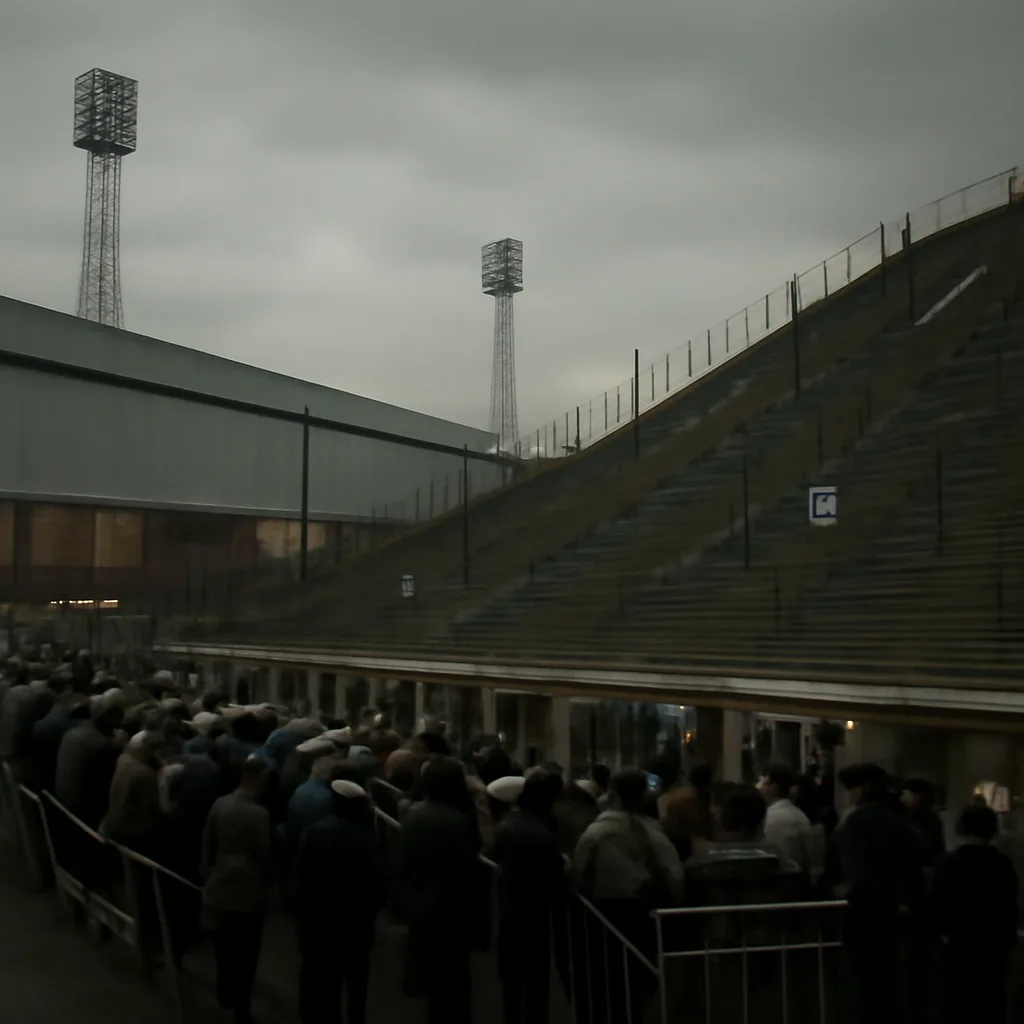
On 15 April 1989, a crush in the Liverpool vs Nottingham Forest FA Cup semi-final at Sheffield’s Hillsborough Stadium resulted in the deaths of 97 football supporters and hundreds injured, triggering major inquiries and lasting changes to British stadium safety.
The stadium’s layout, penning system, and limited entry points contributed to dangerously high densities. Police tactics that day — including directing large numbers of supporters into already crowded central pens via an open exit gate and failing to close the tunnel or redirect flows — were later identified as factors that exacerbated the crush. Stewards and emergency services faced access difficulties inside the pens, hindering timely rescue and medical response.
Immediate aftermath and early inquiries focused on fan behaviour and allegations of drunkenness and ticketless supporters. For years, official statements and some media coverage suggested fan misbehaviour played a major role. Families of the victims and campaigners consistently challenged those accounts, asserting that failures in stadium management and policing were primary causes.
A landmark turning point came with the Hillsborough Independent Panel report in 2012, which reviewed a vast archive of documents and concluded that policing failures and an inadequate match-day response were central to the disaster. The panel found, among other things, that emergency response was delayed, that there had been a failure to promptly declare a major incident, and that many emergency calls and medical needs were not adequately addressed.
The panel’s findings also revealed that senior South Yorkshire Police officers had altered or withheld documentation and that some official statements had been misleading. Those revelations led to fresh criminal investigations. Inquests that resumed after the panel’s report culminated in a 2016 jury conclusion that the 97 victims were unlawfully killed. The jury assigned primary responsibility to policing and emergency response failures rather than to fans in the stands.
The Hillsborough disaster prompted wide-ranging changes in British stadium safety. The 1990 Taylor Report, commissioned after the disaster, had earlier recommended conversion to all-seater stadia in the top tiers of English football and improvements in crowd management and stadium design; many of those recommendations were implemented and transformed match-day arrangements across the UK.
Beyond legal and regulatory consequences, Hillsborough had profound social and cultural impacts. The long campaign by victims’ families, notably the Hillsborough Family Support Group and the Hillsborough Justice Campaign, reshaped public understanding of the disaster and influenced media accountability. The case remains a reference point in debates about policing, public inquiry, institutional responsibility, and the rights of victims’ families to truth and justice.
Commemoration of the victims continues each year, with memorials at Anfield and Hillsborough, and the names of the deceased publicly remembered. The disaster’s legacy endures in stadium design, emergency planning, and ongoing scrutiny of how institutions handle major public-safety failures.
While official findings since 2012 have clarified many aspects of what went wrong, some families and observers continue to seek further accountability and questions remain about individual decisions on the day. Hillsborough remains one of the deadliest tragedies in British sporting history and a pivotal moment in modern British public-safety and policing history.