
← Back
04/15/1912 • 8 views

RMS Titanic Declared a Total Loss After Iceberg Strike
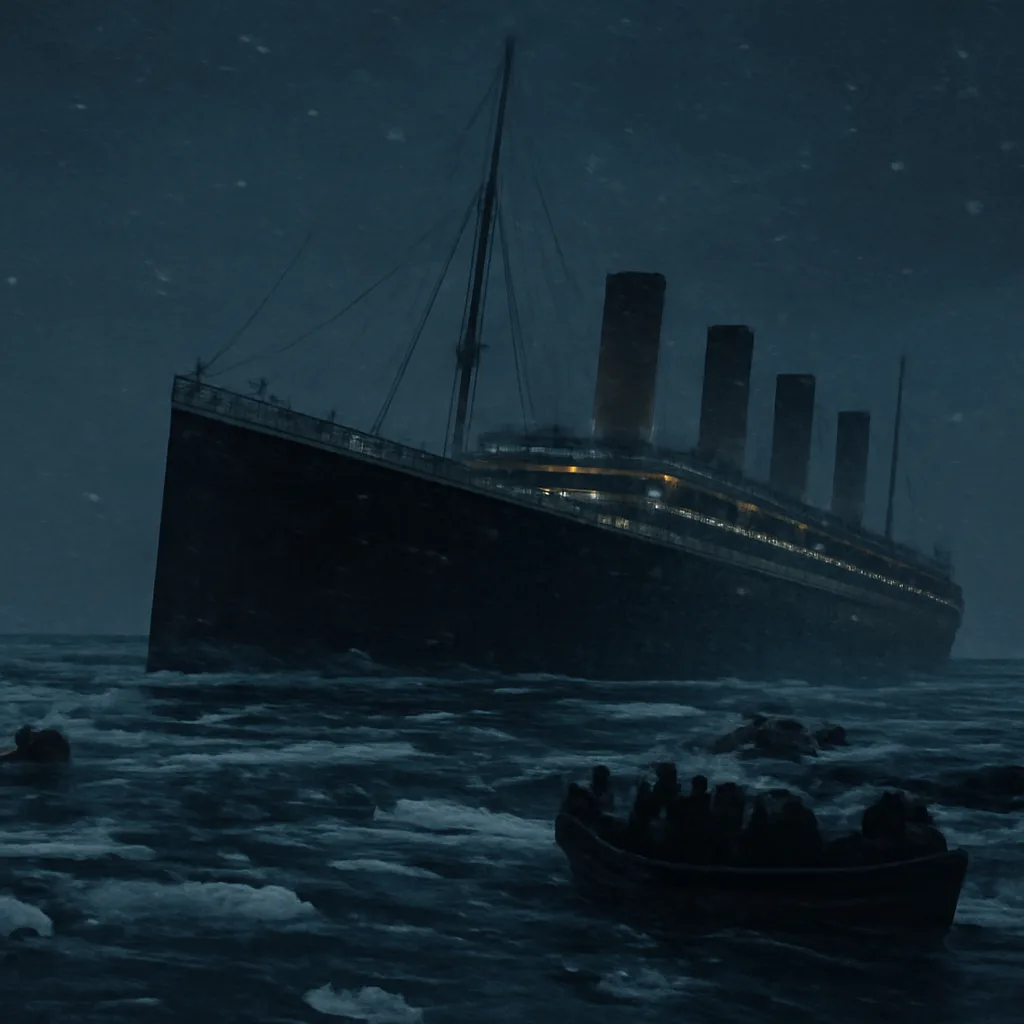
Nighttime scene of a large early 20th-century ocean liner stalled amid ice fields with lifeboats in the water and distant rescue ship lights; dark sea and sky reflect a cold North Atlantic setting.

On the night of April 14–15, 1912, the RMS Titanic struck an iceberg and sank in the North Atlantic; in the aftermath the ship was officially declared a total loss as salvage was impossible and lives were lost.


On the evening of April 14, 1912, the White Star liner RMS Titanic, on her maiden voyage from Southampton to New York, collided with an iceberg in the North Atlantic. The impact damaged multiple watertight compartments, and despite efforts by the crew to control flooding, the ship foundered and sank in the early hours of April 15. Rescue by nearby vessels was limited: the RMS Carpathia arrived several hours after the collision and picked up survivors from lifeboats, but more than 1,500 people died in the disaster.

From a maritime and legal perspective, the vessel was treated as a total loss. The term “total loss” in marine insurance and salvage practice denotes that a ship is so severely damaged, sunk, or otherwise rendered worthless that recovery and repair are impracticable or uneconomic. Titanic’s condition—lying on the ocean floor at an estimated depth of about 12,500 feet (approximately 3,800 meters) on the continental slope southeast of Newfoundland—made immediate physical salvage impossible with 1912 technology. The wreck site was remote, in deep, cold North Atlantic waters, and the ship had broken apart and settled on the seabed, precluding straightforward recovery of the hull.

Insurance and maritime administration responded accordingly. Titanic had been entered for insurance for a sum far less than her construction cost; White Star Line carried liability and hull arrangements typical for the era. Following the loss, claims processes, inquiries, and legal actions addressed both human and financial consequences. The formal classification of Titanic as a total loss reflected both the physical reality of the wreck and the legal/financial resolution required by insurers, owners, and authorities.

The sinking prompted immediate and long-term changes in maritime safety. Public inquiries in Britain and the United States examined causes and responsibility, and resulted in regulatory reforms: the International Convention for the Safety of Life at Sea (SOLAS) and rules on lifeboat capacity, continuous radio watches, ice patrols, and ship design and emergency procedures were influenced by lessons drawn from Titanic’s loss. Those reforms aimed to reduce the chance that another newly built luxury liner could be lost with such heavy loss of life.

Despite the declared total loss in 1912, the wreck site remained a subject of fascination and eventual technological pursuit. Titanic’s location on the seabed was unknown for many decades. In 1985, an expedition led by oceanographer Robert Ballard located the wreck and documented its condition, confirming that the ship had broken into two main sections and that much of her structure and fittings lay scattered on the ocean floor. Those discoveries expanded understanding of the sinking sequence but did not change the 1912 determination: the ship had been lost in the disaster and could not be returned to service.

The label “total loss” therefore applies both to the immediate aftermath—where recovery and repair were not feasible—and to the enduring status of the vessel on the ocean floor. The Titanic remains a maritime grave and an iconic historical case that reshaped maritime law, safety standards, and public awareness of the risks of ocean travel in the early 20th century. Details about passenger lists, survivor accounts, and official inquiry findings are well documented in contemporary records and archival materials; where specifics are uncertain or disputed, historians note divergent testimonies and the limits of surviving evidence.

Share this

Email Share on X Facebook Reddit

Did this surprise you?