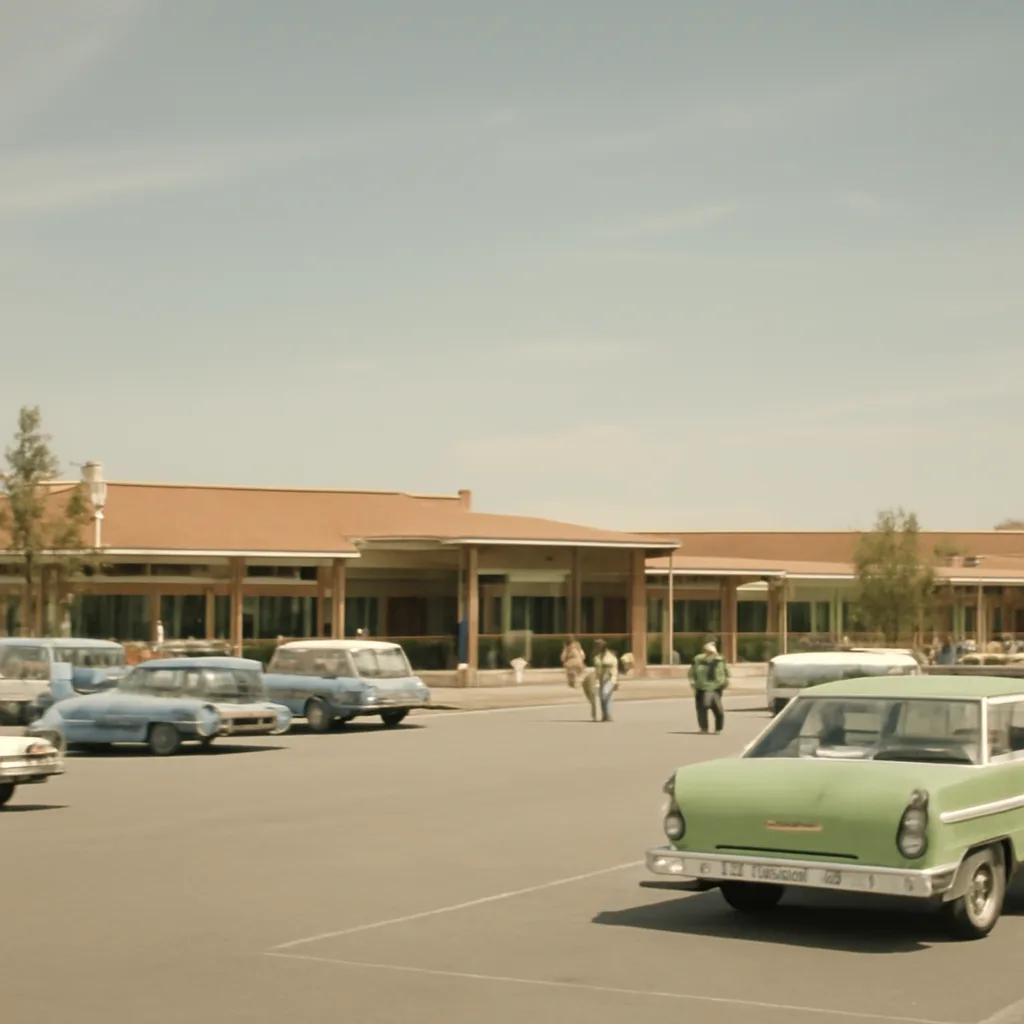
On April 15, 1956, Southdale Center in Edina, Minnesota, opened as the first fully enclosed, climate-controlled shopping mall designed by architect Victor Gruen, setting a model for suburban retail development in the United States.
On April 15, 1956, Southdale Center in Edina, Minnesota, opened to the public and is widely recognized as the first fully enclosed, climate-controlled shopping mall designed from the outset as a shopping center for a suburban population. Commissioned by the Dayton Company and designed by Austrian-born architect Victor Gruen, Southdale combined a two-level enclosed concourse with department stores, smaller retail shops, and interior pedestrian circulation intended to create a community-oriented environment sheltered from weather.
Context and design
Post-World War II suburbanization, increased automobile ownership, and expanding middle-class purchasing power created demand for new retail formats outside traditional downtown shopping districts. Victor Gruen—who had emigrated to the United States in 1938 after establishing a reputation in Europe—envisioned a new kind of retail complex that blended commercial, civic, and social functions. Southdale’s design included an enclosed central court with skylights, climate control, and a layout that separated pedestrian movement from car traffic. Anchored by large department stores and surrounded by a variety of specialty shops, the center was intended to promote longer visits and a more leisurely shopping experience than strip malls or downtown aisles.
Reception and influence
Southdale attracted immediate attention from the press, urban planners, and retailers. Its enclosed design proved commercially successful and became a template for subsequent suburban shopping centers across the United States and, later, internationally. Developers adapted and scaled the model, creating variations that included lifestyle centers, regional malls, and, eventually, expansive super-regional complexes.
Gruen’s evolving perspective
Despite his role in shaping the mall format, Victor Gruen later expressed ambivalence about how the concept was applied. He had originally hoped his designs would be integrated with public space, civic institutions, and pedestrian-oriented urban planning; he opposed the later car-centric, purely commercial expansions that he felt undermined his social and urbanist intentions. Scholars and commentators often cite Gruen’s critiques when discussing the broader social and urban consequences of mall proliferation.
Long-term significance
Southdale’s opening marks a key moment in mid-20th-century retail and suburban development. The mall model transformed shopping habits, influenced land use and transportation patterns, and had lasting cultural effects by creating new public interiors as sites of consumption, leisure, and social interaction. Over subsequent decades, changing retail economics, e-commerce, and new urban planning priorities have led to varied fates for malls: some have been redeveloped or demolished, others repurposed for mixed uses, while a subset continue operating as retail centers.
Historic note on the date
The commonly cited opening date for Southdale Center is April 15, 1956. While other earlier shopping arcades and open-air centers existed, Southdale is generally credited as the first intentionally planned, fully enclosed, climate-controlled shopping mall in the modern sense.