
10/30/1972 • 6 views
British soldiers fire on civilians during Northern Ireland's Bloody Sunday, 1972
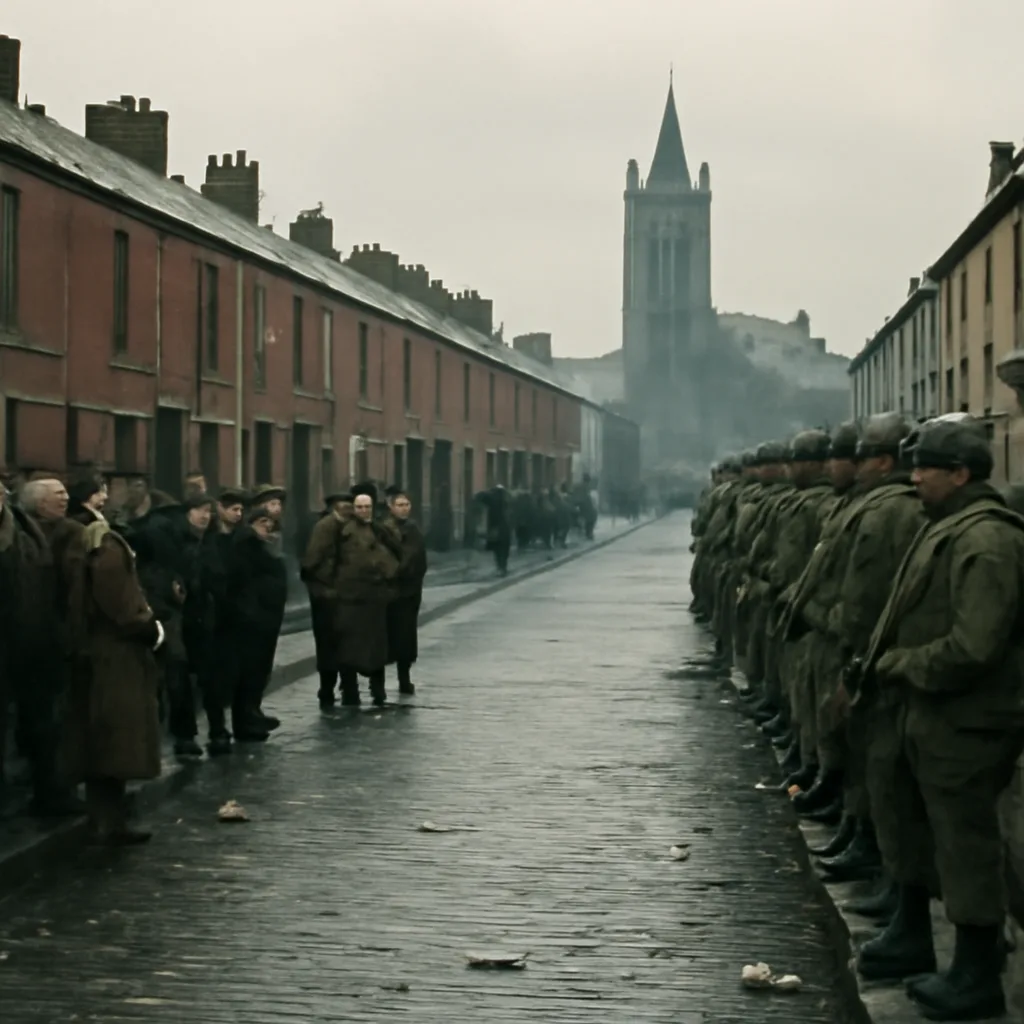
On 30 October 1972 in Derry (Londonderry), British paratroopers shot at civilians during a civil rights protest, killing 13 people and wounding others; the incident intensified sectarian tensions and prompted multiple inquiries and public outcry.
The demonstration that day involved people protesting alleged mistreatment and the presence of security forces. Confrontations between local residents, including some rioters and stone-throwers, and the British Army escalated in the streets. Soldiers moved into the Bogside and, in a series of engagements over several hours, fired live rounds. Thirteen people died on the day and a fourteenth later died of injuries. Victims included local civilians—some unarmed—and the casualties and circumstances prompted widespread shock.
Initial official statements from the British government portrayed the soldiers’ actions as responses to armed attacks and rioting. That account was contested by residents, journalists, and relatives of the dead, who said many victims were unarmed and that the shootings were unjustified. The events provoked immediate local and international condemnation and became a major flashpoint in the conflict.
The incident was the subject of multiple official examinations. The first formal inquiry, the Widgery Tribunal (1972–1973), largely accepted the soldiers’ account and was widely criticized as a whitewash by nationalist communities and others. Decades later, following sustained campaigning and new evidence, the British government commissioned a fresh investigation. The Saville Inquiry (1998–2010) conducted an extensive review of witness testimony and forensic evidence and concluded that the killings were “unjustified and unjustifiable.” The report found that none of the casualties posed a threat that justified shooting and that soldiers had fired the first shots in many of the incidents reviewed. The British government formally apologized for the events following the Saville report.
Bloody Sunday had profound political consequences. It increased support for the Provisional Irish Republican Army among many nationalists, hardened attitudes across communities, and intensified international attention on Northern Ireland. The event remained a deep source of grievance and collective memory in the nationalist community and a focal point for debates over responsibility, accountability, and the conduct of security forces during the Troubles.
Legal and political repercussions continued after the Saville Inquiry: criminal investigations and limited prosecutions were pursued in subsequent years, and public debate over the adequacy of accountability measures persisted. The episode remains one of the most studied and contested events of the Troubles, with extensive documentary, journalistic, and academic literature documenting divergent perspectives.
Because accounts and interpretations evolved over time and were contested for decades, any summary should note the contested nature of early official findings and the later, more critical conclusions of the Saville Inquiry. The broad historical facts—date, location, British Army involvement, civilian deaths, and the long-term political impact—are well established; interpretations of intent, command decisions, and individual culpability were matters of inquiry and, in some cases, legal process.