01/08/1958 • 5 views
A 14-year-old became a national chess champion
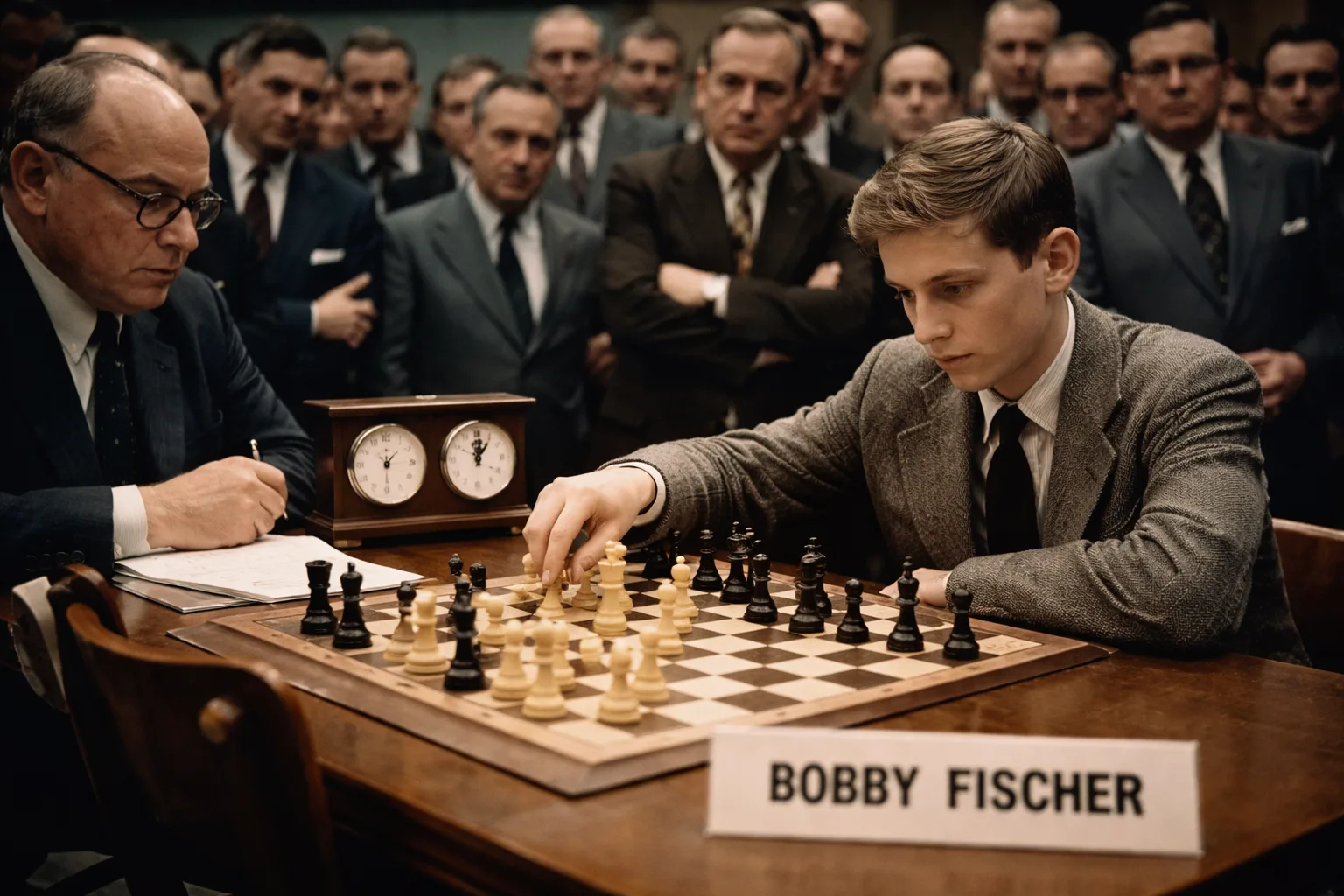
On January 8, 1958, a skinny, soft-spoken teenager from Brooklyn did something that seemed impossible.

This wasn’t a junior tournament. There were no age brackets, no special allowances, no training wheels. Fischer defeated the best adult chess players in the country, many of them seasoned masters with decades of experience. At an age when most kids were worrying about homework and baseball cards, Fischer was dismantling America’s chess elite.
Not a Fluke — A Domination
Fischer didn’t squeak by on a technicality. He won convincingly, finishing the tournament with 10½ points out of 13, a full point ahead of his nearest rivals. His games were marked by precision, aggression, and a maturity that stunned observers. Commentators quickly realized they weren’t witnessing a lucky prodigy — they were watching a future legend in real time.
Chess master and writer Reuben Fine famously remarked that Fischer played “with the authority of a veteran,” despite being young enough to need parental permission to travel to tournaments.
A Kid Against the Cold War Machine
The timing of Fischer’s victory mattered. In the 1950s, chess was dominated by the Soviet Union, which treated the game as a state-sponsored intellectual weapon. The USSR produced grandmasters the way factories produced tanks. American chess, by contrast, was fragmented and underfunded.
Fischer’s rise felt symbolic. A lone American teenager, largely self-taught, was suddenly standing as proof that the U.S. could compete intellectually on the world stage. Newspapers latched onto the story, portraying Fischer as a kind of cerebral David taking on a Soviet Goliath.
Obsession, Not Talent Alone
Fischer’s success wasn’t just raw intelligence. It was obsession.
He reportedly studied chess up to 14 hours a day, memorizing openings, endgames, and classic matches. He played constantly, replaying historic games from memory and analyzing positions long after others would have quit. School bored him. Socializing didn’t interest him. Chess consumed everything.
That singular focus gave him an edge — and foreshadowed the isolation that would later define his life.
The Beginning of a Legend
The 1958 championship was not Fischer’s peak — it was his launchpad. Over the next decade, he would:
Become a Grandmaster at 15
Defeat nearly every top player in the world
Win the 1972 World Chess Championship, ending decades of Soviet dominance
Turn chess into an international spectacle watched by millions
But all of that future greatness traces back to January 8, 1958, when America realized it was witnessing something unprecedented.
Why It Still Matters
More than six decades later, Fischer’s record remains unbroken. Plenty of prodigies have emerged, but none have managed to seize a full national championship at such a young age. His victory stands as a reminder that true genius sometimes arrives early — and when it does, it rarely asks for permission.
Bobby Fischer wasn’t just good for a kid.
On that day, he was simply the best chess player in the United States.