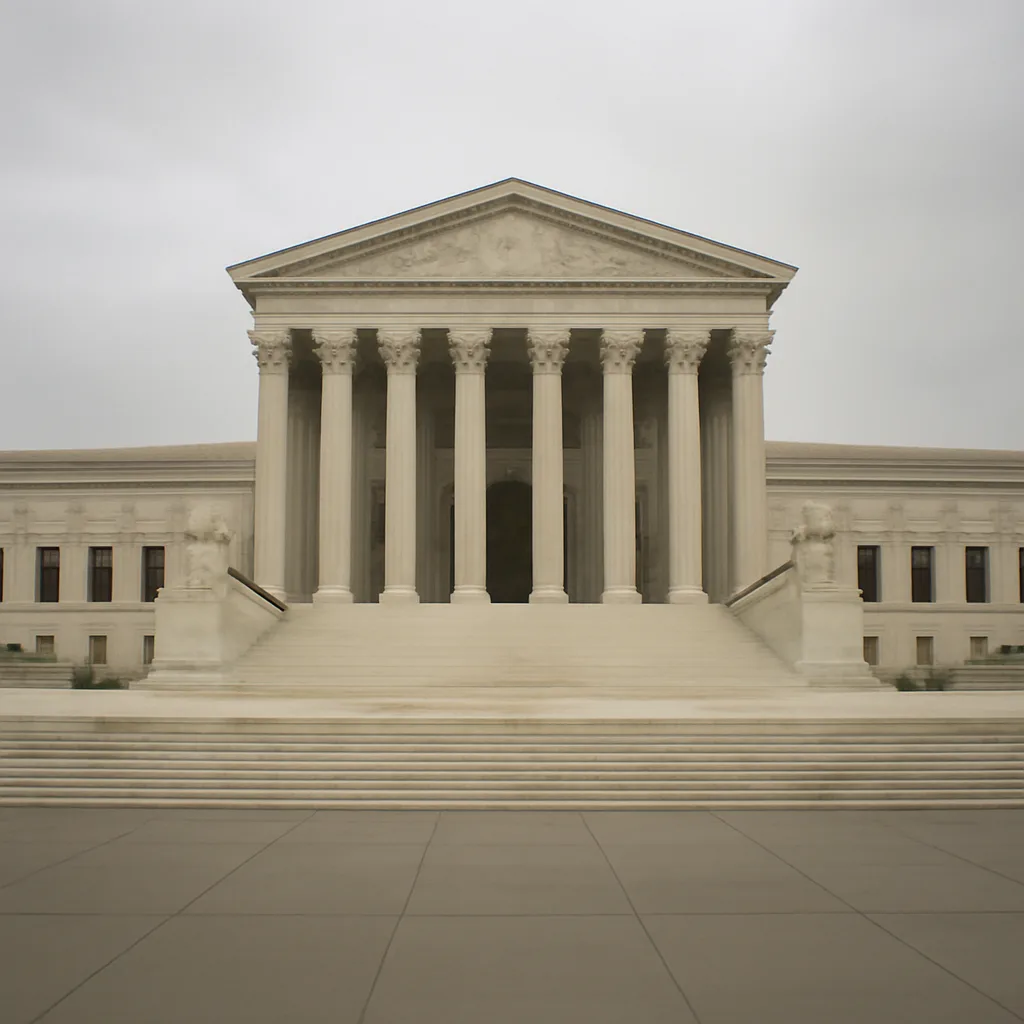
Supreme Court Invalidates State Sodomy Laws in Landmark 2003 Ruling
On January 26, 2003, the U.S. Supreme Court ruled in Lawrence v. Texas that state laws criminalizing private, consensual same-sex sexual activity violate the Due Process Clause of the Fourteenth Amendment, overturning prior precedent and decriminalizing sodomy nationwide.
On January 26, 2003, the United States Supreme Court issued its decision in Lawrence v. Texas, 539 U.S. 558, holding that state statutes criminalizing private, consensual sexual activity between adults of the same sex are unconstitutional. The Court ruled 6–3 that such laws violate the Due Process Clause of the Fourteenth Amendment, effectively overruling its 1986 decision in Bowers v. Hardwick, which had upheld a Georgia sodomy statute.
Background
The case arose after police in Houston, Texas, entered a private residence responding to a reported disturbance and arrested John Lawrence and Tyron Garner under a Texas statute that made homosexual conduct a crime. Challenging their convictions, Lawrence and Garner argued the statute violated their constitutional rights. The U.S. Court of Appeals for the Fifth Circuit upheld the convictions, and the Supreme Court granted review.
The Court's Rationale
In an opinion authored by Justice Anthony Kennedy, the majority emphasized liberty and autonomy in intimate decisions, stating that adults have the right to engage in private, consensual sexual conduct without governmental intrusion. The opinion found that moral disapproval alone was an insufficient justification for criminalizing private conduct between consenting adults. The decision framed the protections as arising from the Due Process Clause’s guarantee of liberty—notably declining to rest the ruling on equal protection grounds.
Impact on Precedent
Lawrence explicitly overturned Bowers v. Hardwick (1986), in which the Court had affirmed the constitutionality of a state sodomy statute. By repudiating Bowers, Lawrence removed the constitutional support for criminal statutes that targeted same-sex sexual activity and signaled a shift in the Court’s approach to personal autonomy and sexual privacy.
Legal and Social Consequences
The ruling invalidated sodomy laws still on the books in many states, rendering prosecutions for consensual same-sex sexual activity unconstitutional nationwide. Practically, some states quickly repealed or allowed such statutes to remain unenforced; others took legislative steps to remove them. Lawrence also influenced subsequent litigation and legal arguments regarding the rights of lesbian, gay, bisexual, and transgender people, including cases addressing marriage, family, and anti-discrimination protections.
Dissent and Continuing Debate
Three justices dissented in Lawrence, arguing that the Constitution did not prohibit states from criminalizing certain sexual practices and expressing concern about the opinion’s scope. Despite the decision’s clear bar on enforcing sodomy laws against private consensual conduct, debates continued—legislative, cultural, and legal—over its broader implications for LGBTQ rights and for the Court’s role in resolving moral controversies.
Historical Significance
Lawrence v. Texas is widely regarded as a landmark in the expansion of constitutional protections for sexual privacy and LGBTQ people. By invalidating laws rooted in moral disapproval of same-sex intimacy, the decision marked a pivotal change in constitutional doctrine and in public law. It also paved the way for later rulings that further recognized legal rights for same-sex couples.
Sources and Verifiability
This summary is based on the Supreme Court’s opinion in Lawrence v. Texas, 539 U.S. 558 (2003), the overruling language regarding Bowers v. Hardwick, and contemporaneous reporting and legal analysis of the decision’s immediate effects. For precise legal text and parsing of holdings, consult the official U.S. Reports opinion and subsequent case law interpreting Lawrence.