
01/26/1983 • 5 views
Pentagon Confirms 1983 Near-Nuclear Crisis During NATO Exercise
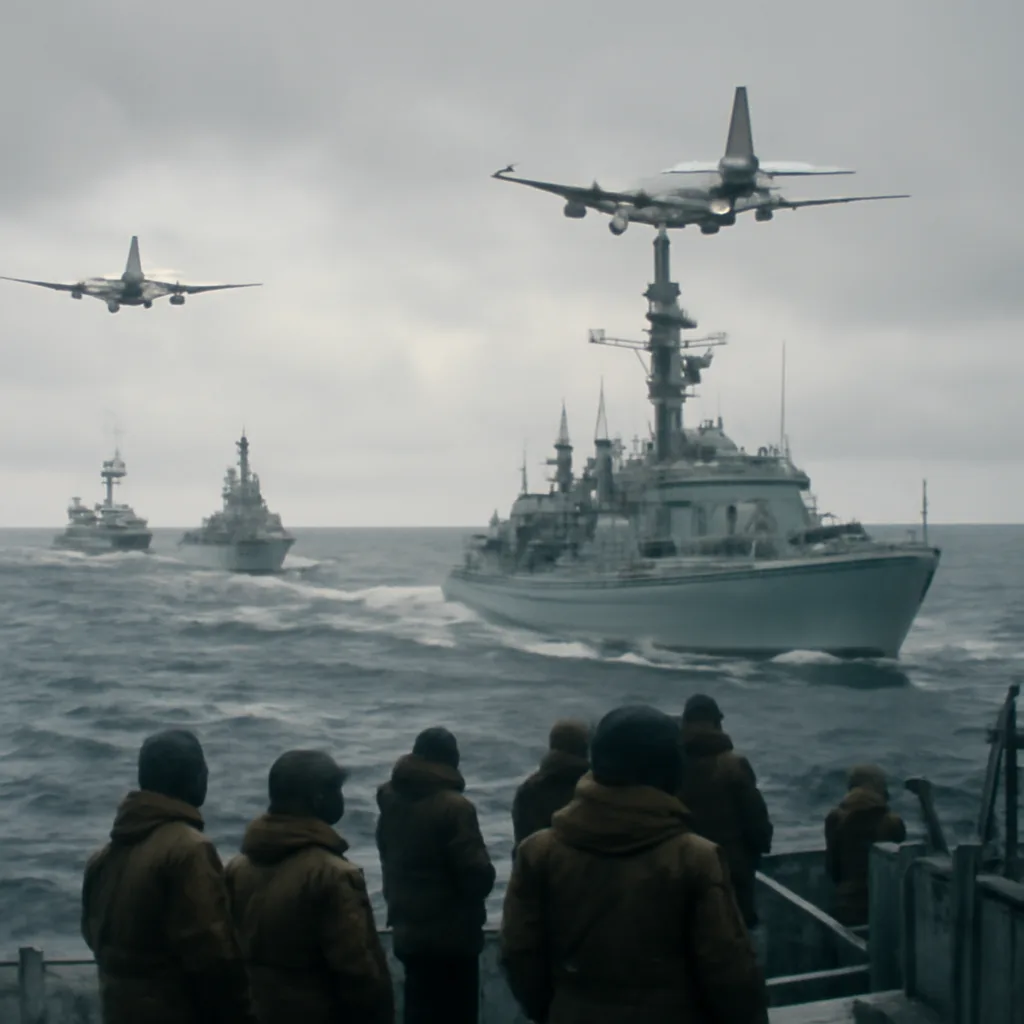
On Jan. 26, 1983, U.S. defense officials later acknowledged that a NATO exercise and Soviet misperceptions brought U.S. and Soviet forces close to triggering a nuclear response, highlighting Cold War escalation risks.
Context
The early 1980s were marked by intense NATO–Warsaw Pact rivalry, large-scale military exercises, and mutual suspicion. NATO’s annual winter exercise patterns included simulated large-scale conventional operations; at the same time, the Soviet Union maintained high readiness levels and conducted its own maneuvers. Command-and-control systems, intelligence judgments, and alert procedures on both sides were calibrated for high-threat scenarios, increasing the possibility that misinterpreted actions could be seen as preparations for a nuclear first strike.
What happened
Accounts based on declassified documents, memoirs by officials and later Pentagon statements indicate that on Jan. 26, 1983, a NATO exercise scenario, coupled with other regional military activities, led U.S. and Soviet forces to assume elevated threat postures in specific theaters. The exact sequence varied in different sources, but common elements include heightened air and naval movements, alert orders within tactical forces, and ambiguous intelligence signals that contributed to misperception. U.S. military leaders later acknowledged that procedures and communications at the time left little margin for error.
Why it mattered
Officials and historians have pointed to this episode as illustrative of systemic danger: peacetime exercises and normal operational changes could be misconstrued as preparations for an attack, especially when both sides operated under doctrines that emphasized rapid escalation control and, in some formulations, quick authorization for high-level response. The January 1983 incident reinforced concerns about the fragility of crisis stability and the need for clearer signaling, more reliable communications, and de-escalatory protocols.
Aftermath and reforms
In subsequent years, U.S. and NATO authorities undertook measures to reduce risks of miscalculation, including improved communication channels, more robust information-sharing with allies, and refinements in rules of engagement and alert procedures. The episode contributed to broader Cold War dialogues about arms control and confidence-building measures. Some documented reforms sought to ensure that exercises were less likely to be misread as preparations for strategic attack, and to provide leaders with better situational awareness before escalating responses.
Historical assessment
Scholars treat the Jan. 26, 1983 episode as one of multiple near-crisis moments during a tense phase of the Cold War. Precise details and the degree of immediacy vary across sources; while the Pentagon and many historians describe it as a close call, others emphasize that institutional checks ultimately prevented escalation. The incident is frequently cited in retrospective analyses as evidence that conventional operations and signaling ambiguities could, under adverse conditions, produce strategic risk.
Limitations
Public accounts rely on declassified documents, participant memoirs, and official statements; some operational records remain classified or incomplete. Where specifics differ between sources, this summary follows commonly reported elements without asserting contested operational minutiae.
Significance today
The Jan. 26, 1983 episode remains a cautionary example in military and policy circles about the dangers of misperception, the importance of crisis communication, and the need for safeguards in an era when military activities by one side can be rapidly interpreted as preparations for strategic attack by another.