
← Back
08/24/1983 • 4 views

Near-Miss: U.S. and USSR Avoid Nuclear Clash During 1983 Air Incident
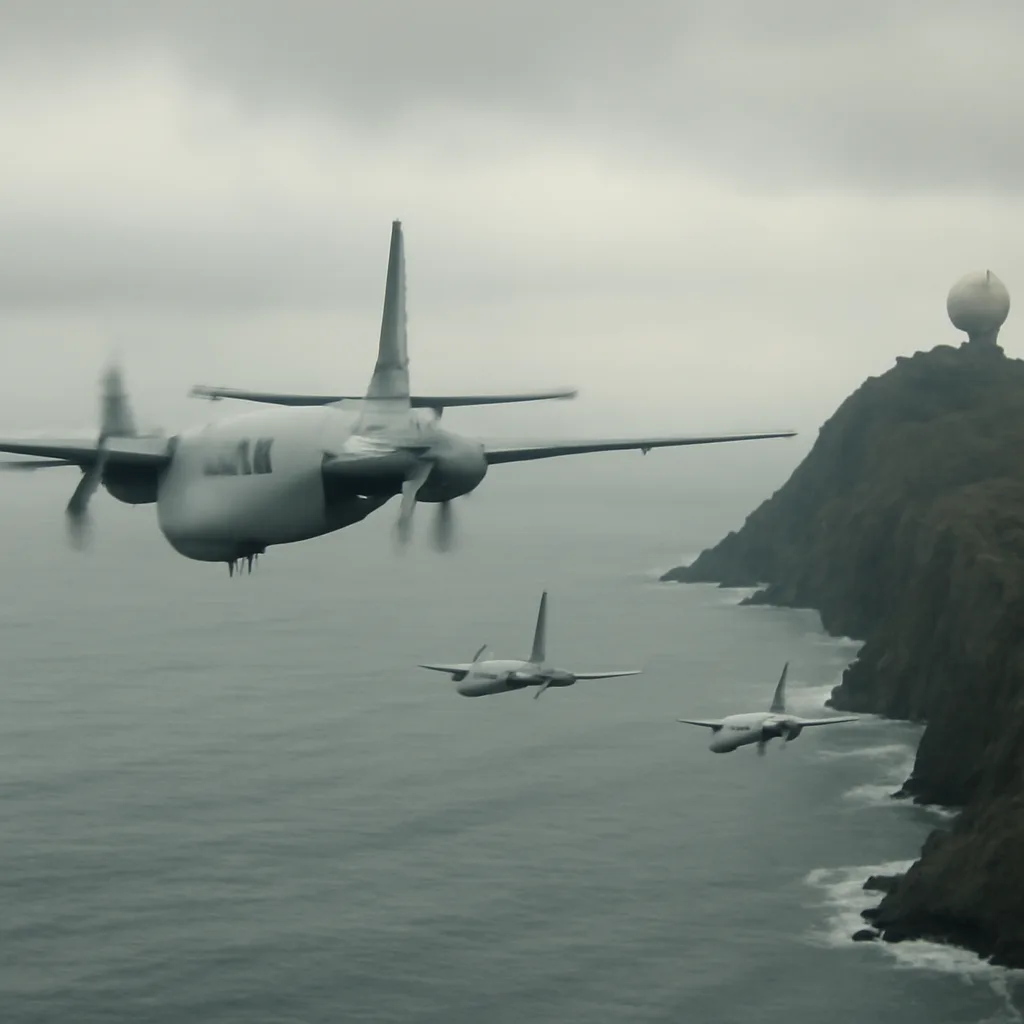
Cold War-era military reconnaissance aircraft shadowed by fighter jets over open sea near a Soviet coastline, with overcast sky and a tense, austere atmosphere.

On August 24, 1983, a mishap involving Soviet air defenses and a U.S. reconnaissance aircraft brought Washington and Moscow perilously close to a nuclear confrontation before cooler heads prevailed.


On 24 August 1983, Cold War tensions spiked after a Soviet Su-15 interceptor shot down Korean Air Lines Flight 007 on 1 September 1983 is often cited in discussions of that period, but earlier episodes in late August further illustrate how close the United States and the Soviet Union came to a broader military or nuclear clash. In late August 1983 a series of reconnaissance flights, air intercepts, and alerting incidents created dangerous misunderstandings between the two superpowers.

Context: By 1983 both capitals were operating at high alert. The U.S. had resumed large-scale NATO exercises — such as Able Archer later that year — and was flying intelligence-gathering missions near Soviet periphery to monitor Soviet military activity. The USSR, led by Yuri Andropov, perceived many Western actions as potential cover for surprise attack and had enhanced its air-defense posture.

The incident: On 24 August, a U.S. reconnaissance aircraft operating in international airspace near Soviet territory was intercepted by Soviet fighters. According to declassified and contemporaneous Western sources, the interception was tense: Soviet pilots flew close to the U.S. aircraft and radio communications and identification maneuvers were fraught. Confusion over flight paths, identification signals, and rules of engagement heightened the risk that a single misinterpreted move could escalate.

Soviet air-defense units in the region were on heightened readiness; some reports from the period note that surface-to-air missile units and interceptors were prepared to engage perceived intruders. U.S. forces, observing Soviet reactions, increased alerts and scrambled support aircraft to shadow the encounter. Both sides monitored the situation with elevated strategic alarm, fearing that an attack on national assets could cascade into a larger conflict.

Avoiding escalation: What prevented disaster were a combination of factors: adherence by many pilots and commanders to restraint, real-time communication channels that—while imperfect—allowed some de-escalatory messaging, and command-level decisions to avoid immediate retaliation for isolated provocations. Intelligence officers and diplomats in both capitals later emphasized that systemic caution and the existence of limited backchannels reduced the likelihood that the episode would become a casus belli.

Aftermath and significance: The late-August encounters added to a pattern of dangerous interactions in 1983 that included the later shooting down of KAL 007 (1 September) and the November Able Archer exercise, which the Soviets viewed as potentially a cover for a first strike. Historians and declassified documents show that 1983 was one of the most perilous years of the Cold War, with incidents that could have escalated quickly. These air intercepts underscore how routine intelligence operations and aggressive defensive postures, combined with mistrust and imperfect communications, produced recurring near-misses.

Scholarly perspective: Researchers who have studied 1983 emphasize uncertainty in some operational details and caution against overstating any single episode as uniquely determinative. Instead, scholars treat the late-August encounters as part of a dangerous milieu in which multiple events, policies, and misperceptions accumulated to raise the risk of unintended escalation.

Legacy: The near-misses of 1983 contributed to later efforts to reduce such risks: improved rules of engagement, enhanced communication hotlines, and greater transparency around exercises and reconnaissance activities. While Cold War rivalry persisted until the USSR’s collapse, episodes from 1983 remain a stark reminder of how routine military activity can, under strained conditions, bring nuclear-armed states to the brink.

Share this

Email Share on X Facebook Reddit

Did this surprise you?