
← Back
02/01/2003 • 4 views

NASA Confirms Loss of Space Shuttle Columbia and Seven-Member Crew
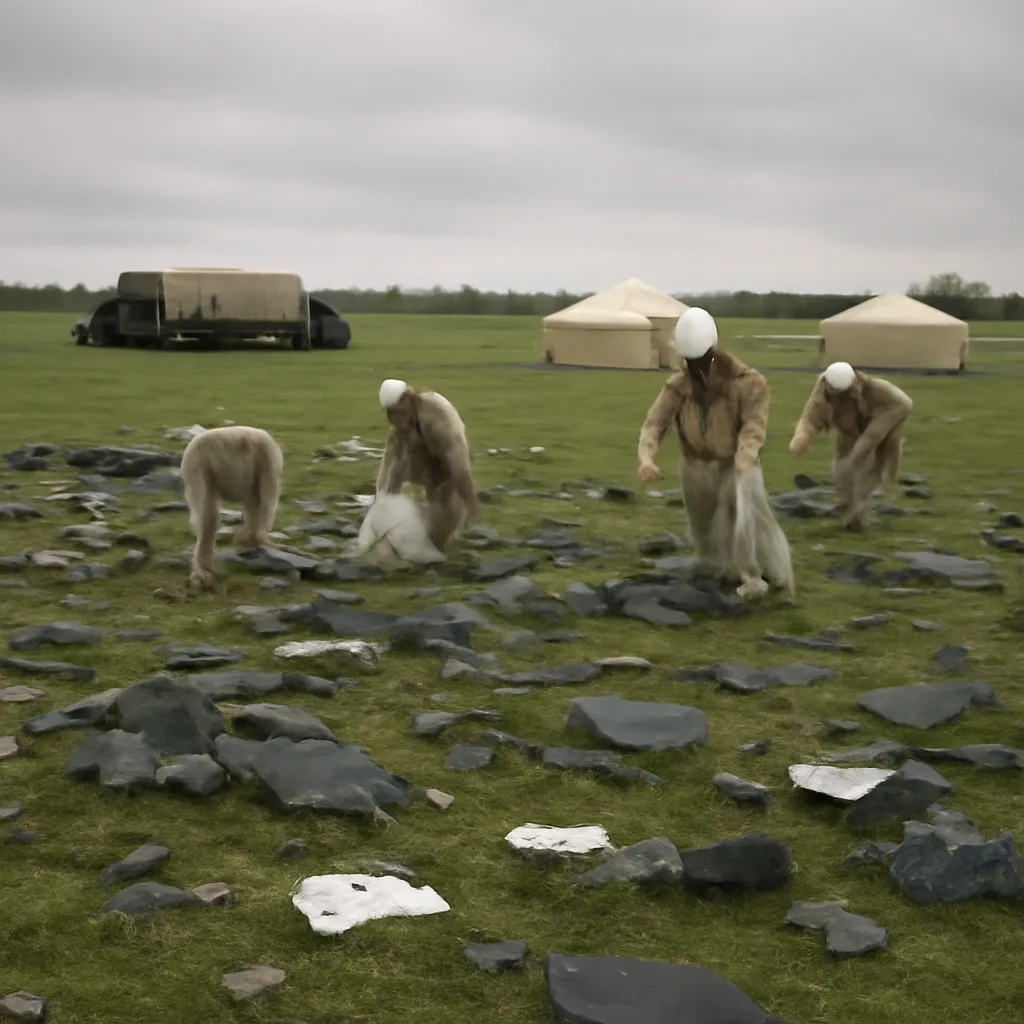
Wide view of a debris-strewn Texas recovery field with investigators and covered wreckage pieces from Space Shuttle Columbia during the 2003 recovery operation.

On February 1, 2003, NASA confirmed that Space Shuttle Columbia disintegrated during re-entry, killing all seven crew members. The agency launched an investigation into possible foam debris damage sustained during launch.


On February 1, 2003, NASA announced that Space Shuttle Columbia (STS-107) was lost during re-entry over Texas and Louisiana, and that all seven crew members had been killed. The shuttle had launched successfully on January 16, 2003, on a dedicated science mission. Re-entry communications were lost during the vehicle’s return to Earth, and debris later recovered from a wide area confirmed a catastrophic breakup of the orbiter.

Crew and mission

Columbia’s seven-member crew consisted of Commander Rick D. Husband, Pilot William C. McCool, Payload Commander Michael P. Anderson, Mission Specialist Ilan Ramon (Israel’s first astronaut), and Mission Specialists Kalpana Chawla, David M. Brown, and Laurel B. Clark. The STS-107 mission focused on a variety of scientific experiments in microgravity across disciplines such as life sciences, materials science, and atmospheric studies.

Loss and initial findings

During ascent on January 16, a piece of insulating foam from the external tank detached and struck Columbia’s left wing. At the time, imagery showed the impact but NASA managers did not fully determine the severity of the damage. On re-entry, heating loads on the orbiter’s wing are normally handled by thermal protection tiles; however, later analysis and recovered debris indicated that heat breached the left wing’s structure, leading to structural failure and breakup of the vehicle as it encountered peak aerodynamic heating and stress.

Recovery and investigation

Debris from Columbia was scattered across a wide region of Texas and Louisiana. Recovery teams collected thousands of pieces of wreckage, which aided reconstruction efforts. In the weeks after the accident, the Columbia Accident Investigation Board (CAIB) was established to examine the cause, the organizational and management factors at NASA, and the culture surrounding shuttle safety decisions.

The CAIB’s final report, released in August 2003, concluded that the physical cause was the foam strike that damaged the left wing’s reinforced carbon–carbon panels, allowing superheated gases to penetrate the wing during re-entry. The board also identified significant organizational and cultural issues at NASA that contributed to the accident, including risk management shortcomings and failures of communication and technical oversight. The report made numerous recommendations to improve safety, organizational processes, and shuttle inspection and repair capabilities.

Aftermath and legacy

All Space Shuttle flights were suspended after the accident. NASA implemented many of the CAIB’s recommendations, including modifications to the external tank to reduce foam shedding, improved on-orbit inspection techniques, and development of contingency options for damaged orbiters. Columbia’s loss, along with the 1986 Challenger accident, had a profound effect on NASA policy and public understanding of the risks of human spaceflight.

Columbia’s crew are memorialized at multiple sites, including the Space Shuttle Columbia Memorial in Texas and memorials at the Johnson Space Center and elsewhere. Their loss prompted renewed emphasis on safety in human spaceflight programs and informed subsequent approaches to managing technical risk and organizational culture in high-stakes aerospace operations.

Notes on dates and sources

The fatal breakup and confirmation of crew loss occurred on February 1, 2003. The CAIB published its final report in August 2003 with detailed findings on both technical causes and organizational factors. This summary draws on those publicly available investigative findings and contemporaneous reporting; where uncertainties remained immediately after the accident, the CAIB report provides the authoritative, post-investigation conclusions.

Share this

Email Share on X Facebook Reddit

Did this surprise you?