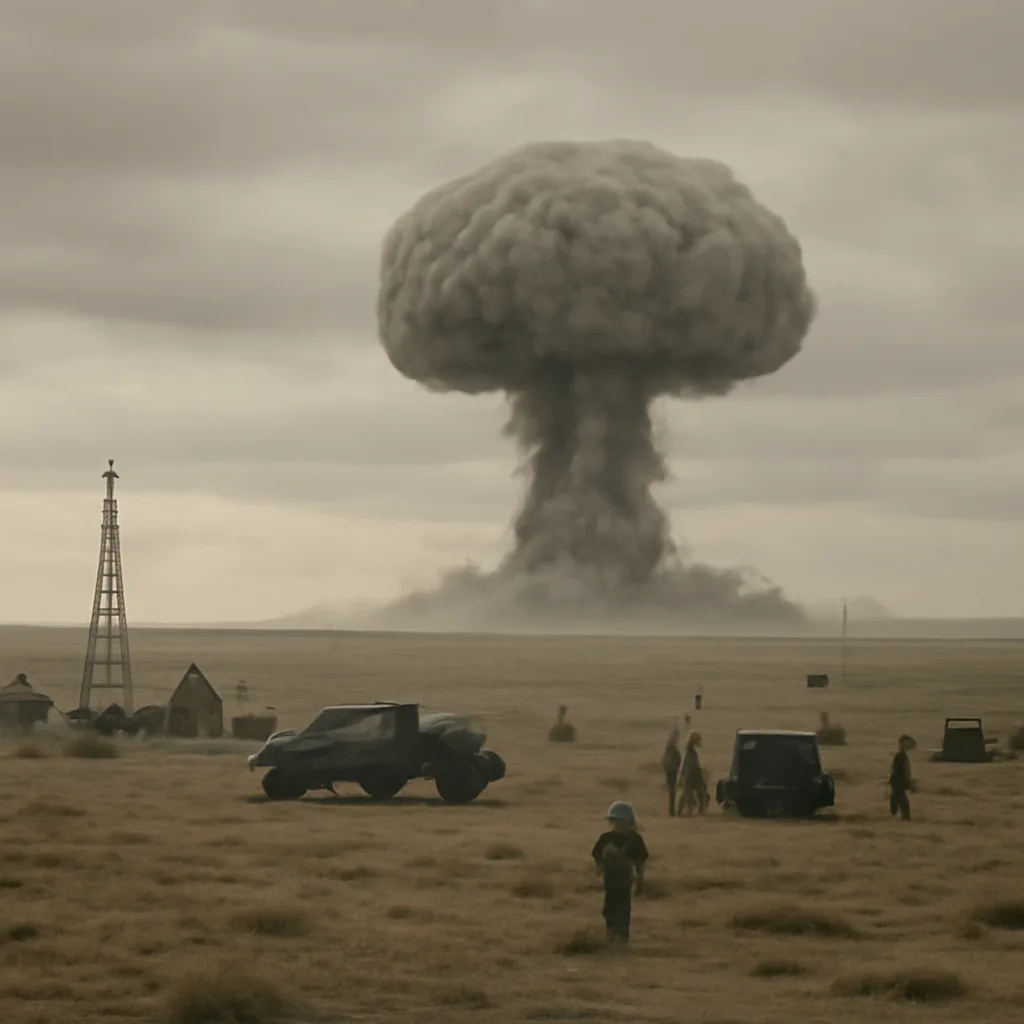
On October 30, 1961, the Soviet Union conducted a major nuclear test that intensified Cold War tensions, prompting international alarm, emergency civil defense measures, and diplomatic protests amid fears of further escalation.
On October 30, 1961, the Soviet Union carried out a significant nuclear test that further heightened already severe Cold War tensions between Moscow and the West. The test came during a period of acute confrontation: the year had seen the Berlin crisis intensify, and in late October world leaders and publics were acutely sensitive to any demonstration of nuclear capability. Although details about yield and specific device type were contested at the time and have been the subject of later historical analysis, contemporary Western governments treated the event as evidence of Soviet readiness to expand nuclear capabilities and respond to perceived geopolitical pressure.
Immediate reactions were mixed but uniformly serious. Western capitals issued formal protests and demanded explanations through diplomatic channels. Military and civil defense authorities in NATO countries reviewed alert statuses and public safety guidance, while intelligence agencies rushed to collect and analyze data from seismic stations, atmospheric sampling, and reconnaissance to estimate the device’s yield and technical characteristics. In the United States and parts of Western Europe, newspapers and broadcasters featured front-page coverage and government spokespeople reassured publics that measures were being taken to assess risk.
The test also affected international diplomacy. Allies advocated for restraint and urged renewed dialogue to prevent a spiral of escalation. Nonaligned and neutral countries expressed concern about the implications for global security and for ongoing arms control efforts. The incident underscored the fragility of détente prospects and the limited mechanisms available at the time for verifying and constraining nuclear tests.
Domestically within the Soviet Union, state media framed such tests as demonstrations of scientific and military strength necessary to deter aggression. The Soviet leadership presented nuclear development as integral to national security and to maintaining parity with the United States and its allies. Western analysts interpreted the Soviet public posture as both strategic signaling and an attempt to strengthen bargaining position in negotiations over Berlin and other contested issues.
Historians have debated the test’s precise motives and technical specifics. Some view it as part of a sequence of tests intended to advance warhead design and delivery system integration; others emphasize its timing as a political message during a tense diplomatic standoff. Declassified archives and later scholarship have clarified aspects of the Soviet nuclear program, but contemporaneous uncertainty contributed to heightened alarm and precautionary policies.
The October 30 test reinforced broader trends of the period: an accelerating arms competition, the expansion of civil defense measures, and growing public anxiety about nuclear war. It also fed momentum for subsequent arms control discussions that would develop over the decade, as policymakers and publics grappled with the risks of unconstrained nuclear competition. While the test did not trigger immediate military hostilities, it served as a stark reminder of how technical demonstrations of nuclear capability could influence international relations and public perceptions during the Cold War era.