
← Back
12/28/2017 • 6 views

Widespread Protests Erupt Across Iran Over Economy and Governance
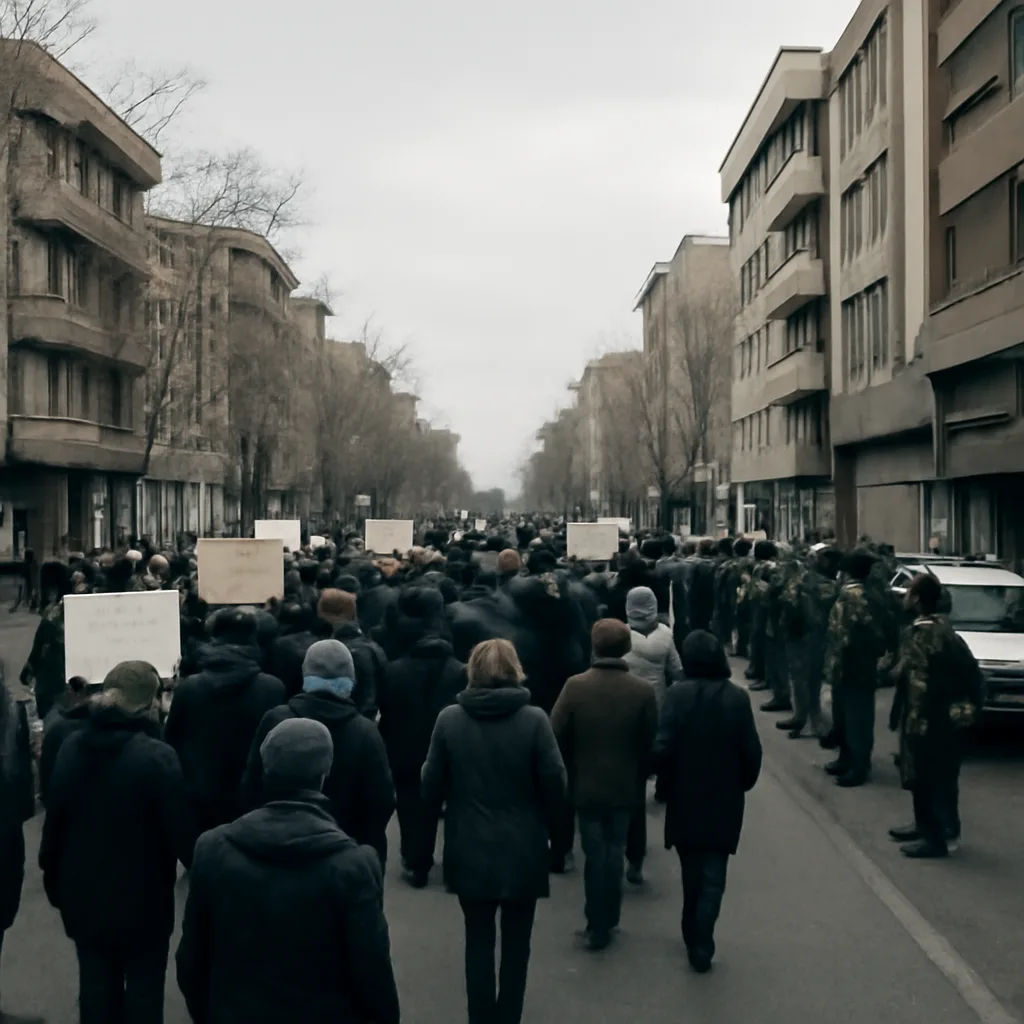
Crowd of protesters marching on an urban street in Iran holding placards and banners; visible police and security forces on the periphery, winter clothing, daytime.

Mass demonstrations began in late December 2017 across dozens of Iranian towns and cities, driven by rising prices, unemployment and grievances against political and economic elites; security forces responded with arrests and force as protests spread.


Beginning on December 28, 2017, a wave of anti-government protests swept through multiple cities and towns in Iran. What began as localized demonstrations over economic hardship and rising living costs quickly broadened in scope to include political and social grievances. Protesters voiced anger at inflation, unemployment, corruption, and perceived mismanagement of the economy, and some chants and slogans criticized the Islamic Republic’s political leadership and called for greater political freedoms.

The unrest spread rapidly beyond Tehran to cities such as Mashhad, Isfahan, Karaj, Qom, Tabriz and smaller towns in multiple provinces. Demonstrations varied in size and character: many were peaceful gatherings and marches, while in some locations clashes occurred between protesters and security forces or paramilitary Basij units. Reports from journalists and human rights organizations documented arrests of protesters and, in some cases, the use of tear gas, water cannon and live ammunition. Iranian state media and official statements emphasized that security forces were restoring order and condemned what officials described as attempts to destabilize the country.

The protests were notable for their geographic breadth and the mix of demands. Economic complaints were dominant in many places, but in others demonstrators expressed political discontent, including criticism of the government, Supreme Leader Ayatollah Ali Khamenei, and the political establishment. Slogans varied by location and time; some explicitly targeted local officials, while others included calls for regime change—though the extent to which such calls were widespread is subject to differing accounts.

Iranian authorities initially portrayed the unrest as orchestrated by foreign adversaries and political opponents. Security responses included mass arrests and a strong presence of police and paramilitary forces at protest sites. The government also restricted access to social media platforms and messaging apps at times, complicating independent verification of events and casualty figures. International reactions ranged from expressions of concern about the use of force and defense of protesters’ rights to statements supporting Iran’s sovereignty and urging restraint.

Independent verification of casualty and arrest numbers remained difficult. Human rights organizations and some media outlets reported deaths and hundreds of arrests in the weeks following the start of the protests, while Iranian officials offered lower figures. The differing tallies reflected difficulties in reporting amid communications restrictions and contested official narratives.

The December 2017 protests did not immediately result in wholesale political change, but they marked a significant moment of public mobilization in the Islamic Republic, highlighting widespread economic anxieties and political disaffection. They also presaged further waves of unrest and tighter domestic security measures in subsequent years. Analysts noted that the protests revealed structural economic problems—such as unemployment, subsidy cuts, and currency pressures—combined with longstanding political grievances, creating an environment prone to renewed mass mobilization.

Scholars and policy observers emphasized that the events of late December 2017 should be understood within a longer trajectory of protest cycles in Iran, influenced by domestic economic trends, factional politics, and regional geopolitics. Assessments of responsibility for escalation, the role of social media in mobilization, and the long-term political consequences remain matters of analysis and debate among researchers and commentators.

Sources for coverage of these events include contemporaneous reporting by international and Iranian media, statements from human rights groups and civil society organizations, and analyses by regional experts. Where figures and details differ across sources, this summary notes that numbers of arrests and fatalities were contested and difficult to verify independently.

Share this

Email Share on X Facebook Reddit

Did this surprise you?