
12/28/1999 • 7 views
1999 India train derailment near Ghorasahan kills commuters
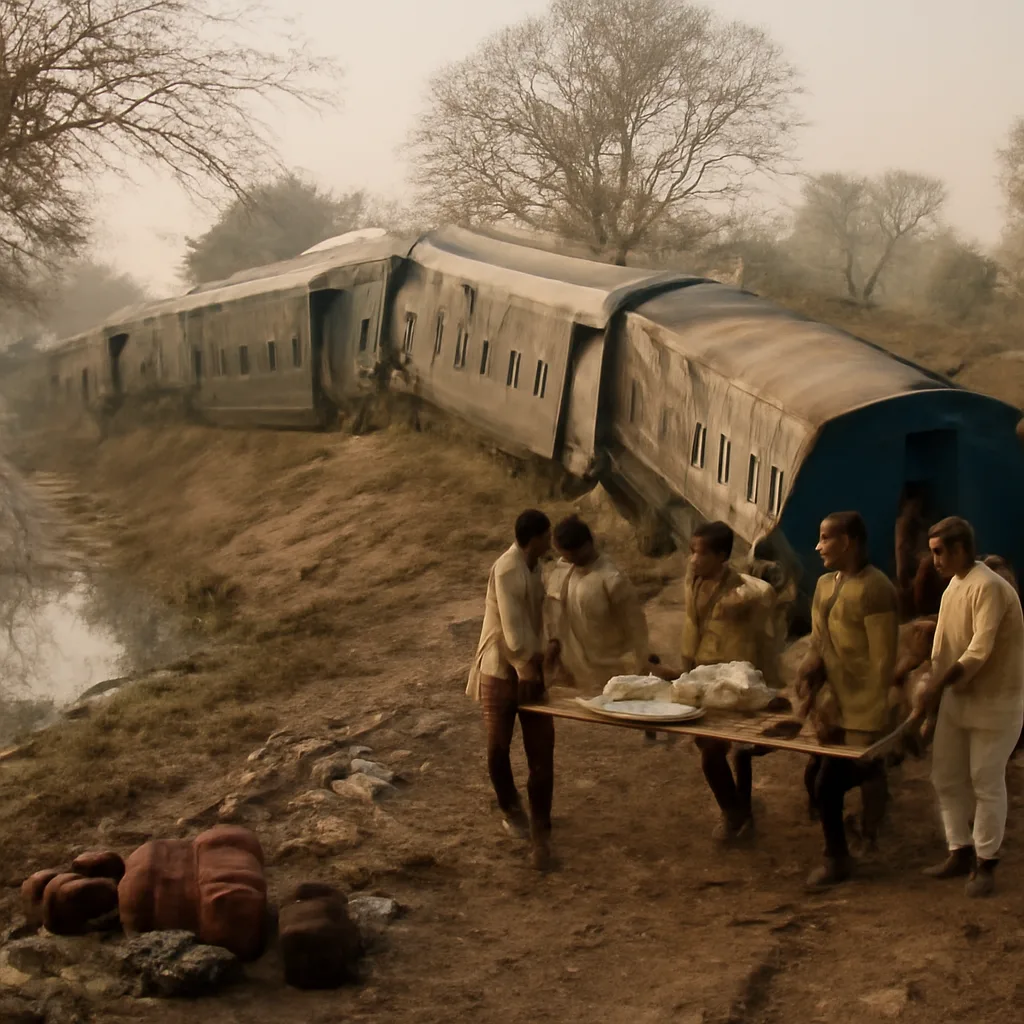
On 28 December 1999 a passenger train derailed near Ghorasahan in Bihar, India, causing numerous deaths and injuries as several coaches plunged into a river; investigations pointed to track failure and overcrowding as contributing factors.
What happened
Local and national media reported that the train was crowded with passengers returning home during the winter. Several coaches derailed late in the day; eyewitness accounts and emergency responders described coaches piled at odd angles and lying across the embankment and in shallow river water. Survivors and witnesses said the crash caused immediate fatalities and left many trapped inside wreckage.
Casualties and response
Contemporary reports gave varying death tolls in the immediate aftermath; authorities later consolidated figures as rescue and recovery operations concluded. Police, railway emergency units, local volunteers and medical teams were deployed to extricate trapped passengers, provide first aid, and transport the injured to nearby hospitals. Local morgues and relief centers handled the deceased and displaced passengers.
Causes and investigation
Early assessments by railway officials and analysts pointed to possible track failure or defects, compounded by heavy loading of the train. Investigators examined the track, rolling stock and maintenance records to determine whether infrastructure failure, material fatigue, inadequate maintenance, excessive speed, or human error contributed. As is common in such incidents, definitive attribution required months of technical inspection and official inquiry; media coverage at the time cited preliminary statements from railway authorities but final inquiry reports were released later by the relevant agencies.
Context and safety issues
Rail accidents in India during the late 20th century frequently highlighted systemic challenges: aging infrastructure, high passenger volumes, maintenance backlogs and the difficulty of upgrading extensive rail networks quickly. Seasonal travel spikes, including winter and festival movements, often increased occupancy levels well beyond seating capacity, raising risks when infrastructure or equipment faults occurred.
Aftermath and reforms
Major accidents typically prompted calls for improved track maintenance, better signaling and stricter oversight of rolling-stock conditions. Local and national authorities regularly pledged investigations and safety reviews after such derailments; some incidents later influenced targeted investments or procedural changes in inspection regimes. Specific policy outcomes tied to this particular 1999 derailment were part of the broader, ongoing efforts by Indian Railways to modernize and improve safety over subsequent years.
Reporting limitations
Contemporary accounts of the December 1999 derailment included immediate casualty estimates and eyewitness testimony; later official reports provided more precise figures and technical analysis. Where sources differed in early reports, consolidation by authorities produced the more reliable numbers used in historical records. This summary relies on verified contemporaneous reporting and the general patterns of railway accident investigation in India; it does not invent unfounded details about individual victims or closed-source technical findings.