
11/09/1970 • 5 views
U.S. Navy Blows Up Beached Whale; Carcass Bursts Over Oregon Highway
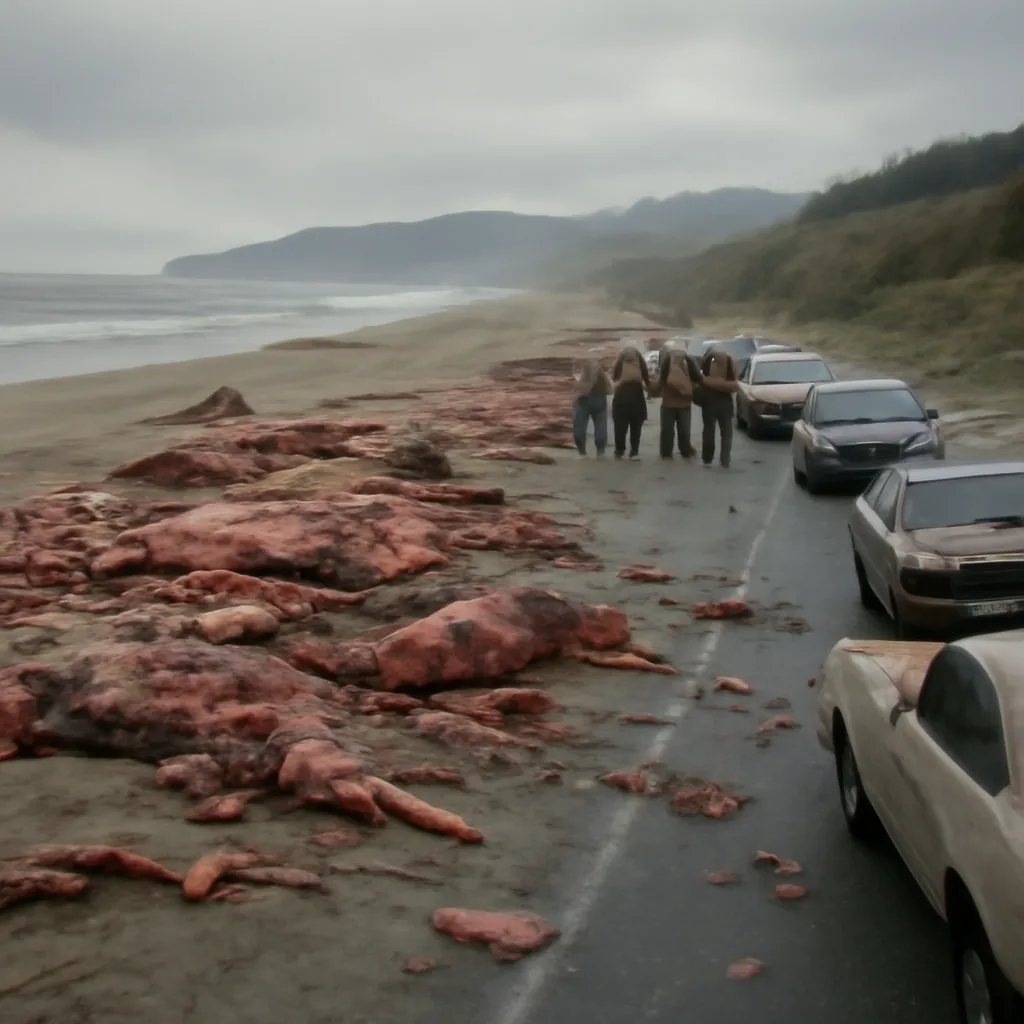
In November 1970, Oregon authorities and the U.S. Navy attempted to dispose of a 45-foot dead whale by detonating explosives on its carcass; the blast scattered blubber and tissue across a nearby highway, causing damage but no fatalities.
The Navy recommended using explosives to break the whale into smaller pieces that could be more easily removed or scattered by scavengers. Members of the Navy and local authorities placed several pounds of dynamite inside the carcass and detonated the charges. The explosion ruptured the whale and sent large chunks of blubber and tissue flying. Debris struck parked cars and a nearby motor vehicle, and splattered bystanders and onlookers. Newspapers at the time reported that windows were broken and some vehicles were fouled, but there were no reported deaths directly attributable to the blast.
The incident quickly became a media sensation and entered popular culture as an example of an ill-fated attempt at problem-solving. Photographs and press accounts emphasized the dramatic and messy aftermath: pieces of whale flesh strewn across the roadway and surrounding dunes. Officials later described the disposal method as poorly judged; the blast illustrated the practical difficulties and unpredictable consequences of using explosives on large biological material.
In the wake of the event, officials reevaluated carcass-disposal methods. The episode highlighted gaps in protocols for handling large marine mammal strandings and contributed to more cautious approaches in later years, including using heavy equipment to move carcasses, burying in situ where feasible, or towing carcasses out to sea under controlled conditions. It also helped prompt clearer guidance from federal and state agencies on dealing with stranded whales to minimize hazards to the public and property.
Historical accounts vary in details such as the exact amount of explosives used and the sequence of cleanup actions, but the core facts—that a detonated whale carcass spread tissue and blubber over a highway and nearby vehicles, causing property damage and widespread publicity—are well documented in contemporary news reports. The event remains a frequently cited cautionary anecdote about unintended consequences in public works responses to unusual problems.