A 1587 English colony vanished overnight — what the records say
On May 20, 1587, the English settlement on Roanoke Island was found abandoned with only the cryptic carved word “CROATOAN” left behind. Contemporary records, later accounts, and archaeological work offer several plausible explanations but no definitive answer.
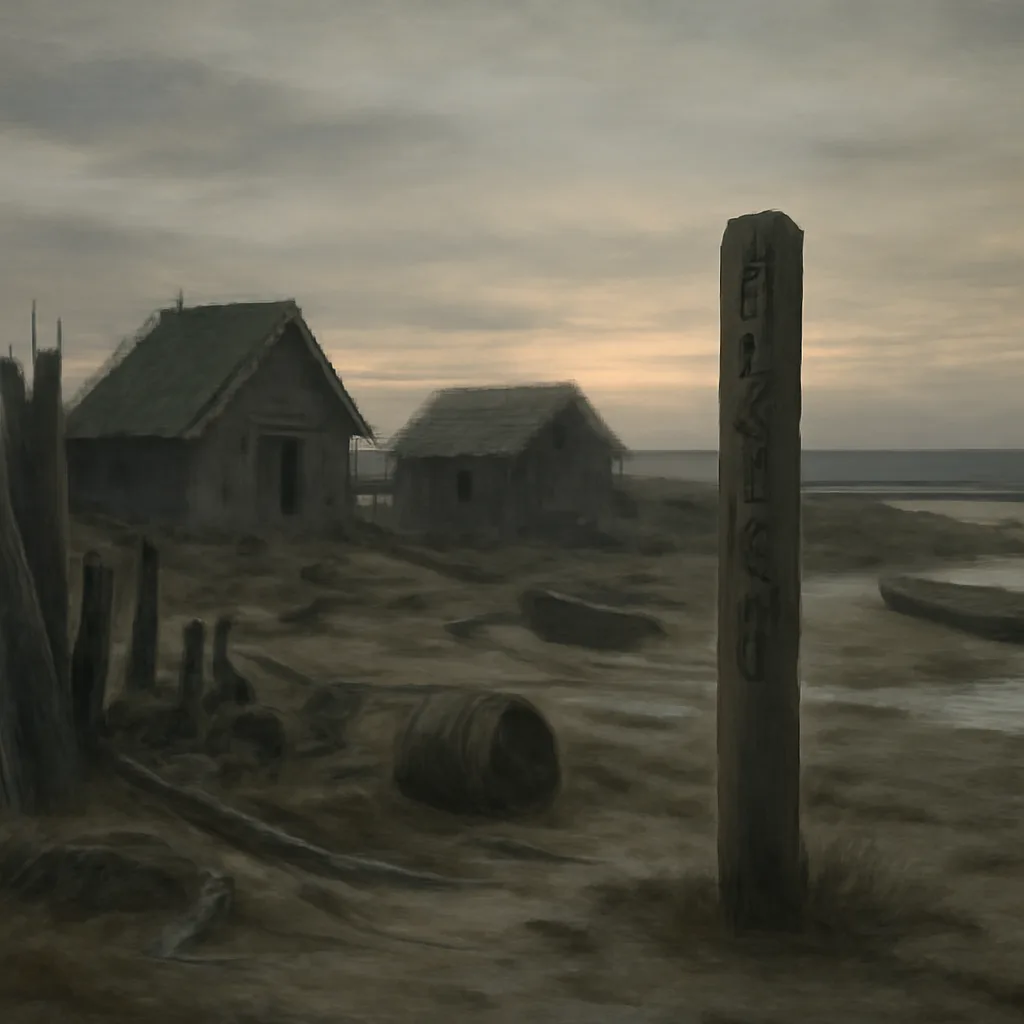
On May 20, 1587, a supply ship returning to the English colony on Roanoke Island (off present-day North Carolina) found the settlement deserted. The colonists had arrived earlier that month under Governor John White as part of an effort to establish a permanent English presence in North America. When White returned from a delayed resupply voyage to England, he discovered buildings dismantled and no people. The only clear sign left was the single carved word “CROATOAN” on a post; another more cryptic marking, a Maltese cross, had been carved elsewhere but was removed. No bodies, no battle remains, and no ship were found at the site, and the fate of the roughly 115 colonists became one of the most enduring mysteries of early American history.
Primary sources and their limits
The principal contemporary source is John White’s account and the printed materials of the period, including letters and the celebrated 1590 engraving by Theodor de Bry based on White’s drawings. These sources confirm the discovery of an abandoned village and the carved message but provide little additional detail. Records from England show that White’s return was delayed by the Anglo-Spanish War and the difficulty of securing ships, which left the colonists stranded longer than intended. Later written reports from explorers, colonists, and colonial officials sometimes repeat oral histories from Indigenous groups or include secondhand claims, but none supply direct documentary proof of a single, conclusive outcome.
Main hypotheses
- Integration with local Indigenous groups: Many historians consider voluntary relocation or absorption into neighboring Native American tribes—particularly the Croatoan (later known as the Hatteras) or other Algonquian-speaking groups—a plausible explanation. Contemporary and later accounts include reports of English traits, objects, or people living among coastal tribes decades later. Archaeological finds of English-style artifacts in Indigenous contexts have been interpreted by some researchers as supporting contact and assimilation, though such artifacts can also result from trade or later European presence.
- Relocation inland: Another theory posits that the colonists attempted to move inland to secure better resources or to join friendly tribes. Subsequent English expeditions in the early 1600s searched inland rivers and communities for traces of Roanoke settlers but returned without definitive identification. Terrain, hostile relations with some groups, disease, or lack of supplies could have complicated such a move.
- Attack or enslavement: Some historians consider the possibility of an attack by hostile groups or capture and enslavement by other Europeans or Indigenous slavers. Contemporary documents do not provide concrete evidence of a large-scale battle at Roanoke, and the absence of bodies or scorched structures at the abandoned site argues against a violent, rapid destruction in situ, but attack or forced removal during relocation cannot be ruled out.
- Death by disease or famine: Disease, malnutrition, and exposure are documented hazards for early colonial ventures. A catastrophic epidemic could have decimated the community, with survivors attempting to leave in small groups. Again, the lack of human remains at the site complicates this scenario, though scavenging, burial practices, or relocation might account for that absence.
Archaeological and historical work since the 20th century
Archaeological fieldwork on Roanoke Island and at Indigenous village sites on the Outer Banks and the North Carolina mainland has produced small quantities of late 16th-century English artifacts, Native pottery with European trade items, and environmental data about the settlement’s conditions. None of these finds conclusively identifies the final location of the Roanoke colonists. In recent decades, multidisciplinary teams have combined archaeology, dendrochronology, paleobotany, and Indigenous oral histories to narrow search areas and to better understand colonial–Indigenous interactions. These efforts have refined what is plausible but have not resolved the central question.
What is firmly known and what remains uncertain
Documentary evidence firmly establishes that a colony was found abandoned on May 20, 1587, and that the word “CROATOAN” (and an altered cross marking) were recorded at the site. Beyond that, the colonists’ ultimate fate remains unproven. Multiple plausible scenarios—assimilation with local tribes, inland relocation, disease, attack, or some combination—are supported by varying degrees of circumstantial and archaeological evidence, but no single hypothesis has achieved consensus or definitive proof.
Why the story endures
The Roanoke disappearance sits at the intersection of early colonial ambition, Anglo-Spanish conflict, cross-cultural contact, and the practical vulnerabilities of 16th-century transatlantic ventures. The mixture of contemporary silence, fragmentary later reports, and tantalizing archaeological hints keeps the question open to investigation. Ongoing archaeological projects and collaboration with Indigenous communities continue to refine the historical context and may yet produce clearer evidence about the colonists’ fate, but for now the event remains an unresolved episode in early North American history.