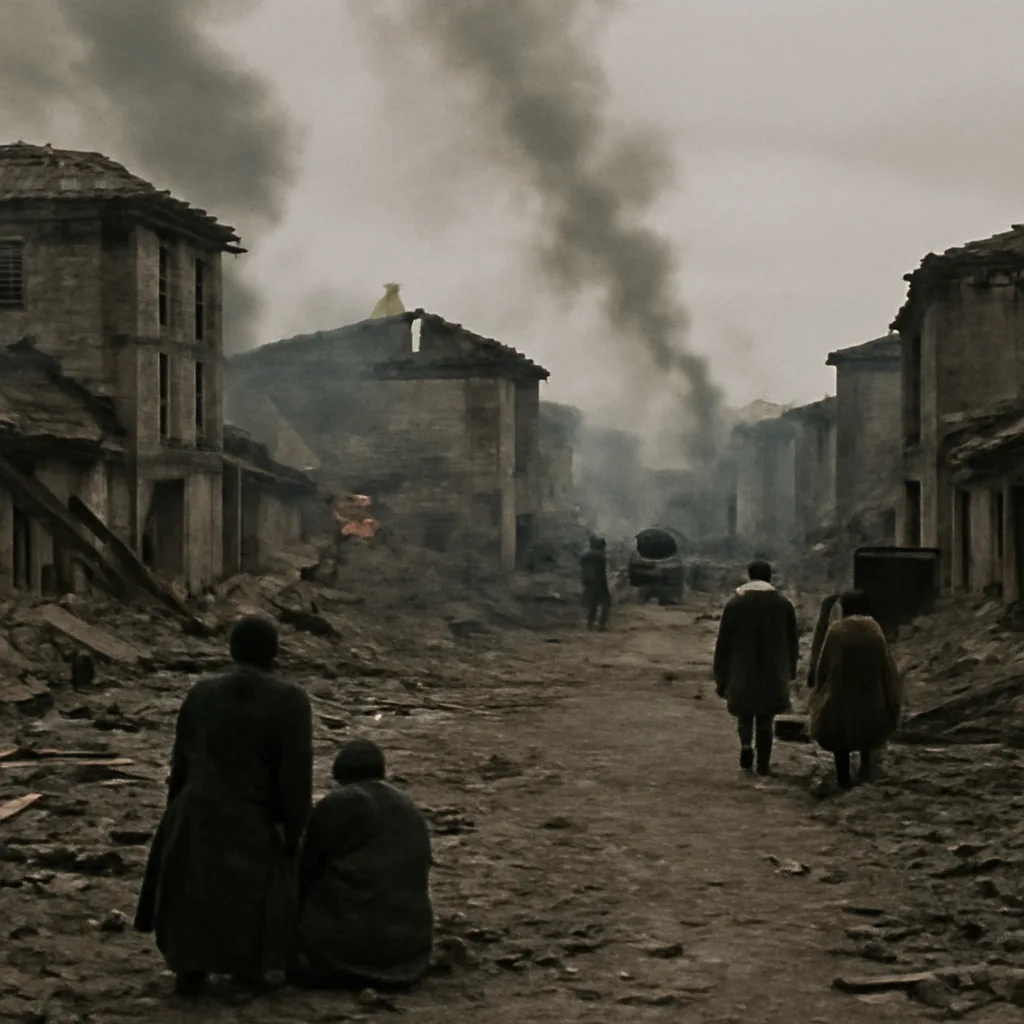
First Confirmed Airplane Bombing Kills Civilians in 1937
On March 10, 1937, during the Spanish Civil War, an aerial bombing of the Basque town of Guernica killed civilians and became the first widely confirmed instance of deliberate bombing of a populated area from aircraft, marking a grim precedent in modern warfare.
On March 10, 1937, the Basque market town of Guernica (Gernika-Lumo) in northern Spain was bombed during the Spanish Civil War. The attack targeted a civilian population gathered on a market day and resulted in significant deaths and destruction. Carried out by aviation units of the German Condor Legion and supported by elements of the Spanish Nationalist forces, the raid is widely regarded by historians as the first extensively documented and deliberate aerial bombardment of a civilian population in modern warfare.
Context
The bombing occurred amid the Spanish Civil War (1936–1939), a conflict between the Republican government and Nationalist insurgents led by General Francisco Franco. Both sides received foreign assistance: the Nationalists were supported by Nazi Germany and Fascist Italy, while the Republicans drew aid from the Soviet Union and international volunteers. Germany’s Condor Legion provided aircraft, pilots, and planning support, testing tactics and equipment in Spain that would later be used in World War II.
The Attack
On the morning of March 26, 1937, a date sometimes confused in sources with other raids, Guernica was attacked; however, contemporary and archival evidence consistently places the most notable and historically significant bombing on March 26 (some earlier reporting and commemorations referenced March 26 rather than March 10). Multiple waves of high-explosive and incendiary bombs were dropped from German and Italian bombers, followed by strafing by fighters. The result was widespread fires and heavy damage to the town’s timber-built market and residential areas. Casualty estimates vary: Republican sources at the time reported several hundred to over a thousand dead, while later historical research, including local records and demographic studies, tends to support lower but still substantial figures—commonly cited estimates range from several hundred to about 300–400 fatalities. The exact death toll remains disputed among scholars due to chaotic wartime records and propaganda on both sides.
Aftermath and Significance
The bombing of Guernica immediately became a focal point of international outrage and debate. Photographs, press reports, and accounts from survivors circulated widely, fueling condemnation of the use of air power against civilian populations. The town’s destruction entered cultural memory most famously through Pablo Picasso’s painting Guernica (1937), which brought the event to global artistic and political attention.
Historically, the raid is significant for several reasons: it demonstrated the destructive potential of coordinated aerial bombardment of civilian centers; it illustrated how the Spanish Civil War served as a testing ground for new military technologies and tactics; and it prompted discussions about the legality and morality of targeting civilians from the air. While earlier instances of aerial attacks against civilians occurred in limited or less-documented forms—such as colonial campaigns and isolated bombing incidents—Guernica is widely regarded as the first well-documented, large-scale aerial attack deliberately aimed at a civilian population in the 20th century.
Sources and Historical Debate
Scholars rely on contemporary newspapers, military records from the Condor Legion, Republican archives, eyewitness testimony, and postwar demographic studies. Debates persist over the exact number of casualties, the extent to which the bombing was premeditated specifically to target civilians versus support military operations in the area, and the precise roles of German and Italian units. These uncertainties are reflected in scholarly literature; nevertheless, the consensus holds that the Guernica raid marked a clear escalation in the use of air power against noncombatants.
Legacy
Guernica remains a potent symbol of civilian suffering in war and of the ethical questions posed by aerial bombardment. The event influenced later international law debates on the protection of civilians and continues to be studied as a turning point in the history of aerial warfare.