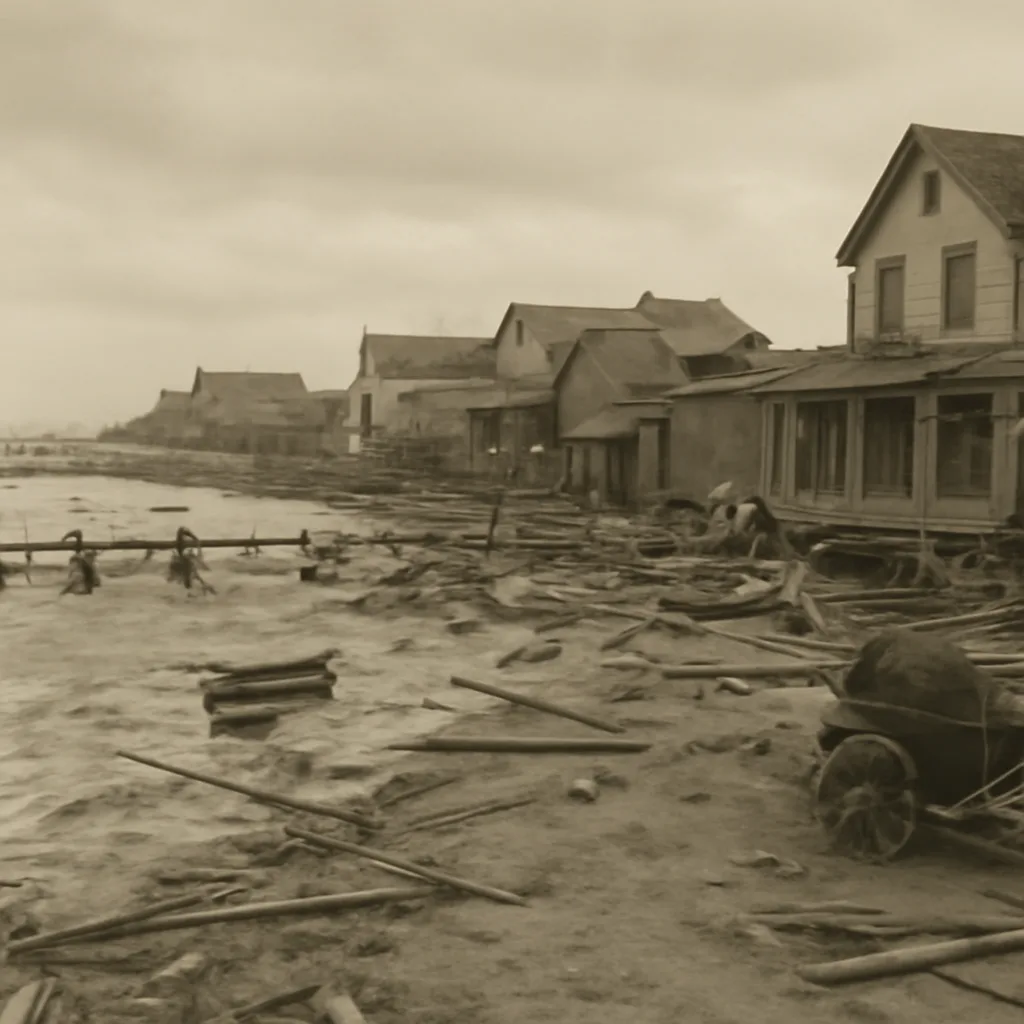
1900 Galveston Hurricane Devastates City, Kills Thousands
On September 8, 1900, a powerful hurricane struck Galveston, Texas, producing a storm surge that inundated the low-lying barrier island and caused the deadliest natural disaster in U.S. history, with estimated fatalities in the thousands.
On the morning of September 8, 1900, a hurricane made landfall on Galveston Island, Texas, bringing a catastrophic storm surge, violent winds, and widespread destruction. At the time Galveston was a thriving port city and one of the busiest seaports on the Gulf Coast. The island's low elevation—much of it only a few feet above sea level—and the lack of substantial coastal defenses left the community extremely vulnerable.
Contemporary reports and later historical studies indicate that the storm produced a storm surge estimated between 8 and 15 feet in different parts of the island, accompanied by sustained hurricane-force winds and torrential rain. The surge and waves swept across the island, destroying wooden homes, businesses, and piers, and carrying debris inland. Fire broke out in multiple locations in the aftermath, complicating rescue and recovery.
The death toll has been the subject of uncertainty and revision. Official counts at the time varied, and historians' estimates range widely; commonly cited figures place the number of fatalities between 6,000 and 12,000. This makes the 1900 Galveston Hurricane the deadliest natural disaster in U.S. history. Thousands more were injured, and many survivors were left homeless.
The disaster exposed shortcomings in forecasting, communication, and urban planning. Weather science and storm warning systems in 1900 were limited: telegraph lines and ship reports provided some warning, but there was no modern hurricane-tracking infrastructure. Some warnings reached Galveston but were not universally heeded or adequately acted upon. In the storm's wake, debates emerged about responsibility, preparedness, and how to protect the rebuilt city.
Recovery and rebuilding began almost immediately. Aid came from across the nation, and relief trains brought supplies and personnel. One of the most significant engineering responses was the construction of a seawall, approved and built in the years after the hurricane to shield the island from future storm surges. Additionally, a large-scale grade-raising project lifted many areas of the city by as much as 17 feet in places, with sand and fill brought in to elevate streets and foundations.
The hurricane also had broader economic and social impacts. Galveston's prominence as a commercial hub declined relative to other Gulf ports, notably Houston, which expanded its port facilities and rail connections in subsequent decades. The disaster affected families and businesses across social classes; while wealthier residents sometimes had greater means to rebuild or relocate, many working-class and immigrant communities suffered disproportionately.
Historical study of the 1900 Galveston Hurricane relies on a mix of contemporary newspapers, government records, personal accounts, and later scholarly research. Because record-keeping at the time was incomplete and because many bodies were never recovered or officially counted, specific figures—especially the death toll—remain estimates rather than precise counts. Historians emphasize the event's significance for U.S. disaster response, coastal engineering, and the development of meteorology.
Remembering the 1900 Galveston Hurricane involves both commemoration of lives lost and recognition of the changes it prompted in urban planning and coastal protection. The seawall and grade-raising projects stand as physical legacies of the city's response; the storm also underscored the need for improved forecasting and emergency preparedness that would evolve over the 20th century.