← Back
01/07/2015 • 1 views

The Charlie Hebdo Massacre Shocks the World
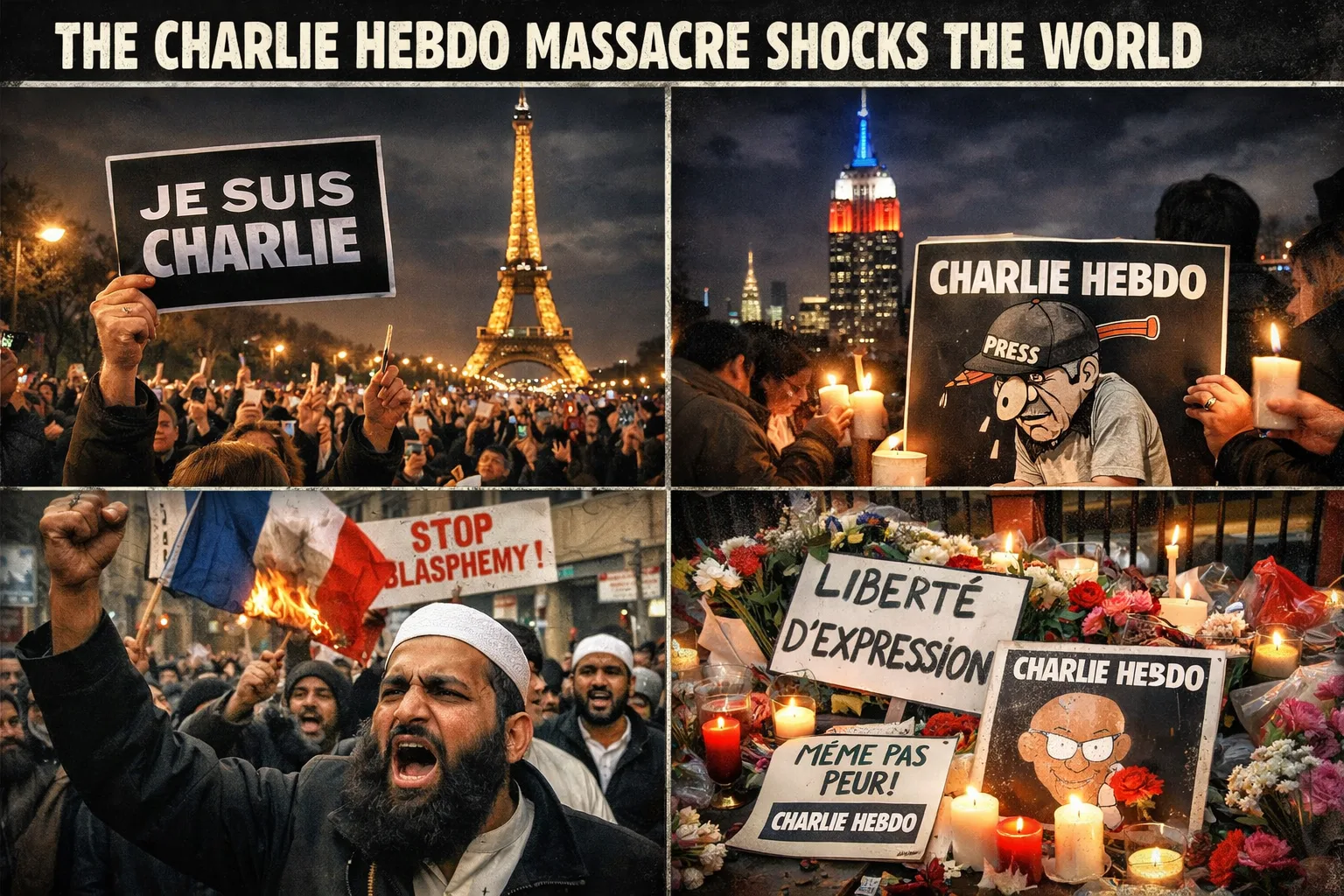
The Charlie Hebdo Massacre

On the morning of January 7, 2015, a brutal act of terrorism shattered Paris and sent shockwaves across the globe.


On the morning of January 7, 2015, a brutal act of terrorism shattered Paris and sent shockwaves across the globe. Two armed brothers, Saïd and Chérif Kouachi, stormed the offices of the French satirical magazine Charlie Hebdo, murdering 12 people and wounding several others in a targeted attack that would become one of the defining moments of the 21st-century debate over free speech, religion, and extremism.

Charlie Hebdo was no stranger to controversy. The magazine had a long history of provocative satire, skewering politicians, institutions, and religions alike. In particular, its cartoons depicting the Prophet Muhammad had drawn violent threats for years, forcing the publication to operate under police protection. Despite this, the editorial staff continued to defend satire as an essential expression of secular democracy and freedom of expression in France.

The attack occurred shortly after 11:30 a.m. The gunmen, dressed in black and armed with assault rifles, entered the building during a weekly editorial meeting—when many of the magazine’s most prominent cartoonists were present. They methodically executed journalists, editors, and a visiting economist. Among the dead were legendary cartoonists Cabu, Wolinski, Charb, Tignous, and Honoré, figures who had shaped French satire for decades.

As they fled, the attackers murdered a French police officer, Ahmed Merabet, who was shot at close range on the sidewalk—an image that would haunt the world when video footage emerged. The gunmen reportedly shouted that they had “avenged the Prophet Muhammad” and pledged allegiance to Al-Qaeda in the Arabian Peninsula (AQAP).

France was immediately thrust into a nationwide manhunt and a state of emergency. Two days later, the Kouachi brothers were killed in a standoff with police at a printing facility outside Paris. Meanwhile, a related hostage crisis at a kosher supermarket claimed four more lives, deepening the sense that France was under siege.

In the aftermath, millions took to the streets. On January 11, over 4 million people marched across France in one of the largest demonstrations in the nation’s history. World leaders locked arms in Paris, and the phrase “Je suis Charlie” (“I am Charlie”) became a global rallying cry—printed on signs, projected onto monuments, and shared billions of times online.

Yet unity quickly gave way to division. While many embraced the slogan as a defense of free expression, others—particularly in Muslim communities worldwide—felt the slogan ignored the pain caused by offensive satire. The attack exposed deep fractures around integration, radicalization, Islamophobia, and the limits of satire in pluralistic societies.

The Charlie Hebdo massacre did not just kill people—it ended illusions. It forced Europe to confront homegrown extremism, challenged long-held assumptions about secularism, and revealed how fragile social cohesion can be in the face of ideological violence. A decade later, the questions it raised—about speech, belief, fear, and resilience—remain unresolved.

Share this

Email Share on X Facebook Reddit

Did this surprise you?