
07/17/1950 • 4 views
Senate Holds Public Hearings on Organized Crime, 1950
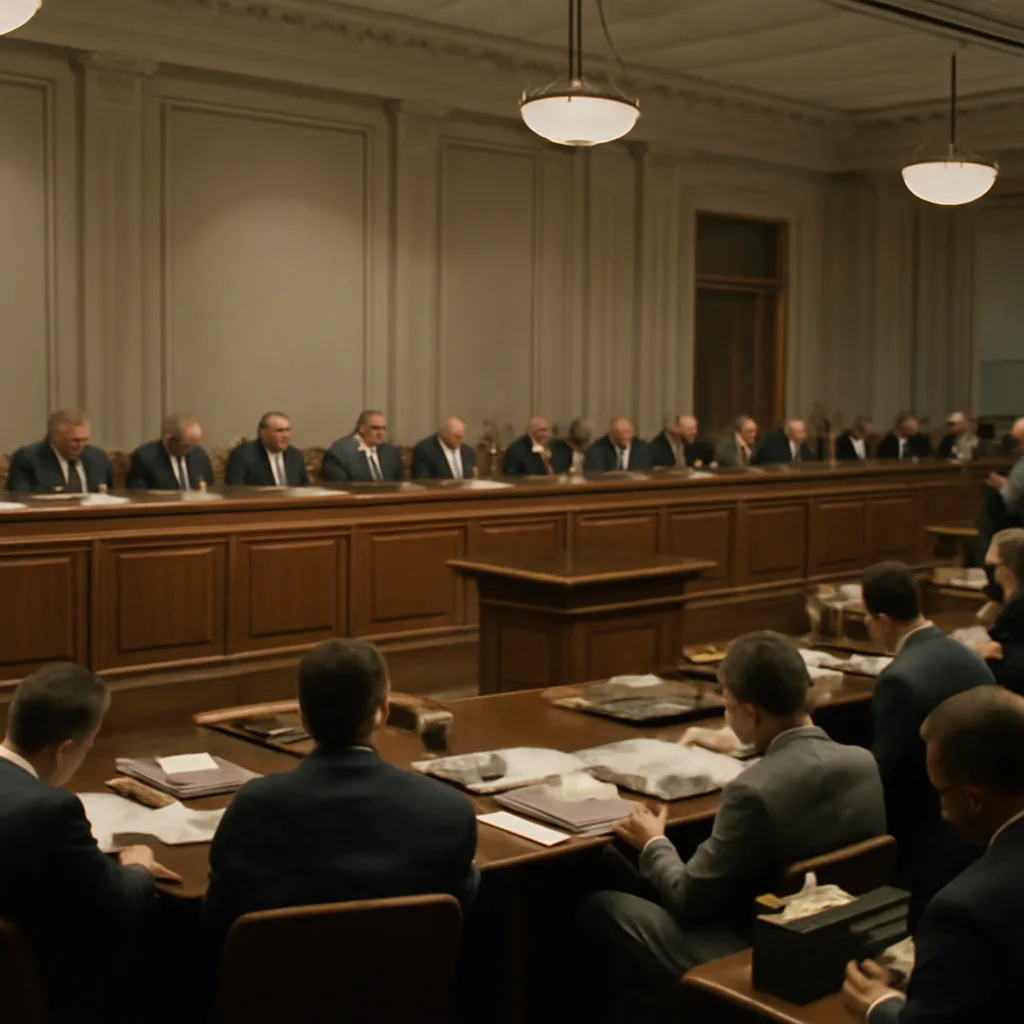
On July 17, 1950, the U.S. Senate began a series of public hearings into organized crime, aiming to expose racketeering networks and clarify links between criminal syndicates and public institutions.
Background
Interest in investigating organized crime had grown in the 1930s and 1940s amid public concern over gambling, labor rackets, narcotics, and illicit liquor distribution. By 1950, persistent press coverage and high-profile criminal prosecutions increased pressure on Congress to examine the scope of syndicate activities and their potential corruption of public officials. The Senate hearings reflected both investigative ambition and legislative intent: lawmakers wanted a public record to support possible reforms in federal law, law-enforcement coordination, and judicial practice.
Proceedings and Focus
The hearings convened open sessions designed to elicit factual testimony rather than secret grand-jury evidence. Witnesses included federal and local law-enforcement officials, prosecutors, and experts on criminal finance and labor relations. Topics addressed included methods used by organized-crime groups to infiltrate legitimate businesses, techniques for money laundering and extortion, and the use of violence and intimidation to control labor and gambling operations. Senators also explored whether existing statutes were adequate to prosecute complex interstate criminal enterprises and whether federal agencies needed expanded investigatory powers.
Impact and Significance
Though not the first congressional inquiry into criminal syndicates, the 1950 hearings contributed to a growing body of public documentation about organized crime. They helped shape subsequent legislative and prosecutorial strategies by highlighting investigative challenges, such as jurisdictional limits and the difficulty of obtaining cooperative witnesses. The hearings also fed into later, more extensive investigations in the 1950s and 1960s that examined crime’s social and economic reach and recommended legal reforms.
Limitations and Cautions
The hearings produced extensive testimony but did not by themselves produce comprehensive legal remedies or immediate mass prosecutions. Public hearings have limitations: witnesses may be reluctant to testify fully, some evidence remains confidential or subject to grand-jury secrecy, and political constraints affect the scope of inquiries. Historians note that congressional hearings can illuminate patterns and prompt reforms but rarely substitute for sustained investigative work by prosecutors and law-enforcement agencies.
Historical Context
The 1950 hearings fit into a mid-20th-century pattern in which the federal government, state authorities, and the press worked intermittently to expose organized-crime structures. They preceded and informed later high-profile investigations and legislative measures aimed at curbing racketeering, improving interagency cooperation, and strengthening tools for criminal prosecution. While the hearings increased public awareness, the battle against organized crime continued for decades, evolving with new criminal enterprises and enforcement approaches.
The record of the 1950 hearings remains a source for researchers seeking contemporaneous testimony and congressional perspective on organized crime at midcentury. As with many public inquiries, their most durable effect was to broaden public understanding and to prompt subsequent policy and legal debates rather than to serve as an immediate solution to entrenched criminal networks.