
← Back
06/01/1941 • 5 views

First Commercial Television Advertisement Airs in 1941
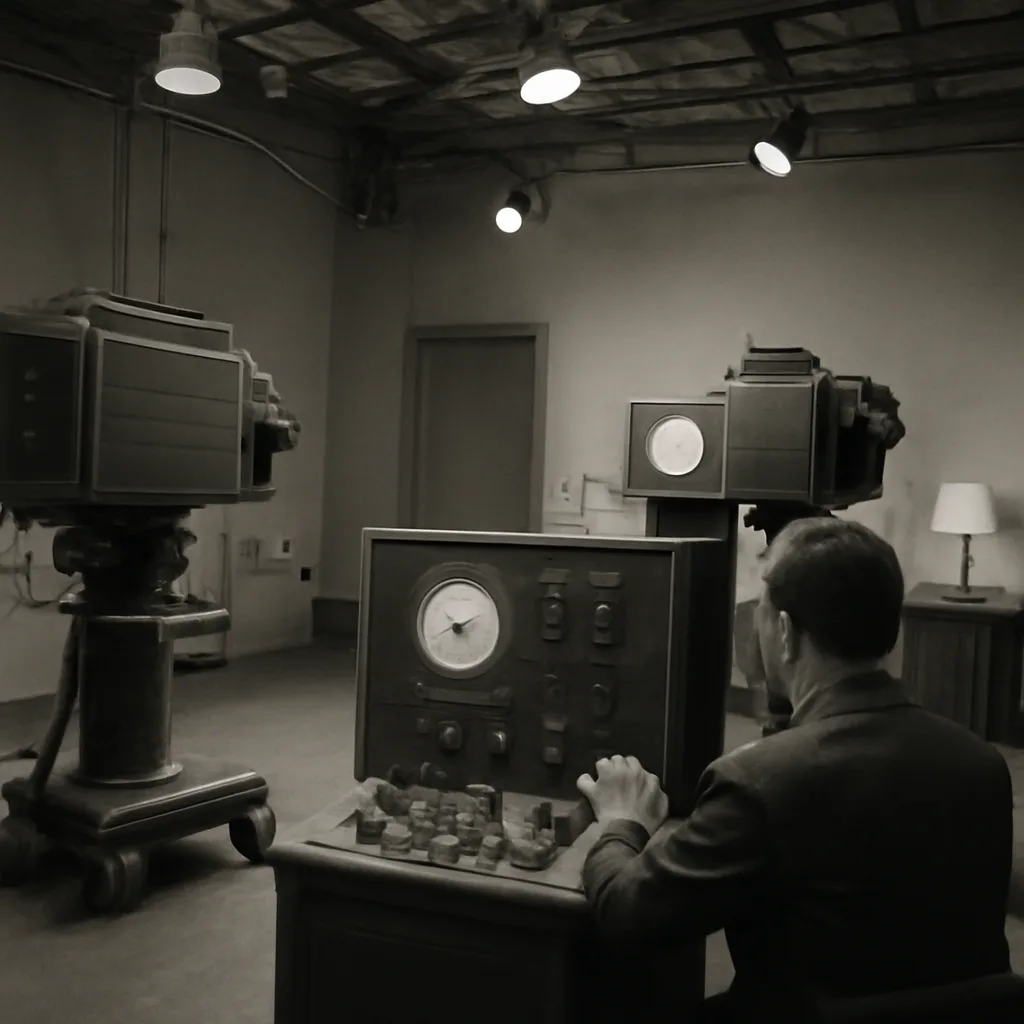
Black-and-white scene of a 1940s television studio control room with large camera equipment and a small television monitor displaying a simple clock graphic; technicians in period dress operate dials and switches.

On June 1, 1941, the first paid commercial television advertisement in the United States aired during a Brooklyn station’s broadcast, marking an early step in the development of TV advertising despite the medium’s limited audience at the time.


On June 1, 1941, an early milestone in broadcast history occurred when the first paid commercial television advertisement aired in the United States. The advertisement ran during experimental broadcasts by New York station WNBT (now WNBC), operated by the Radio Corporation of America (RCA), from a transmitter at the Empire State Building. The spot, a 10-second paid announcement for Bulova watches, cost the advertiser $9.00. It was inserted between two tennis matches and appeared as a small animated image of a clock overlaid on the screen, accompanied by the company name.

Context and reach

Television in 1941 was still experimental and extremely limited in reach. The Federal Communications Commission (FCC) had just adopted new technical standards for commercial television broadcasts earlier that year, which helped pave the way for regular scheduled service. However, very few households owned television sets; most viewers were engineers, industry insiders, or customers in select public viewing locations. Because of this narrow audience, early television advertising was as much a demonstration of technical possibility and prestige as a conventional marketing investment.

Content and format

The Bulova announcement is widely cited in historical accounts as the first paid television commercial in the U.S. Rather than the multi-minute commercials that became common in later decades, the early spot was brief and simple — essentially a title card or logo image displayed on-screen for seconds. The short duration and static visual reflected both technical limitations (live mechanical and early electronic scanning systems, limited program length) and the experimental nature of early television production.

Significance

Though modest in presentation and audience, the Bulova spot signaled the commercial potential of television as an advertising medium. It demonstrated that advertisers could pay to reach viewers on a new platform, and it gave broadcasters a direct revenue model beyond sponsorship and network support. After World War II, with the lifting of wartime restrictions, the growth of consumer television ownership, and improvements in production and transmission, television advertising expanded rapidly and became central to the economics of broadcast television.

Historical notes and cautions

Details about this event — including the precise wording and visual appearance of the spot, its exact placement within programming, and the size of the viewing audience — are limited by the fragmentary records of early experimental broadcasts. Historians generally agree on the date (June 1, 1941), the broadcaster (WNBT/RCA), and the advertiser (Bulova), but contemporary descriptions vary in small particulars. The $9 fee and 10-second length are commonly reported in secondary sources summarizing the episode; some primary documentation exists in trade publications and company records, but archival materials are not comprehensive.

Legacy

The first paid television advertisement stands as an emblematic moment marking television’s transition from experimental technology to commercial mass medium. It presaged an industry that would reshape advertising, popular culture, and the economics of broadcasting in the decades that followed. While tiny by modern standards, the brief Bulova announcement is repeatedly cited in histories of television as the practical beginning of paid TV advertising in the United States.

Share this

Email Share on X Facebook Reddit

Did this surprise you?