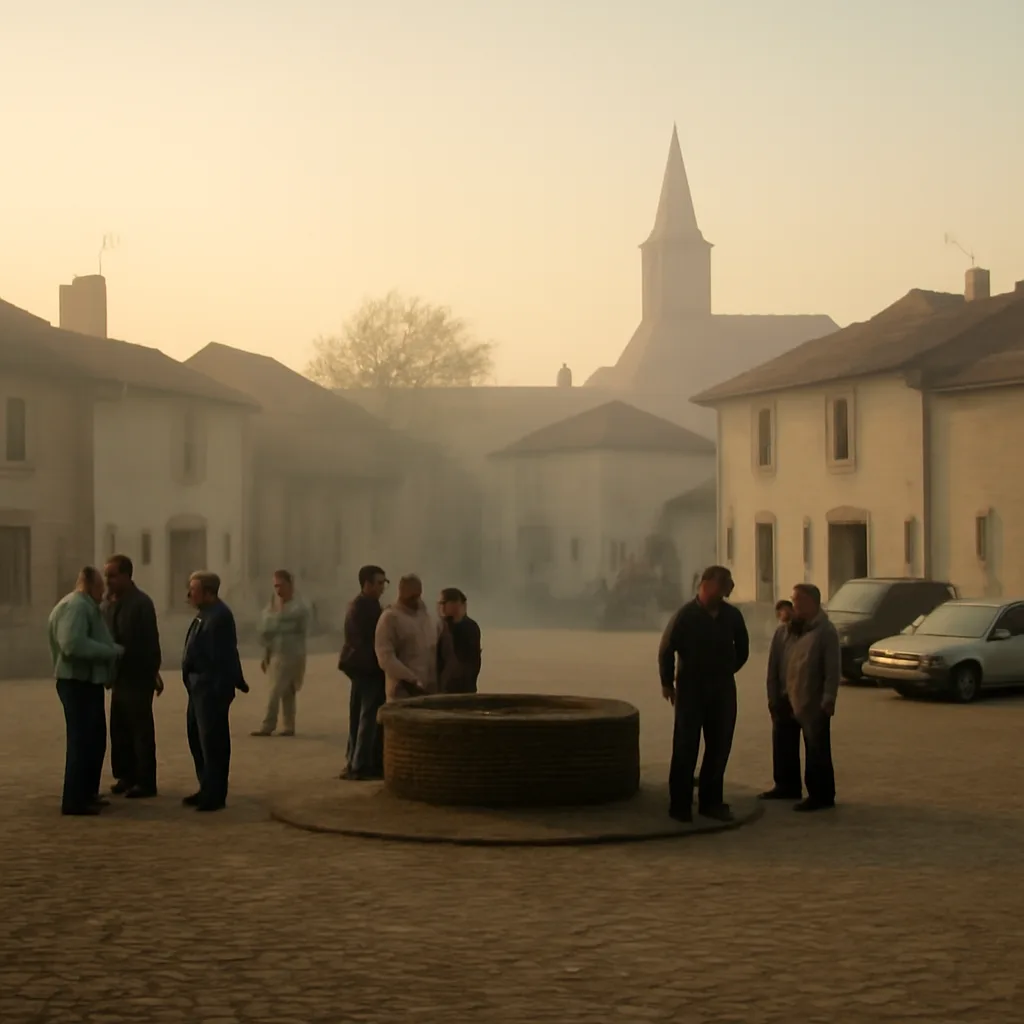
Whole Village Reports Having the Same Dream on June 1, 2006
On the night of June 1, 2006, residents of a small village reported an unusually high number of people describing the same dream. Accounts and local records show a cluster of similar reports, though explanations range from shared cultural cues to coincidence.
On the night of June 1, 2006, an uncommon event gathered attention in a small village: a significant number of residents described having essentially the same dream. Local newspaper coverage and contemporaneous community notes recorded multiple independent accounts of similar dream content reported the following morning at workplaces, shops and the village square. The phenomenon drew interest from journalists and, later, from folklorists and sleep researchers curious about how collective experiences of dreams can occur.
What was reported
Descriptions from the community indicate a recurring set of images and themes rather than verbatim retellings. Accounts collected in local reporting and oral histories mention a shared setting and sequence of events in the dream—such as walking toward a familiar landmark, encountering a specific natural feature, and experiencing a common emotional tone—but precise details varied between storytellers. No verified audio or video recording of the dreams exists; documentation is limited to contemporaneous press reports, personal notes and later interviews.
Immediate context and circulation
The accounts surfaced publicly through local press the next day and through conversations in public places, which likely amplified awareness. Social contagion—whereby hearing others’ accounts influences how one remembers or describes private experiences—is well documented in social and cognitive science. Once a few people reported similar dreams, others may have been more likely to recall and report details that fit the emerging pattern. That process does not prove the dreams were identical, but it helps explain how similar narratives can consolidate quickly within a tight-knit community.
Possible explanations
Scholars and commentators have proposed several plausible mechanisms:
- Cultural priming: Shared environment, stories, rituals or recent local events can prime common imagery in dreams. If villagers had recently discussed a particular topic or experienced a striking local event, that content could appear in multiple people’s dreams.
- Social contagion and memory shaping: Hearing others’ dream accounts soon after waking can reshape how individuals remember their own dreams, producing convergence.
- Environmental factors: Shared exposure to the same sounds, smells, or late-night disturbances (for example, weather, low-frequency noise, or nearby lights) can influence dream content for many people simultaneously.
- Statistical coincidence: In small communities, clusters of similar dreams can arise by chance, especially when public attention makes them seem more notable.
What is not documented
There is no authenticated, contemporaneous scientific monitoring (such as polysomnography) of village residents from that night. No official medical or laboratory confirmation exists demonstrating synchronized dreaming in the strict physiological sense. Nor are there reliable records showing that every single resident had the identical dream; surviving sources indicate a notable cluster rather than universal experience.
Follow-up and significance
The incident has been cited in discussions about collective memory, folklore and the social dynamics of shared experiences. Folklorists and social scientists point to it as an example of how narratives can spread and stabilize in communities. Sleep researchers note it as an anecdotal case that underscores the difficulty of proving coordinated dreaming without direct physiological data.
Conclusion
The June 1, 2006 episode in the village remains an intriguing documented cluster of similar dream reports. Available sources support that multiple people described comparable dream imagery the next day, but explanations range from cultural priming and social contagion to mundane environmental influences or coincidence. The event is best understood as a sociocultural phenomenon rather than conclusive evidence of synchronized dreaming.