
09/18/1980 • 3 views
South Korean military moves into streets amid September 1980 democracy protests
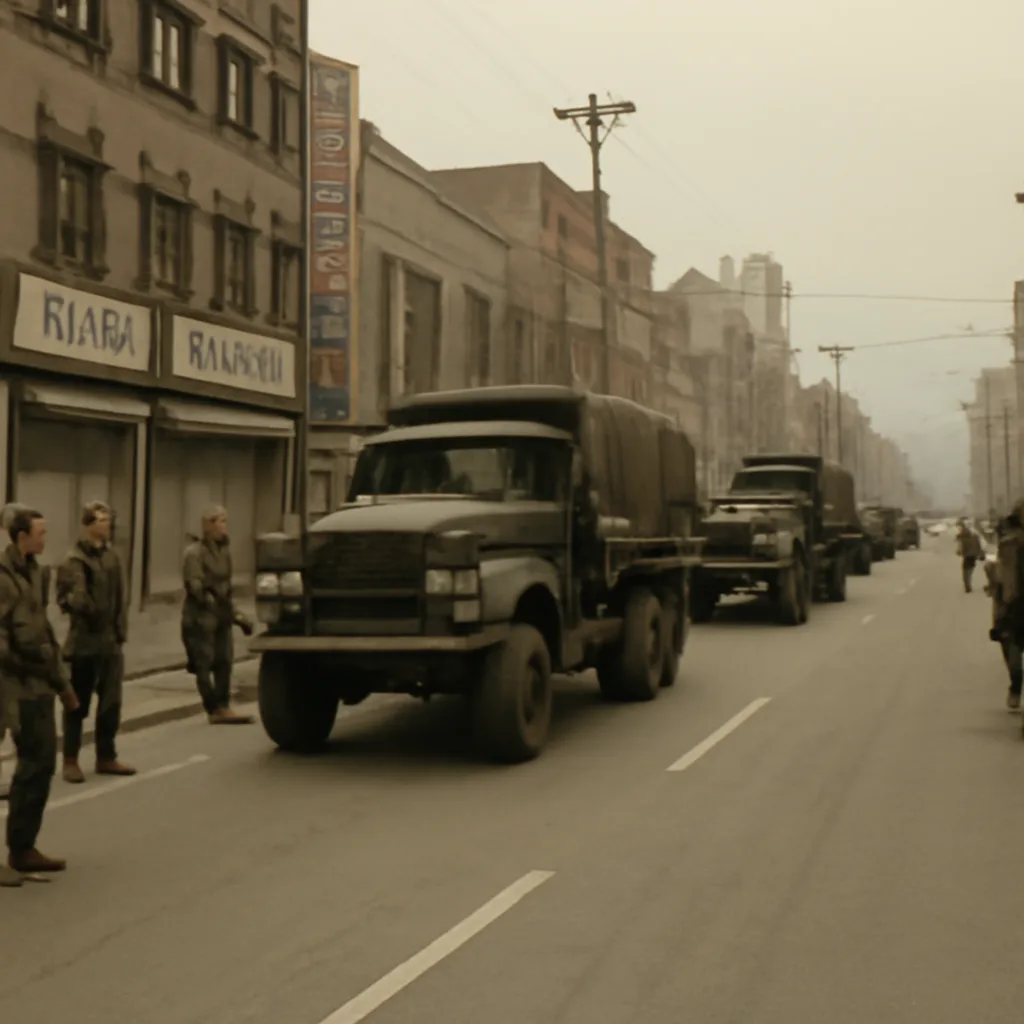
In mid-September 1980, South Korean authorities deployed troops to suppress widespread pro-democracy demonstrations following political turmoil earlier that year; the intervention intensified a national crackdown on dissent and reshaped the country’s transition under military-dominated rule.
Background
South Korea in 1980 was marked by intense struggle over the trajectory of governance after the assassination of President Park Chung-hee in 1979. Power struggles within the armed forces and between civilian political actors culminated in a coup in May 1980, led by Chun Doo-hwan and his allies. The coup tightened martial law, dissolved the National Assembly, and curtailed civil liberties, prompting large-scale protests in cities and on university campuses demanding democratic reform and civilian rule.
Events in September 1980
On and around September 18, 1980, government forces — including army units and militarized police — were reported to have been deployed in major cities to suppress demonstrations and enforce curfews and bans on assemblies. Deployment patterns mirrored earlier crackdowns in May and June, though the September actions occurred in the context of ongoing arrests of activists, closure of civic organizations, and increased censorship. The presence of troops on city streets aimed to deter public gatherings and to support large-scale roundups of suspected organizers and dissidents.
Impact and aftermath
The September deployment reinforced the consolidation of authority by Chun Doo-hwan’s regime. With the use of military force to break organized dissent, political opposition was weakened, many activists were detained, and a climate of fear limited public political activity. Internationally, the actions drew criticism from human-rights organizations and some foreign governments concerned about civil liberties in South Korea.
Domestically, the use of troops contributed to a decade in which political liberalization was severely constrained until mass pro-democracy movements in the late 1980s eventually pressured the government toward democratization. The 1980 deployments are remembered within a wider historical narrative of state repression during that transitional period and are documented in scholarly histories, human-rights reports, and contemporaneous news accounts. Exact scales of troop numbers and casualty figures vary by source; historians note disagreements in archival accounts and official records, and investigations over time have sought to clarify details of arrests, detentions, and incidents of violence.
Historical significance
The September 1980 deployments exemplify how military power was used to shape South Korea’s political institutions in the early 1980s. While they temporarily suppressed visible protest and allowed the regime to entrench control, they also contributed to long-term grievances that fueled later democratization efforts. Researchers and human-rights advocates continue to examine archival material and testimonies to build a fuller account of the period’s events and consequences.
Sources and limitations
This summary synthesizes well-documented patterns of military intervention and repression in South Korea during 1980 as found in academic histories, contemporary journalism, and human-rights reporting. Precise operational details (exact troop counts, full lists of arrests, or definitive casualty totals for specific September actions) remain contested or unevenly recorded in public sources; where exact figures are cited in scholarship, they often rely on government records, survivor testimony, and investigative reporting that can yield differing estimates.